
Early in my doctoral studies on support services for student athletes, I uncovered the term emerging adults coined by Jeff Arnett and truly feel that this is the best term to describe the college students I see on a daily basis. Arnett describes in Emerging Adulthood and Higher Education that emerging adulthood is “…the period from approximately 18 to 29 years of age [that] now constitutes a distinct life stage that is neither adolescence nor adulthood.” Arnett goes on to describe five features of emerging adulthood that make it distinctive including “…identity explorations, instability, self-focus, feeling in-between, and possibilities/optimism.” Understanding this unique period becomes essential for anyone who might be parenting, teaching, hiring, and interacting with individuals currently engrossed in this season of life.

When a college student enters the former-cafeteria, drains-covered domain of my office for their semester advising session, often there is a haze of angst that follows the upper-level student through the door. For most of their educational lives, there has existed this list of requirements that year-by-year they mark off on their way to the “next” item on their list. Each educational level has presented them with a new list to follow from elementary school through high school. Although the need to make important choices has arisen through these transitions, there remained a fairly clear picture of what was next. After graduation from high school, do you seek employment or further education? Depending on the route chosen, there emerges a to-do list to follow. Once enrolled in college and a major is selected, a new list is placed in your hand known as a curriculum map. As the excitement builds in anticipation of college graduation, reality pounces with the question, “What do I do next?”

It is at this juncture and transition in life that I see the paradox between the possibilities that are on the doorstep for this student and the instability of no more lists. Now, the decisions become weightier as the realities of emerging adulthood move ever closer. Thankfully, I work in an organization that is student focused and is intentional about assisting students to navigate these uncertain times through established programs (including one creatively entitled Adulting 101) available in not only academic departments but in student life and the Vocatio Center as well. Hopefully, our students take advantage of these services designed to help them transition into adulthood.
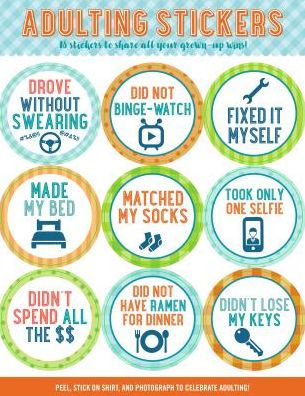
Adulthood, an interesting word that modern culture has now even created a verb out of the noun. The term adulting has become so popular that one can now purchase stickers for less than $4 related to these unfavorable tasks and adhere them into a calendar in order to feel a sense of achievement. So, instead of the excitement of flourishing into a new season of life, we are faced with emerging adults who view this stage of independence as one to be delayed as long as possible. Returning to their family home after graduating college is no longer taboo; instead, it’s a common practice as one study by Kirkham shows “40 percent of emerging adults move in with family members.”
So, why does it matter if Gen Z chooses to move back home and delay accepting the full responsibilities of adulthood? I’m sure we could develop a mile-long list of reasons both for and against this delay of independence, but my focus here is on what this means for those of us who are walking side-by-side with these emerging adults and attempting to prepare them for both professional and personal lives that flourish.
My dream is for our students to emerge from college not only prepared for the next season of life but equipped to flourish in that season. As you interact with emerging adults, I want to encourage you to consider why God has specifically placed you in their life and ask yourself how you can mentor and advise them during this time of instability and uncertainty. How can we invest in this generation with the resources we have to equip them to flourish? There may not exist one model that will guarantee success for all emerging adults, but if those of us who are further along in our lives will seek to offer guidance to this generation, we might be granted an opportunity to witness some amazing success stories!
Please feel free to share successful suggestions for mentoring and guiding our generation of emerging adults! More to come in future posts about mentoring and how we can provide tools to help this generation.
 Flourishing @ Life
Pingback: Engaging and Equipping Gen Z – Flourishing @ Life
Pingback: Roaring Twenties – Flourishing @ Life
Pingback: Emerging Adults and Communication – Flourishing @ Life
Dr. Powell,
I really appreciated this blog post as I am currently in this stage of life. I often times feel as if I am constantly looking to the “next thing” in my life instead of focusing on the now. I am majoring in nursing, and it is very common for me to mark of classes from my curriculum map to remind myself how close I am to reaching nursing school. Once I am finally in nursing school, I am sure I will mark off each rotation to remind myself how close I am to graduating. One thing that I know I need help with as an emerging adult is dealing with stress and working on time management. College is nothing like high school. I am in charge of doing my homework and studying. Most professors don’t hand out study guides or allow you to turn in work late. It is very easy for me to feel stressed when I think about the amount of work I have to complete in a week’s time. I really liked how you looked for ways to understand and help my generation in your post!
Thank you,
McKenzie Heath
LikeLike
Pingback: Return on Relationships – Flourishing @ Life
Pingback: Memphis Flights and Pole Vaulters – Flourishing @ Life
Pingback: Bubble or a Greenhouse – Flourishing @ Life
Pingback: Follow Where You’ve Been – Flourishing @ Life
Pingback: Why Do I Have to Change? – Flourishing @ Life
Pingback: Digital Natives – Flourishing @ Life
Pingback: Sabbath, Shabbat, Shalom – Flourishing @ Life
Pingback: Flourishing in the Mundane and the Monotonous – Flourishing @ Life
Pingback: You Can Do Hard Things – Flourishing @ Life
Pingback: Essential Nutrients of Relational Equity – Flourishing @ Life
Pingback: Check Gauges Light – Flourishing @ Life
Pingback: Who Packs Your Parachute? – Flourishing @ Life
Pingback: I Sliced Instead of Peeled – Flourishing @ Life
Pingback: Deja Vu People – Flourishing @ Life
Pingback: Just Do…Something – Flourishing @ Life
Pingback: Struggle With Singleness – Flourishing @ Life
Pingback: Courageous Conversations – Flourishing @ Life
Pingback: Spiritual Conversations – Flourishing @ Life
Pingback: Probing Conversations – Flourishing @ Life
Pingback: The Habit of Resilience – Flourishing @ Life
Pingback: A Flourishing Generation – Flourishing @ Life
Pingback: Too Many Choices – Flourishing @ Life
Pingback: Sunday to Monday Gap – Flourishing @ Life
Pingback: Seasons of a Professional's Life – Flourishing @ Life
Pingback: Craftsman Mindset – Flourishing @ Life
Pingback: Gift of Failure – Flourishing @ Life
Pingback: Friendship Conversations – Flourishing @ Life
Pingback: Mentoring Communities – Flourishing @ Life
Pingback: Borrow a Map – Flourishing @ Life
Pingback: Whine or Worship – Flourishing @ Life
Pingback: Be A Spoon – Flourishing @ Life
Pingback: Make Your Bed – Flourishing @ Life
Pingback: I’m Only – Flourishing @ Life
Pingback: Cowboy Creed – Flourishing @ Life
Pingback: Shipwrecked – Flourishing @ Life
Pingback: Stealing the Pen – Flourishing @ Life
Pingback: Dead People – Flourishing @ Life
Pingback: 50 Yards – Flourishing @ Life
Pingback: Roots Before Fruit – Flourishing @ Life
Pingback: Changing the Metrics – Flourishing @ Life
Pingback: Flourishing Mindset – Flourishing @ Life
Pingback: Hearth Places – Flourishing @ Life
Pingback: Anti-Aging Mindset – Flourishing @ Life
Pingback: Comparison Trap – Flourishing @ Life
Pingback: Trust Me – Flourishing @ Life
Pingback: Disrobing – Flourishing @ Life