
At the university where I teach, each semester we are provided with opportunities to participate in dialogue groups with other faculty members and administrators which I find both insightful and challenging. Since the spring of 2011 where the group discussed Tim Elmore’s Generation iY to the fall of 2016 when the group read Jean Twenge’s iGen, there has been an increasing desire to study generational theory; after all, these emerging generations are entering through the doors of A-11 and Bowld 247 into my classes, and how can I instruct them if I don’t understand them?

One significant moment occurred as we sat around the table in the Provost’s Conference Room sharing our thoughts on iGen. If memory serves me correctly, Dr. C. Ben Mitchell queried the group to see if we all felt the angst and concern over this emerging generation after reading the statistics Twenge presents on the increasing health issues related to anxiety, stress, and depression. Approaching the information from a different perspective, I shared my experience of hopefulness after reading the content. Yes, I am discouraged when I ponder the depressing statistics; but at the same time, if an issue can be identified, then I feel empowered to work towards improvements, if not a remedy, to the problems. Being provided with tangible research which explained the differences I was experiencing in my students offered optimism that our institution could intervene and become proactive with our students to mitigate some of these issues and equip them to have a flourishing life.
Continuing on this journey in an attempt to understand emerging generations and specifically, emerging adulthood, I’ve continued to engage with numerous resources in efforts to find teaching and coaching strategies that might be successful. Although I’m doubtful I will ever uncover only a single answer to a magical teaching method, it’s fun to experiment with variations. Some ideas flounder and need reconsideration, some techniques flat out fail and are tossed aside, but through the process, I am learning what aligns with my teaching style and what concepts engage our students who are very different from my own Gen X characteristics.
Over the past week delving into somewhat opposing views of Gen Z, I return to my optimism that those of us who are guiding this emerging generation are in a wonderful position to influence this generation, recognizing the challenges they face, and choosing to mentor them wisely in the days ahead. If, for example, we acknowledge the concern for a generation who is unable to engage in “productive disagreement” as described in The Coddling of the American Mind, then we can share examples, such as above, where a disagreement in the dialogue group did not lead to conflict but instead to engaging conversation. In what ways can we model the importance of discussing ideas in a productive manner, even if we disagree? If I am aware that students are struggling to participate in meaningful conversation, I can adapt my teaching strategies to emphasize the importance of conversation. In these areas where there is concern that emerging generations will be deficient, let’s embrace the opportunity to prevent this deficiency. Where one person might see a lost cause, I see an opportunity to change direction to ensure emerging generations will flourish.
One of my new favorite books on generational theory is entitled The Gen Z Effect where the authors provide an option to accepting generational gaps. “Gen Z is a set of behaviors and attitudes about the way the world works. You can be born into it or you can choose to be part of it. The Gen Z Effect is what happens when the simplicity and affordability of technology unites generations more than it divides them.” Koulopoulos and Keldsen express their idea that microgenerations will be developing a new pattern to generational theory and although we are in uncharted territory, when we understand and embrace Gen Z, we can flourish in numerous ways including: “(1) managing and working with the broadest possible ranges of ages; (2) enjoying intense collaboration in our work; (3) building professional relationships that leverage the energy of youth and the wisdom of maturity; (4) embarking on a journey of lifelong learning, unlearning, and relearning; (5) enjoying interacting with your kids and grandkids, nieces and nephews, without a technology divide; and (6) embracing the value of disruption and uncertainty.”
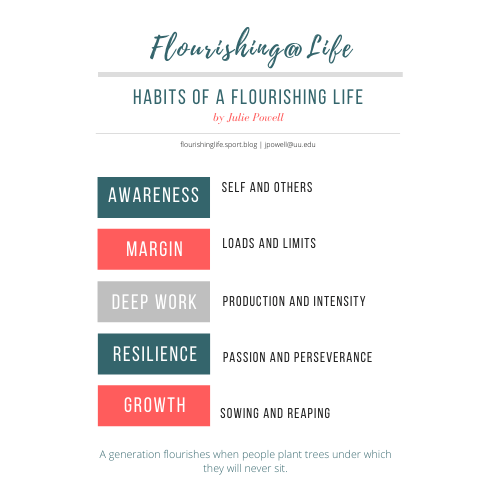
So, whether we ask emerging generations to develop the five Habits of a Flourishing Life, we expand our strategies in the classroom, support services, and vocational organizations, or we just choose to invest relational equity in those younger than us, we have a golden opportunity to change the narrative from a Distracted Generation to a Flourishing Generation. Are you willing? Please feel free to share any thoughts and comments below.
 Flourishing @ Life
Pingback: Is Gen Z the Canary? – Flourishing @ Life
Pingback: Bridging the Generational Gap – Flourishing @ Life
Pingback: Building the Wrong House – Flourishing @ Life
Pingback: Generational Remix – Flourishing @ Life