
If you have not yet witnessed the recent AT&T advertising campaign which uses the slogan, “just ok is not ok,” click here to visit a website featuring the doctor scenario. While the humorous and effective ad campaign has my brain considering the various situations where I prefer not to settle for Just Okay, I could not help but ponder the parallels between the creative promotion and the content shared in The Come Back Effect. Focusing on how to inspire organizations, such as churches, to foster a culture of hospitality, Young and Malm outline ten suggestions for creating a flourishing organization with one suggestion to “reject just okay.”

In the post entitled Bump the Lamp, we learned about Young and Malm’s emphasis on feeling or empathy in a flourishing organization, but today the spotlight shifts to examine the importance of “going above and beyond-even when it’s possible nobody will notice the extra effort put into making it excellent.” Sharing experiences that all of us can relate to where our interactions with the expectations of customer service have dropped over the last few years, the authors encourage us not to accept this average approach as the norm. As AT&T states, “just ok is not ok,” and we should expect more from ourselves and the organizations we represent, especially when being excellence-driven and people-focused are an emphasis in the core values.
In The Come Back Effect, there are five main areas where the authors share it can be “tempting to settle for ‘just okay’: (1) when we think people won’t see, (2) when something just has to get done, (3) when you don’t feel the burden for it, (4) when it feels like the stakes are lower, and (5) when you get lazy.” Young and Malm reveal stories that I’m sure we can all relate to where organizations lose the desire to go above and beyond. “If you want to create a culture filled with people who ‘bump the lamp,’ you have to create an environment where you’re always improving. The standard for excellence tomorrow should not be the same level that it was yesterday. It should be raised incrementally each day.”
This is where developing a Habit of Growth can influence an individual or organization to move away from Just Okay and towards excellence. It’s tempting to maintain the processes that are currently working but “if you’ve done something the same way for fifty years, that’s an indication that you haven’t improved in fifty years. Improvement requires processes to change.” In situations like this, it’s time for leaders to capitalize on the creativity and ingenuity of emerging generations like Gen Z to “institute a culture of constant improvement.”
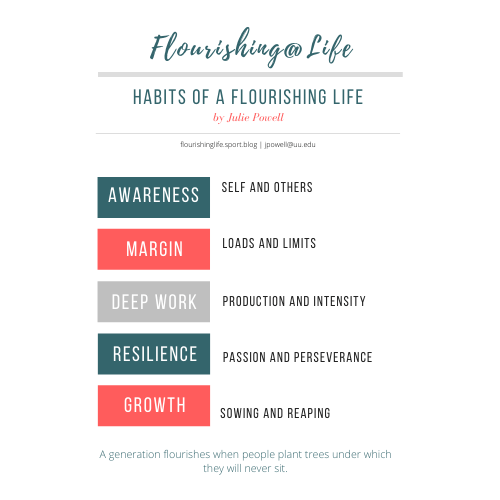
As an educator who desires to establish a Habit of Growth, I might look for one simple change to make each week in my class design, in my advising strategies, or in my professional development. “Over a year’s time, that’s fifty-two small changes. While each change might not have been revolutionary, the sum of all those changes at the end of the year would be massive.” Several years ago, I read a story which resonated with the sport professional inside of me, and I still relay this story to our students today. In efforts to understand why the school was experiencing an increase in fan misbehavior, an athletic director opted one Saturday to leave town and arrive on game day as a fan would. For those of you unfamiliar with game operations, the athletic staff is typically at the venue hours ahead of game time, so staff experiences will contrast to those of a fan. What the AD discovered through this extra effort was that the existing processes for parking, ingress, and security needed improvement so that fans did not arrive to the stadium agitated and upset. Choosing not to settle for Just Okay, this AD refined the system and created a more hospitable environment on game day.
But you must remember that a few areas of improvement don’t undermine the many areas where you do your job well. A squeaky wheel here and there will make the car seem like it’s falling apart. But it only indicates a few areas where grease is needed. It’s not the end of the vehicle.
The Come Back Effect
In what other ways have you experienced a strive for excellence rather than settling for Just Okay? How are you challenged within your sphere of influence to think about going above and beyond what is asked? Please feel free to share these stories in the comments below.
Reference:
Young, J. & Malm, J. (2018). The come back effect: How hospitality can compel your church’s guests to return . Baker Books.
 Flourishing @ Life
Pingback: Second Mile Spirit – Flourishing @ Life