
The more hours spent engaged in research on a flourishing life, the more convinced I become that a successful definition rests more in relational equity and connecting with others than in the measurement of achievements and successes. Whether it’s words of wisdom from the Reverend Billy Graham in Nearing Home or Bob Buford’s Finishing Well, people in the closing season of their lives never look back through the rear view mirror and regret time spent cultivating relationships. “The things we value during the prime of life will follow us into the twilight years. If we wisely value faith in the Lord Jesus Christ, it will strengthen us as we age. If we cherish our families by giving them love and understanding, we will likely benefit from continued fellowship with them,” states Graham.

So, the conclusion can be drawn that if making connections and building relational equity are foundational for a flourishing life or organization, then there is a great lesson to be learned from the slime mold. As a child of the 1970s, I was not a fan of the “toy” by Mattel that was sold in a green, plastic garbage can, but Slime was an object that could create a sticky situation for Princess Leia and Han Solo in imaginary scenarios. This unusual glob of goo reappeared over the years in various forms, but this product is what I picture when considering the lesson of the slime mold and how it functions.
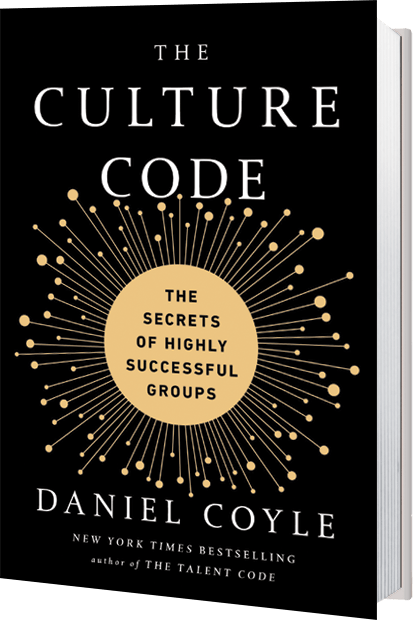
Daniel Coyle shares with readers about this fascinating living thing in his book entitled The Culture Code. “Slime molds are ancient, bloblike organisms made up of thousands of individual amoebae…when food becomes scarce, the thousands of amoebae begin to work together in a beautiful and intelligent way…as if responding to an invisible signal, the amoebae move with single intent toward the center, where thousands of them fuse together into a single organism that starts to move…The whole thing is utterly magical and orchestral, as if some hidden conductor were whispering instructions: You over here, now here, now all together…’The slime molds show us that it’s possible for groups to solve extremely complex problems using a few rules of thumb.’”
Connection between beings through a shared common goal becomes vital for survival whether one is discussing slime mold, honeybees, ants, or humans. “In the case of slime molds, these rules of thumb are as follows: If there’s no food, connect with one another. If connected, stay connected and move toward the light. If you reach the light, stay connected and climb.” Coyle uses the lesson of the slime mold to describe the success restauranteur Danny Meyer’s has created in New York City by using catchphrases which “function as a conceptual beacon, creating situational awareness and providing clarity in times of potential confusion.” The catchphrases develop to unite members of an organization to embrace a shared common goal of serving customers well. “The trick is not just to send the signal but to create engagement around it…He approaches the catchphrase-generating process with the focused verve of a pop songwriter. He generates constantly, testing which ones work. He seeks snappy, visceral phrases that use vivid images to help team members connect.” The lesson of the slime mold is that when the amoebae work together through common communication, they accomplish something larger than they could alone and are nourished in the process. Organizations should work the same way.
Whether it’s using phrases like Bump the Lamp or an organization’s core values, these phrases become a part of the culture and can unify a team, connecting through communication in a unique but powerful way. Coyle uses many examples from the SEALs to the New Zealand All-Blacks where leaders “focus on creating priorities, naming keystone behaviors, and flooding the environment with heuristics that link the two…“At first encounter, a heuristic-dense culture feels slightly off-putting…’It’s all hokey and corny. And then you start to see how they work, and you start using them in regular life. Then all of a sudden, they’re not corny-they’re just part of the oxygen.’” Catchphrases become a link of connection which creates a sense of belonging that all humans crave.
So, taking the lesson of the slime mold, organizations and teams who desire to flourish and achieve success in a unified manner can utilize catchphrases, or common values, to improve their culture. Moving beyond wins and losses, sales goals or bottom lines, teams can successfully flourish through a deep connection with one another as they are challenged to depend on each person to do their part. I’ve personally witnessed the creation of a desired team culture using this strategy at Union through our women’s volleyball team. If you have ever been part of a group, whether a team or family, I hope you’ve experienced this as well.
Coyle’s book is rich with ideas beyond the slime mold that I will continue to share, and I think the concept of creating a specific culture provides a foundational element to our discussion on creating relational equity for personal and professional success. Does your family, department, or organization have some catchphrases that have emerged as a part of a keystone habit that is recognized by all? Please share in the comments below.
References:
Buford, B. & Blanchard, K. (2004). Finishing well: The adventure of life beyond halftime. Grand Rapids, MI: Zondervan.
Coyle, D. (2018). The culture code: The secrets of highly successful groups. New York: Bantam Books.
Graham, B. (2011). Nearing home: Life, faith, and finishing well. Nashville, TN: Thomas Nelson.
 Flourishing @ Life
Pingback: For Others – Flourishing @ Life