
If I requested that you provide a definition for the term “remix,” what explanation would your mind evoke? For most of us, our immediate response would be musically focused. In her book, The Remix, Pollak states, “In music, of course, a remix is a song, usually a well-known classic, that has been changed from its original state by a new artist who adds, takes away, or alters the original in some way to create something both recognizable and entirely new.” One of my favorite remixes is Will Smith’s 1997 “Just The Two Of Us,” but given enough time, I’m sure I would manage to remember a few more.
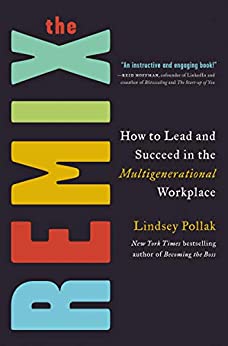
Moving in a different direction and away from music, let’s consider the term from an organizational culture mindset, whether that organization is a church, a school, a workplace, or a volunteer group. Pollak outlines what she describes as “the secret sauce-the strategy I have observed again and again across a wide variety of industries and company sizes-involves a combination of keeping the best, ‘classic’ workplace practices of the past while simultaneously embracing more modern and innovative approaches to work. It mixes the ‘old’ and the ‘new’ in positive ways. The best way I’ve found to explain this approach is with an analogy from far outside the realm of business, in the world of music. It is the remix.”
Pollak offers her readers a Generational Remix to guide leaders on strategies to succeed in the multigenerational workplace. Bringing the remix from music to business, Pollak states that “the remix is a positive approach to organizational change that takes practices or habits embraced by a previous generation (Traditionalists, Baby Boomers, and/or Generation Xers) and adds to, removes from, or alters them in some way to better appeal to Millennials, Gen Zers, and future generations to come so we can all succeed together. The result is a workplace that mixes, matches, and blends the best of each generations’ ideas and practices to design a smarter, better, more inclusive experience of work for everyone.”
In the discipline of organizational leadership, you might be familiar with the term best practices where a strategy, supported by evidence such as research, expert opinion, field experience, and theoretical rationale, is implemented in order to achieve success for that organization’s goals. What Pollak is offering to leaders is a list of best practices which help all generations to flourish in the workplace. Rather than doing something the way it has always been done, there is intentionality given to whether that practice should be altered or removed. With the recent shift to working from home due to the COVID pandemic, could this be an optimal time to assess organizational practices to uncover What is Truly Essential and remix the current workplace?
One of the outcomes I am most optimistic about, as employees and church members return from activities at home, is that generations will find more commonality. Mirroring the research shared in the blog post entitled A Flourishing Generation, Pollak offers, “To be a remixer is to see today’s unprecedented generational change not as a challenge but as an opportunity.” With a positive outlook, Pollak offers some ideas for remixers that any organization could implement without altering fundamentals such as “meaning, purpose, good leaders, professional growth,” but taking into consideration “how each generation expresses these needs and expectations.”
Before returning to all the methods used prior to COVID-19, what if we embraced this perfect opportunity to blend, to remix, the best practices established during our contactless, work-from-home experiments into our churches and workplaces when restrictions are no longer required? I’m convinced that if our educators who never used technology previously can become experts at Zoom, then there is hope for integrating best practices which unite all generations to succeed in the days ahead.
Have you witnessed some best practices that serve as a Generational Remix uniting, rather than dividing, the various generations currently existing in our organizations? Please take the time to share in the comments below.
Reference:
 Flourishing @ Life
Pingback: Appreciating Differences – Flourishing @ Life
Pingback: Pot Roast – Flourishing @ Life
Pingback: A La Carte – Flourishing @ Life
I have recently become fascinated with the differences from one generation to the next. As we discussed in a PEWS-113 class earlier this year, there is a noticeable shift in the behaviors and habits of people born even one year apart over a change in generations. Lately, with the Gen Z trend of mocking Millennials and Baby Boomers alike, the focus on the generation gap has been exacerbated, causing people to look on other generations with disgust.
My dad is a Baby Boomer by the calendar (he was born in 1946) but a member of the Silent Generation by behavior, because he was raised in a family where all of his siblings were of the Silent Generation. Therefore, he is able to bond with both crowds, bringing harmony between the generations. Perhaps what is needed is for people to spend true bonding time with members of other generations in a non-work environment where they can recognize their common humanity.
LikeLike
Pingback: Pivot – Flourishing @ Life
Pingback: Buried Pipes – Flourishing @ Life
Pingback: Devaluing the Past – Flourishing @ Life
Pingback: Stay Interviews – Flourishing @ Life
Pingback: Surreal Experience – Flourishing @ Life
Pingback: Gen Beta – Flourishing @ Life
Pingback: Singles Conference – Flourishing @ Life