
Examining McHugh’s A Listening Life and his perspective on the importance of creating a Habit of Awareness through listening well, I was amused by his descriptions of a “few of the usual suspects in the ongoing case of bad listening.” His turn of phrase here reminded me of long-ago days of combing the book stacks of the library in search of an unread Nancy Drew mystery. Growing up reading these mysteries, there seemed to always be the Case of Something (the Twin Teddy Bears, the Creative Crime, Artful Crime). Perhaps this interest in walking through the steps of Nancy’s investigations was an early indicator of my Enneagram 5 classification, but I relished her identification of clues and suspects as she solved the case.

Introducing McHugh’s work in the post entitled A Listening Life, I hope to now share his humorous approach on what I call the Case of the Bad Listener. Let’s see if you can identify any familiar bad listeners in your life:
Suspect #1: The One-Upper – “’You think that’s something? Let me tell you about what happened to me last week!’ Here the listener sits quietly through the other person’s story only to try to trump them with a better, more interesting story. It’s a competition more than a conversation.”
Suspect #2: The Sleight of Hander – “’Uh huh, that’s great. But what I really want to talk to you about is . . .’ Listening lulls the speaker into a false sense of security so that they don’t see the trick coming, namely, what the speaker’s agenda is for the conversation.”
Suspect #3: The Inspector – “’Didn’t you say last week that . . .’ The listener asks a series of questions, usually closed-ended questions, in a way that feels like a detective questioning a suspect, trying to lure him into a confession. Listening is the lightning before the thunder, the burning fuse before the boom.”
Suspect #4: The Projector – “’I’m totally dealing with the same thing!’ The listener projects his problems onto the speaker, and then projects his solutions onto the speaker’s problems. The projector sees himself in every conversation.”
Suspect #5: The Hijacker- “You have to give the listener credit with this one: at least he’s honest and doesn’t even pretend to use what the speaker said as a steppingstone. He refrains from speech while the other person talks and then just starts talking about whatever is on his mind, as though they are two deaf ships passing in the night. I’m reminded of a quote I heard once that says most people do not dialogue; they perform a monologue in the presence of another person.”
Suspect #6: The Mechanic – “’Here is what you need to do.’ This person listens like a mechanic listens to a sputtering engine, trying to diagnose the problem so she can fix it. Contrary to popular cultural thinking, both men and women are guilty of this one.”
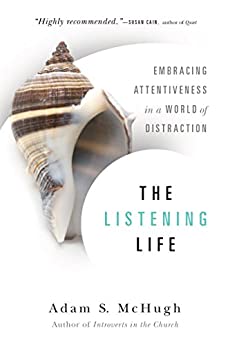
McHugh continues to share other usual suspects where your mind conjures up images of conversations that have occurred in your life. The challenge we are being asked to consider is how others would describe us as a listener. Are we a good listener or do we fit one of the suspect descriptions above? Many people are even confused as to what it means to be a good listener, considering silence to be the answer. “The problem is that silence and listening are not the same thing. Listening is not what you do when you don’t know what to say. True listening is an internal matter; only the listener can truly know in a given moment whether they are listening. You can easily play the part of listening without becoming a listener.”
So, if Nancy and I were to work diligently to solve the Case of the Bad Listener, would you be eliminated as a suspect because you embrace the listening posture of a skilled listener? “A skilled listener will respond accurately and directly to what has been said, and her questions will flow organically from the conversation itself, not approach it as strangers.” I encourage all of us to be intentional about how we approach listening to others and to read more suggestions from McHugh on how to develop this important habit. Please feel free to share in the comments below any descriptors you would add to the suspect list.
References:
McHugh, A.S. (2015). The listening life: Embracing attentiveness in a world of distraction. Downer’s Grove, IL: Intervarsity Press.
 Flourishing @ Life
Good stuff!
LikeLike