
Several years ago, my attempt at a pilot program designed with the objective of encouraging our sport management students to broaden their familiarity of the sport industry, (especially to encompass sports outside of the one they presently identified with) was met with a mediocre response from leadership and students. With an approach more akin to checking off a to-do list rather than engaging with the professionals who embody the wisdom they will need to thrive in life, students fulfilled the obligation without expressing much initiative. On the opposite side of the aisle, whether due to ineffective communication regarding expectations on my part, or a lack of desire or time, the response from the sport professionals was lackluster as well. As I watched a desire for students to have an impactful experience, one that mirrored my own transformational encounter within intercollegiate athletics, die a slow death, I sought answers to this lack of success.
Optimistically, the vision for the pilot program had been to support our athletic program in staffing needs, allowing students valuable experiential learning, and at the same time, embracing this concept of hospitality with a First to Help attitude. Due to technology and generational characteristics, such as a fear of missing out (FOMO), unless they were provided specific step-by-step instructions, the Gen Z students struggled with initiating interactions and having an awareness of tasks that needed to be completed. What I viewed as a vast learning opportunity appeared to them as a threat, shining a light on what they did not already know about sport management. Rather than choosing to Get Better, many students opted for a good enough mindset.
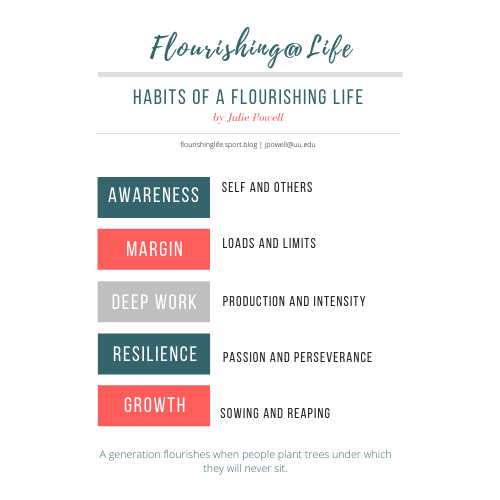
Hindsight is always 20/20, and with the pilot program now buried in the cemetery, it’s easier to view these failings with a different perspective, as the one I stumbled upon from the leadership guru John Maxwell in Everyone Communicates, Few Connect. The First to Help mentality is the mantra that I wish our students would aspire to and is a foundational element to creating a Culture of Hospitality where deep connections are made that open doors to a potentially flourishing life, career, or at a minimum, at least an experience. What Maxwell describes emphasizes a key component in developing a Habit of Awareness which comes in the form of situational awareness.
Organizations, and the personnel within, that utilize situational awareness to be the initiator in fulfilling a need rather than reacting to a request, are the ones that stand out among the crowd. Although Maxwell’s statement was intended to address communication issues, it also applies here, a “willingness to expend energy to initiate connection is important. Be the first to help. It’s very simple but also very powerful. Anytime in life that we find ourselves in need of assistance and we get some help, who is it that we remember most? It’s usually the person who helps us first…We are usually very grateful to the person who makes the effort to help or include us.” Seeing a need (situational awareness) and being empowered by the organization to initiate solutions is just one of the reasons organizations like Southwest Airlines stand out to customers.
Deep in my heart, I believe this is an essential skill that can be cultivated in our students and I would appreciate hearing ideas on how to effectively accomplish the goal of encouraging the First to Help mantra. Maxwell shares, “A Jewish proverb says, ‘The wise does at once what the fool does at last.’ Too often, we wait for the ‘perfect moment’ to initiate with others. It has been my experience that the perfect moment never arrives…Offering to help someone means risking rejection. Giving to others can lead to misunderstanding. You won’t feel ready or comfortable in those moments. You just have to learn to get past the feelings of awkwardness or insecurity…The people who connect with others are the ones who go ahead and do what the rest of us never quite get around to.” (And I will address the issue of a Round Tuit in a later post!)
Please feel free to share any ideas or examples below where you have witnessed a demonstration of being First to Help.
References:
 Flourishing @ Life
Pingback: Round Tuit – Flourishing @ Life
Pingback: Teach Me – Flourishing @ Life