
Creative and resourceful people who are adept at Finding New Wa(ze) of accomplishing routine tasks amaze me! At times, I consider myself fairly “crafty,” in that my brain will conjure new applications for established methods or see an approach that involves tweaking a long-standing process; however, creating something truly original is highly unlikely. As I uncover research on environments that allow creative and innovative people to flourish, along with the numerous times that failed experiments produced new inventions like Post-It Notes, I’m encouraged that emerging generations will continue to Find New Wa(ze) to approach all facets of life.

Now, for those readers who might be wondering how an educated person could misspell the word “ways,” there is an app named Waze for the smartphone that uses crowd-sourcing to provide optional navigation routes to avoid accidents, law enforcement, and other issues that might delay reaching a destination. Some might call the app an upgrade to the standard GPS installed on automobiles, but it offers one more example of how creative people invent products or processes that save us time, effort, and money. Look at how education has been forced into Finding New Wa(ze) to function in the last few months. Educators navigated the switch from a physical space to a virtual one in a matter of weeks. We’ve all had to embrace new ways of purchasing groceries, engaging with friends, and filling leisure time without organized sports.
One of the most intriguing notions I’ve read recently comes from a ten-year-old book from John Maxwell that applies just as much today as it did in 2010. Maxwell offers vital advice for Finding New Wa(ze) to connect with the people in our life in order to increase our influence. Sharing the theory of why it is so critical, not only to communicate well, but to actually connect with others, Maxwell’s strategies and suggestions may be even more relevant with emerging generations as they become more dependent than ever before on a virtual culture- an environment which creates unique obstacles and distractions to truly connecting with those around us, whether in a personal or professional setting.
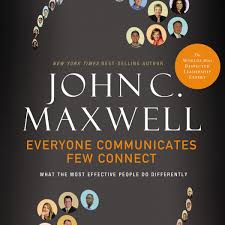
Building upon Maxwell’s connecting principles, Carey Nieuwhof and Bryan Miles reveal in their podcast, strategies leaders might implement to improve connection and communication when teams/organizations are no longer inhabiting a shared physical space. Addressing applicable issues such as Finding New Wa(ze) to engage in robust conversations through technology and to develop the skill of responsiveness in communication, Nieuwhof and Miles speak frankly about what organizational culture may look like in the very near future. Embracing (rather than resisting) new approaches and Finding New Wa(ze) to conduct a team’s business is currently knocking on our front door.
From Finding New Wa(ze) to educate our students, to navigating new technologies at work and play, creativity and ingenuity may become the new essential attributes regardless of a person’s vocation. When and where have you witnessed inspired creativity in Finding New Wa(ze) to approach daily life? What examples have resonated with you where people have discovered unique methods of communication and connection? Or, for those of you in emerging generations, what techniques do you see becoming a part of your normal life that did not exist a few years ago? Please feel free to share your relevant thoughts in the comments below.
References:
 Flourishing @ Life