
Many of you can surely relate to this statement, “I’ve never failed a class in my life!” As a diligent student through all levels of education, I embrace learning and have an insatiable sense of curiosity about people, concepts, ideas, Scripture, and even how things work. However, I’m currently failing at a task, and based on the actions of the world around me, I’m not alone in this failure. Although I am well educated on its benefits and it commonly appears repeatedly in the research on developing a flourishing life, my aim seems to continually miss the mark on this issue. Not the only subject I can’t seem to master, but one that seems to haunt me the most. So, here in this post, I admit that I am flunking gratitude.
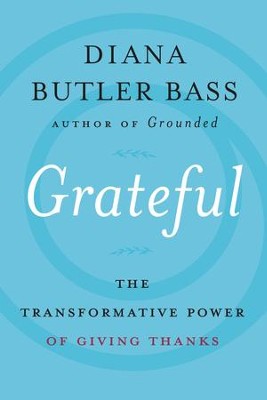
As Diana Bass points out in her book entitled Grateful, “We believe gratitude is virtuous. We might experience gratitude in a given moment…But inwardly, we know how difficult it is to practice and sustain thanksgiving-to live a truly grateful life…There is a gap between what we believe and what we practice” leading us to experience a Gratitude Gap. Since being challenged by pastor Andy Stanley years ago when I heard him say, “unexpressed gratitude is ingratitude,” I have been challenged to be authentic and intentional about expressing my thankfulness to and for others; however, it is much more difficult to embrace gratitude on a deeper level. The depth of gratitude that Bass describes as “a spiritual awareness” and more than just “a social structure of gift and response.”
Similar to my pilgrimage to uncover the components of a flourishing life, Bass shares her “journey from ‘no thanks’ to a more grateful life.” Repeatedly in my readings, researchers share of transformational encounters people have when they begin the exercise of creating a gratitude journal or diary. Bass shares the struggle of how, at first, the exercise “became a kind of list of the benefits of being a middle-class white person,” but expanded to something much deeper. Rather than feelings of gratitude being “consigned to life’s caboose” after receiving a gift, Bass shares, “To feel gratitude is not the caboose of some faith train. It is the beginning. To feel appreciative awareness of our own lives-and feel that awareness of the lives of all those around us-is rather like being reborn, as we look at ourselves, our experiences, and the world with eyes of surprise and wonder.”
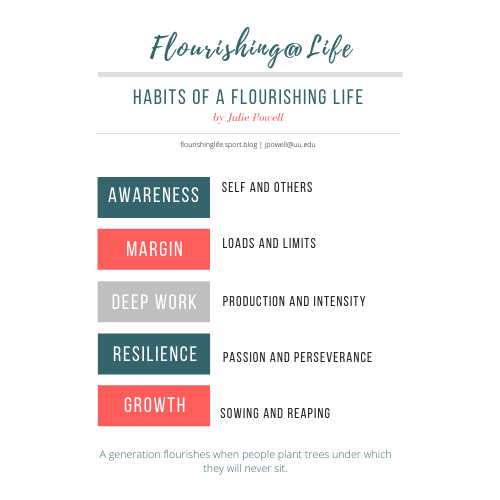
As a follower of Christ who often struggles with faith over feelings, I appreciate how Bass asks readers to think of gratitude as more than an emotion or feeling. Emotions “move like winds through our lives. They depend on what we have eaten or how long we have slept.” Instead, Bass encourages us to cultivate a Habit of Awareness where gratitude is a “disposition that can be chosen and cultivated, an outlook toward life that manifests itself in actions-it is an ethic. By ‘ethic,’ I mean a framework of principles by which we live more fully in the world. This ethic involves developing habits and practices of gratefulness that change us for the better. Gratitude involves not only what we feel, but also what we do.”
We know from the research of social scientists who extoll “gratitude as a personal path to peace, health and contentment” that it is also “socially beneficial and strengthens communities.” We read from organizational leadership, like Gostick and Elton, the important role gratitude plays in employee engagement. We witness devastating stories of heartache and pain in the health-care community that are transformed into “being a time of profound happiness, deepened courage, and new self-awareness.” Intellectually, I am aware of all of these examples of how developing a habit of gratitude changes a person, and yet, still I remain a gratitude klutz.
So, I hope you will hold me accountable to embracing a new habit of gratitude in my life. Being challenged by Marshall Goldsmith to embrace behavioral change as an adult, I will diligently seek opportunities to close the Gratitude Gap by practicing gratefulness whether that appears in the form of expressing gratitude to my students for allowing me to be their guide as they learn about specific topics, or whether it means opening my heart towards others by Being a Good Neighbor. Developing this new habit, I hope, will alter my sense of time, both Chronos and Kairos. I hope it stretches through my “experiences-past, present, and future-creating a fabric of appreciation and awareness that forms the story of [my life].”
References:
Bass, D.B. (2018). Grateful: The subversive practice of giving thanks. Harper One.
Gostick, A. & C. Elton. (2020). Leading with gratitude: Eight leadership practices for extraordinary business results. Harper Business.
 Flourishing @ Life
Pingback: Unexpressed Gratitude – Flourishing @ Life
Pingback: Whine or Worship – Flourishing @ Life
Pingback: Feeling Entitled – Flourishing @ Life
Pingback: Noticing – Flourishing @ Life
Pingback: Vanishing Virtues – Flourishing @ Life