
In the process of developing healthy habits which might lead to a flourishing life, the topic of willpower often arises, but it seems to be most frequently associated with exercise and eating choices. We have the knowledge that wise decisions in this area of our life will have compounding interest on our health, but because American society is provided with such easy access to a plethora of meal options, it can become an obstacle to overcome. As a result, a person might exhibit what we call Decision Fatigue by falling back into unhealthy habits because they are overwhelmed with Too Many Choices. This concept of Decision Fatigue is not only plaguing our food choices but is entering into many domains of our lives today.
In her book The Flourishing Teacher, Christina Bieber Lake, defines Decision Fatigue from the perspective of an educator. “The primary reason for willpower depletion, especially for those of us in any kind of judgment-making professions like law, management, or education, is something called Decision Fatigue. The more decisions you have to make throughout the day, even simple ones, the less willpower you have to resist the glass of wine or pint of ice cream in the evening.” Lake suggests mirroring a study by Baumeister and Tierney, who investigated judges and parole decisions, with educators who are grading papers. “Assessment involves making countless truly subjective decisions…It is exhausting, and we need to remember that.” Lake recommends finding practical solutions to prevent Decision Fatigue from impacting all areas of our lives by implementing Guardrails for protection.
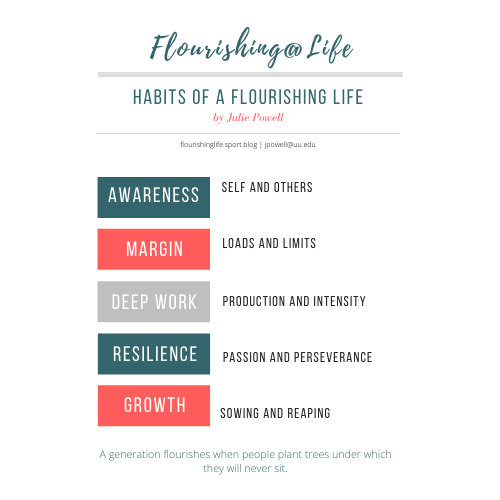
“Since we cannot change the decision-heavy nature of the work that we do, it is important to build systems [Guardrails] that demand fewer decisions in areas where we don’t need to make them,” offers Lake. She recommends deciding some things ahead of time such as when you will grade, what you will wear, and what you will eat. What I love about Lake’s suggestions is that they connect to all of the Habits of a Flourishing Life such as Awareness, Deep Work, Growth, Margin, and Resilience. She also advocates that “it is essential to call out to the Lord for help, and there is no substitute for surrendering to God. But it is also useful…to investigate all of your habits from the inside. The only way to get rid of a bad habit is to identify their cue and reward system, and then to find a Christ-centered, life-giving replacement for them.”
Although I had read these insightful words from Lake in January of 2020, it wasn’t until I heard Andy Stanley discuss Decision Fatigue that it really explained the exhaustion I was feeling after a long, fall semester of constant decision-making surrounding the issue of COVID. Rather then making a few, select adaptations to a semester course schedule, there were daily decisions required depending on who would actually be attending class because of quarantine. What had been planned for a class the day before often required a pivot the next morning in response to emails from overnight communicating students’ absences from class (and yes, that is plural). In a podcast explaining why Stanley’s leadership team had made the decision to not hold in-person church services until January, he offered the reality that Decision Fatigue was a significant part of their decision. The team explained that by making one big choice early on in the pandemic, his staff would be able to focus clearly on how to create a virtual environment rather than constantly pivoting between what type of service would happen each and every week. By removing the in-person option, fewer decisions were required to achieve the church’s mission. This explanation offered, for me, affirmation for why my experience between the spring semester, where we went completely remote, was not as stressful as the fall.
Many people, including pastors and educators, are working much longer hours during the pandemic than usual. “Churches [and schools] have transitioned through a seesaw of onsite and remote [options] in response to fluctuating COVID infection rates,” shares Diana Chandler. In careers which were already decision-heavy, employees were being asked to make even weightier decisions about how, not only to continue their work, but also the consideration of the health and well-being of those they love. Our bodies were not designed to remain in this fight-or-flight stress mode for extended periods of time, thus, the toll that Decision Fatigue carries leads to exhaustion.
Mirroring the sentiments shared by Blake, Stanley, and Chandler, Tim Elmore echoed the same sentiment of Decision Fatigue in a webinar about leading when you feel like leaving. Many people working with emerging adults are experiencing this exhaustion from a personal and professional perspective. It’s almost been a relief to hear someone say, “You Too?” Knowing that this exhaustion is a shared experience may not help us make wise eating decisions, but it does validate the importance that planning can have when our goal is to create healthy habits for a flourishing life.
Have you experienced Decision Fatigue lately? If so, please share in the comments below how you managed to overcome your exhaustion and rally for a healthier life.
References:
Chandler, D. (2021, January 25). “Pastors express ‘decision fatigue,’ ‘ministerial frustration’ as COVID-19 pandemic lingers.” Baptist Press. Retrieved from https://www.baptistpress.com/resource-library/news/pastors-express-decision-fatigue-ministerial-frustration-as-covid-19-pandemic-lingers/
 Flourishing @ Life
Decision fatigue is definitely an issue that I deal with in many areas of my life. Deciding what I’m going to wear, what I’m going to eat, what assignments I’m going to complete first, what chores I’m going to complete, and when I’m going to get errands completed are just a few of the many items on my to-do list that make decision fatigue happen to me. Planning when and how I am going to accomplish some of these tasks has lessened the severity of decision fatigue for me. However, if I don’t accomplish all of the things that I need to accomplish, I get super stressed and overwhelmed. This usually results in feelings of defeat and failure and leads to having less productivity in accomplishing other things. Something I have been prayerfully doing this semester is learning to say “no” to unrealistic demands and trusting God in making decisions.
LikeLike
Pingback: Red Flag – Flourishing @ Life