
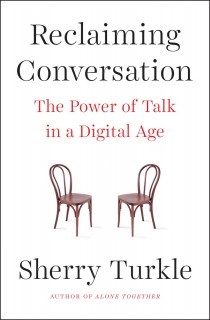
Even if I opt not to create tally marks across a sheet of paper using a pen, I’m probably mentally calculating how often I hear the phrase “Wait, What?” spoken in the conversations around me. Because we live in a culture suffering from Continuous Partial Attention, I believe the frequency of this phrase being uttered is increasing. In her book Reclaiming Conversation, Sherry Turkle shares with readers the results of her research on communication in the digital age, and one of “the most commonly heard phrases at dinner with friends is ‘Wait, What?’ Everyone is always missing a beat, the time it takes to find an image or send a text.”
Once upon a time, “Wait, What?” may have been most frequently heard among the older population who were losing their hearing as a part of the aging process (Just read posts about my experiences in Campers on Mission). However, today I’m hearing “Wait, What?” spoken with increased frequency among emerging adults who consider themselves to be effectively multitasking, and what “we can do on our digital devices makes us feel good immediately. What our brains want is new input—fresh, stimulating, and social. Before technology allowed us to be anywhere anytime, conversation with other people was a big part of how we satisfied our brains’ need for stimulation.” This sense of Continuous Partial Attention has become so normal that Turkle shares “when senators are comfortable saying that going “elsewhere” is normal during a hearing on the crisis in Syria, it becomes harder to expect full attention from anyone in any situation, certainly in any classroom or meeting. This is unfortunate because studies show that open screens degrade the performance of everyone who can see them— their owners and everyone sitting around them.” What we appear to be doing is “editing out the boring bits” of conversation that we find dull and unstimulating.”
What Turkle, and many other authors recommend is that Reclaiming Conversation begins with reclaiming our attention. “These days, average American adults check their phones every six and a half minutes.” If you aren’t aware of just how much our smartphones have become a central focus in our culture, then explain why manufacturers are placing cell phone pockets on lawn chairs, so we don’t use up the cup holder space? So, imagine how often a loved one, sitting at a child’s sporting event, might be missing Defining Moments by not providing their undivided attention. Or, even more concerning is the fact that “[f]orty-four percent do not “unplug,” ever, not even in religious services or when playing a sport or exercising…and that “during the dinner hour, the typical American family is managing six or seven simultaneous streams of information.” This preoccupation with what is happening elsewhere is not new; however, our digital devices can easily manipulate us if we aren’t careful to intentionally decide ahead of time what our Digital Philosophy will be.
So, perhaps a solution to the “Wait, What?” problem is to Reclaim Conversation. “To converse, you don’t just have to perform turn taking, you have to listen to someone else, to read their body, their voice, their tone, and their silences.” Turkle’s solution mirrors the ideas of a Listening Life and Humble Listening while also sharing that colleges are now offering “courses on conversation. The curriculum includes how to pay attention to someone on a date. How to disagree with someone politically.” This struggle to converse expands even further for emerging adults during job interviews. “Most applicants are prepped for one conversation. And then at the end, I tell the potential recruits that their homework is to organize what we’ve discussed and from that make an agenda of interesting themes for our next conversation . . . hopefully tomorrow or the day following. They are stunned. They look like deer caught in the headlights. They don’t want to have another conversation. They were hoping for some follow-up emails.”
“We are at a crossroads: So many people say they have no time to talk, really talk, but all the time in the world, day and night, to connect. When a moment of boredom arises, we have become accustomed to making it go away by searching for something—sometimes anything—on our phones.” Uncertain where you fall on the digital device spectrum, all I ask is that you consider how virtuous your conversations are and if there are strategies you might implement that would impact those people within your sphere of influence.
Please feel free to share in the comments below effective strategies from your own life that you have found improves conversation.
Reference:
Turkle, S. (2015). Reclaiming conversation: The power of talk in a digital age. Penguin Press.
 Flourishing @ Life