
Life is not a game, so why are we continually Keeping Score? Pondering this weighty issue reminded me of a time many years ago when I was teaching an adaptive physical education course, and while we were playing a game in the gym, one of the student athletes, by the name of Mary Kosco Greer posed the question, “How do we know who wins?” You see, we weren’t Keeping Score in this particular instance because the purpose was to engage all students in physical activity, not to determine a winner or loser. I laughed at this question, understanding that for an athlete, especially one as gifted as Mary, we do typically participate with the goal of being declared the winner at the end of the game.
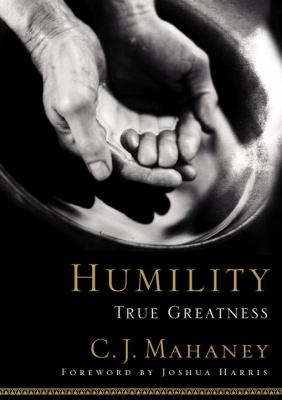
This week as another academic year came to a close, I sat reading C.J. Mahaney’s Humility and my spirit was convicted that over the last few years, I’ve allowed the world’s measure of success to overshadow what is important to God. Rather than embracing the spirit of why we need to measure specific criteria, I’ve allowed myself to succumb to the Comparison Trap of what the world measures as success; and for me, this is where pride takes over and I become so rigid in documenting all that I’m doing in order to prove my worth, that I’m blinded to the true reason behind all these activities, which is to love my neighbors, which in this case, means our students.
You see, God doesn’t Keep Score, and I am oh so grateful that He doesn’t, instead He offers me grace for the times that I succumb to the Comparison Trap, that I allow pride to take over, and I think it’s time for me to take a deeper look into Changing the Metrics for what I measure as success in my role as a college professor.
As if I wasn’t struggling enough with the tension between our culture’s emphasis on productivity versus fulfilling God’s commandments to love Him and love others, my devotion this morning led me to Romans 8:13 where I was reminded that I need to “put to death the deeds of [my] sinful nature.” Well, I can’t speak for anyone else, but my sinful nature lends itself to pride, and the current pressure I feel to produce, present, and publish moves my mindset away from the definition of humility that Mahaney shares with us and towards Keeping Score. Mahaney reminds me that, “Humility is honestly assessing ourselves in light of God’s holiness and our sinfulness,” and “when it comes to the values [I] live by, what will others say about [me] one day? Will they testify that humility characterized [my life]” or was I too busy Keeping Score?
For over two years I have embraced this pilgrimage to determine what characterizes a Flourishing Life. The research has added content to my courses, it’s opened my eyes to appreciating differences, it’s allowed me to grow spiritually, yet I recognize that some people may view this journey “only” as a hobby, not the life transforming process that it has come to be. So, today, I am surrendering the mentality of Keeping Score. Rather than embracing the world’s view that a higher score (accumulation and accomplishment) is more valued than less measurable criteria, I am going to attempt to shift my focus more on the cross than my curriculum vita. If the process of assisting students in Finding Their Flame or helping new managers connect to Emerging Generations doesn’t have a scoring metric, then I will choose to embrace that perhaps the purpose is not in Keeping Score to document an activity, but more about the relationships that were formed with the people involved.
Like one of my favorite Kevin Costner characters, Ben Randall, addresses in the movie The Guardian, he learned to Keep Score differently than others, rather than his number of saves as a rescue swimmer, he felt it was just as important to focus on the times where he failed. Perhaps the challenge before me now is to consider a different approach to measuring the success of a college professor, and I’m not certain the best model currently exists. In an ideal model, I see God preferring to be more focused on asking me, “Who am I producing?” rather than “What am I producing?” Who have I failed to save because I was focused on the wrong aspect? Perhaps a better way to Keep Score is focus on the who rather than the what.
We all have specific metrics that are in place to measure how well we handle the responsibilities placed before us, and to determine who advances within an organization; therefore, I recognize the need to Keep Score. But there is a part of me that wonders and dreams, through the lens of Appreciative Inquiry, is there a better way to accomplish this goal in a way that serves our God-given purpose? Please feel free to share your ideas for positive ways we can approach to Keeping Score.
References:
Mahaney, C.J. (2005). Humility: True greatness. Multnomah Books.
 Flourishing @ Life
Pingback: Changing the Metrics – Flourishing @ Life
Pingback: Flourishing Mindset – Flourishing @ Life
Pingback: Fame or Legacy – Flourishing @ Life