
The field of psychology, especially when studying human performance and Team Chemistry in sports, blows my mind! No, really–the research, the neuroscience, the social implications—all of the areas in which understanding behavior can be applied is fascinating. Exposure to the discipline, for me at least, tends to lean towards applications in the world of sports, but we’re all associated with teams each and every day, whether it’s in the context of our family, our vocation, or our community; and in each of these relationships, Team Chemistry matters.
Consider these questions: What would happen to the Team Chemistry in your family if you failed to remember a significant event like your spouse’s birthday or your wedding anniversary? How quickly could a fund-raising event turn disastrous if the volunteers failed to complete their assigned tasks? Would you witness a drop in workplace morale if colleagues continually allowed their responsibilities to fall onto the shoulders of others? And of course, there are all the sporting examples, where the presence (or absence) of Team Chemistry impacts how successful a season turns out to be.
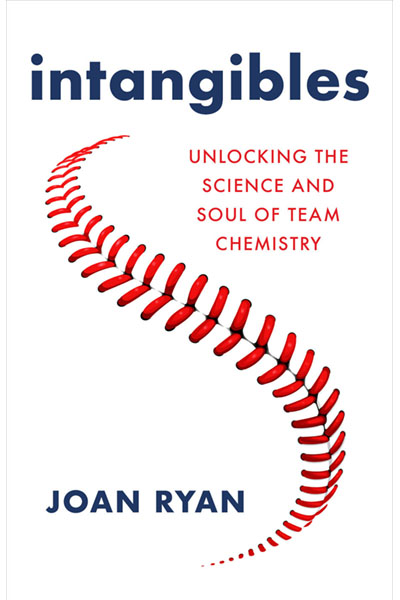
Introducing Joan Ryan’s book Intangibles in the post Exemplar of Selflessness, I return to her work again, where she introduces us to the idea that there exists, what she calls archetypes, on sport’s teams that impact how well a team will perform. Although her specific examples come from her background as a sports journalist, Ryan makes insightful applications to the world of business, education, and many other areas where we are asked to engage with others to reach a shared goal, to form a team. As I ponder the captivating explanations of Team Chemistry from the perspective of neuroscience, with information about oxytocin, mirroring neurons, and other physiological responses that occur when we make meaningful human connections with others, my mind begins to wonder how can I intentionally apply this information to the teams in my life?
Although I firmly believe that a Hospitable Classroom environment establishes a tone for collaboration among students and faculty, is it really important to cultivate Team Chemistry? Recalling previous class experiences over the years, we did have a group of sport management students I tagged the Fab Five. This particular group of students journeyed through their coursework together, engaged in the content in meaningful ways, fed off each other, challenging each other to be their best. I would define this group as having Team Chemistry that ultimately enhanced the educational experience for all of us involved.
If I were to ask you right now to consider teams you have been a part of, I bet your story would include versions of my Fab Five. I imagine it wouldn’t be too difficult to take some of Ryan’s archetypes and assign actual names from that team, who was the Sage? Who was the Jester? Who was the Sparkplug? And what made those teams and individuals so memorable to us? The Team Chemistry within a department, in athletics, and even on dog sledding teams in Alaska, matters a great deal when attempting to perform at a high level. Understanding the concept of Team Chemistry can prove a little more challenging, but Ryan provides us with her conclusions, “In sports, chemistry is often used interchangeably with camaraderie. In business, it’s often referred to as cohesion. Both are wrong. Camaraderie describes a group’s fellowship. Cohesion describes a state of being. Both are static. Chemistry is active. It produces change in the work product…Team chemistry is an interplay of physiological, social, and emotional forces that elevates performance…Note that team chemistry does not produce high performance, but rather elevated performance. High performance requires a certain amount of talent. Chemistry cannot manufacture talent, but it ignites the talent the team does have, getting the most from every player and boosting performance.”
My hope is that you have a chance to experience what it means to be a part of a group with Team Chemistry. My hope is that you engage fully in the archetype role that you are asked to play and to see that dedication result in a successful outcome. Please feel free to offer any suggestions or comments you have on Team Chemistry in the comments below. Help us navigate this unusual phenomenon.
Reference:
 Flourishing @ Life
Reading this blog post opened my eyes to how much team chemistry could really impact aspects of everyday life, not just in a sports setting. When reading about the “fab five” example, it made me think back to the time in my life when I was striving to become a collegiate golfer. In high school, I had a group of friends some who were my school teammates and some who were not. Throughout high school, we always played together and pushed each other to get better by competing with and against one another. Now, all of us are currently or committed to play college golf, and I think the team chemistry we created in high school is what helped push us all to get there.
LikeLike