
Tomorrow, in a first-year English class, I will pose a question to the class, asking them to compose their personal definition for a flourishing life; and I excitedly anticipate how they will choose to answer this query from the perspective of an Emerging Adult. What I anticipate hearing will be concepts related to personal accomplishments, perhaps an economic status, or even explanations connected to feelings such as happiness, but what I don’t expect is for students in this current Season of Life to associate what they value with how they measure where they fall on the Flourishing Continuum. What I hope to accomplish over the short time of this one session is for college students to consider, and hopefully embrace, what I term a Flourishing Mindset.
For those of us who claim to be followers of Christ, I believe we have an advantage when it comes to defining what a Flourishing Life looks like; we are not left to our own devices to conjure meaning when we begin asking the Big Questions that life often throws our way. We have resources available that guide us on this pilgrimage of life, but even with these helpful guides, sometimes we struggle to develop a Flourishing Mindset because life is hard and challenging. My advice to college students, as well as others, is to consider asking God to provide you with the opportunity to develop the Habits of a Flourishing Life along with the ability to alter your mindset when times become difficult.
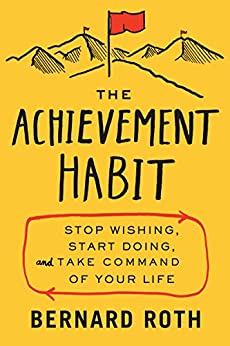
For me, a Flourishing Mindset, might resemble Bernard Roth’s advice for a positive approach, “It’s the opposite of wallowing; it’s allowing yourself to become amused by the terribleness of your situation. You know how some dogs are so ugly they’re cute? This is like that. Think of the metaphors a comedian would use to describe just how bad the meeting is. Write your troubles into a comedic country song. Deliver your own stand-up routine about depression. It’s incredibly empowering to realize that you have the power to change your attitude toward anything. Do you hate washing dishes? If you think about it, there is a lot that is nice about washing dishes. Putting your hands into warm water is soothing. Rinsing and soaping can be a pleasure. And getting rid of a mess and admiring your clean kitchen is always satisfying. Try out a new attitude toward dish washing. You might just find enjoyment in it. ONCE YOU LEARN THAT it is possible to change your habits and develop new attitudes about things, you have a new tool to use in both your professional and your personal life. For most people it is probably easier to change their attitude toward dishwashing than their attitude toward depression. Yet if you start with the small stuff, you will find it easier to tackle the harder stuff in life.”
What I hear Roth describing is what occurs when a person develops a Habit of Resilience, and ultimately a Flourishing Mindset by “reinforcing what you do (your action) rather than what you accomplish, so you can easily recover from temporary setbacks.” As I mentioned in Changing the Metrics and Keeping Score, we have the ability to pre-decide what we will value and how we will measure success on those items. “In life, typically, the only one keeping a scorecard of your successes and failures is you, and there are ample opportunities to learn the lessons you need to learn, even if you didn’t get it right the first—or fifth—time.” What concerns me about our current culture is that because it is so easy to get caught up in the Comparison Trap with everyone’s best days on social media, we forget that achievement is a process, often with many failures along the way. This idea is one of the reasons I embrace Flourishing Thinking, because it’s acceptable to flounder and fail before we flourish at anything.
A Flourishing Mindset, if we apply Roth’s concepts, means that we are “breaking down the fight response and looking at [our situation] as a problem to be solved, then using ideation to bring you to a better place. These steps bring you into a state of emotional well-being [flourishing], in which you regain control over your behavior…We can stop ourselves from getting stuck by practicing [a Habit of Awareness]…this is generally referred to as Mind Over Matter, the main principle behind cognitive behavioral therapy…if we can change our thinking, we can change our behavior.”
We, with our Creator’s help, have the ability to embrace a Flourishing Mindset, which allows us to embrace our failures and continue moving forward in the journey to a Flourishing Life, one struggle, one day at a time. What practices do you implement in your life that might be useful to someone else in developing a positive mindset? Will you please consider sharing in the comments below?
Reference:
 Flourishing @ Life
Dr. Powell,
Bernard Roth’s quote that “It’s the opposite of wallowing; it’s allowing yourself to become amused by the terribleness of your situation,” was such a good reminder. Our attitude toward our environment determines our judgment of the value we place in such circumstances. I appreciate you mentioning the Habit of Resilience. Practicing daily gratitude and shifting our perspective can help us strengthen our ability to flourish. It focuses on the action, not the accomplishment, implementing the mindset that it is not about the destination but the journey of a flourishing life. With that in mind, I love how you mentioned the comparison trap because that is so prevalent in my peer group. When we have an awareness of our problems, without comparing them to others, we can effectively bring ourselves into a place of well-being.
To me, having a flourishing life means being able to endure the not so pretty side of life, not out of obligation, but out of true joy, knowing that the climb is just as important as the view from the mountain top. I learned in my Health Psychology course the art of gratitude. Speaking more kindly (yet realistically) to myself has strengthened my resilience against trials. I needed your reminder to start with the small stuff to find the more challenging things manageable. I tend to want to jump right into the water, but this post has made me ponder a bit deeper and a little longer. We must be mindful of our natural thought processes and be self-aware enough to see how our cognitive decisions dictate our behavior. I implemented the practice of writing down five things I am grateful for each morning. Another thing I do is, as I wake up, I tell myself that I am excited for the day and glad I have another day to learn something new. I have found that I wake up more energized than in previous years. My biggest piece of advice for positive thinking is to not be afraid of becoming your own best friend (something I still struggle to do). Maintain a constant conversation with yourself and adopt the attitude that you would like to be around. This will help you process what you are thinking better and see the situation in a more objective yet kind manner.
LikeLike