
All of us must practice a great deal of discretion when seeking answers on the internet, but even a scholarly researcher often begins their journey with a simple word or phrase search in efforts to begin delving into a topic. After reading Aging With Grace and I Love Growing Older and before composing this post, I made a conscious decision to enter into a search bar the phrase “How to grow old.” Without sharing all the fascinating options and perspectives offered, I did come across an article entitled “How to Grow Old Gracefully: 10 Ways You May Not Have Considered,” which offers some simple and practical advice on the topic; however, I am intrigued by any assistance dispensed because my follow up question is “How do you know how I should approach growing older?” And even more puzzling, “How do I know what to do since I’ve never done it before?” I’m telling you, it would be easy for anyone to find themselves lost attempting to navigate the paths in my mind!
Because we happen to currently live in an American culture that appears to embrace an Anti-Aging Mindset, I admit to experiencing a touch of concern regarding the aging process now that I am entering my fifth decade on this planet. Each year I am reminded that the Emerging Adult population with which I work on a daily basis is becoming younger and younger, and the Generational Gap seems to be increasing into an ever-widening abyss, yet I cannot escape the fact that I am indeed growing older, and if I desire to traverse this path successfully and hopefully equip my students to do the same, there might be a need to find some credible sources to offer us guidance along the way. So, rather than seeking advice from an unknown name on the internet, perhaps we can become learning partners with those who integrate their faith as they enter into the later Seasons of Life.
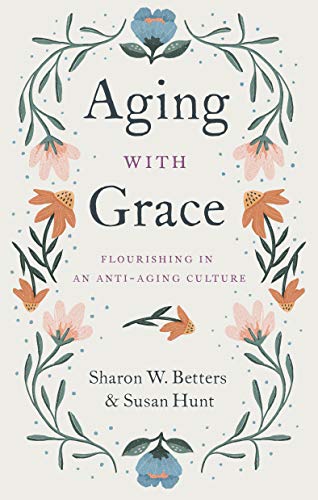
Beginning with insight from Aging With Grace, I offer the authors’ outlook into navigating this Anti-Aging Mindset because as they offer, “Our season for flourishing is fleeting and temporal, but eternity is forever,” so we might be wise to consider the aging process from a spiritual rather than worldly perspective. Susan Hunt shares, “What does God say about aging?’ We studied Scripture and prayed…We were compelled to write what we learned for our generation and theirs. It feels outlandish to write about ending well when we haven’t ended, but we do not write only about what we have experienced; we write about what God’s word tells us.” Sharon Betters adds, “We want readers to truly believe that the Bible gives us not only the promise of bearing fruit in old age, but it also gives us a road map to grow and flourish in this grace.”
Mirroring Betters and Hunt, J. Ellsworth Kalas shares additional thoughts on how to avoid society’s Anti-Aging Mindset in I Love Growing Older, which I have now read multiple times, “Growing older is a process. Growing old is a conclusion. Growing older means that you’re going somewhere, and that in God’s kindness and in your cooperating with God you are taking more of life’s conquests every day. Growing old means that you’ve reached somewhere and that’s it. Older is a journey. Old is a destination. Mind you, I believe in a destination, but my idea of a destination for life is heaven.”
Perhaps, at to no one’s surprise, some of the soundest advice is provided to us from Billy Graham in Nearing Home as he addresses this concept of Kairos time, “…the best way to meet the challenges of old age is to prepare for them now, before they arrive. I invite you to explore with me not only the realities of life as we grow older but also the hope and fulfillment—and even joy— that can be ours once we learn to look at these years from God’s point of view and discover His strength to sustain us every day.”
Although I do not know what will happen in the future with our Anti-Aging Mindset, I am being challenged to think differently, and I will close with a reminder from Kalas, “The goal is not to remain young. The goal is to grow up. And the measure of growing up is that we’ve become better persons…If we have simply grown old, we lose the joy of our human potential. If we see ourselves as a finished product, a person who is already as kind, as intelligent, as gentle and forgiving, and as generous as we’ll ever get to be— well, then, in truth we’re in sad shape. But if we see ourselves as wiser than we were, kinder, more in control of ourselves (even if by minimal measures) and see that we’re still growing (that is, that we’re growing older, not old)—ah, then! Not only are we not the person we used to be, we’re not the person we’re going to be.”
Is there someone in your life who magnifies what it means to fight this Anti-Aging Mindset and lives a truly flourishing life? Will you please consider sharing their story in the comments section?
References:
Betters, S.W. & Hunt, S. (2021). Aging with grace: Flourishing in an anti-aging culture. Crossway.
Graham, B. (2013). Nearing home: life, faith, and finishing well. [Kindle version]. Thomas Nelson.
Kalas, J.E. (2013). I love growing older, but I’ll never grow old. [Kindle version]. Abingdon Press.
Koopman, D. (2021, January 11). How to Grow Old Gracefully: 10 Ways You May Not Have Considered. Life Hack. Retrieved from https://www.lifehack.org/340084/how-grow-old-gracefully-10-ways-you-may-not-have-considered
 Flourishing @ Life
Karen and I sat down with Glen and Gloria Van Andel to ask them how to finish well. They gave us many ideas on leaving a legacy, enjoying each day, and embracing the feelings of getting old. They are good examples of how to grow old faithfully!
LikeLike