
Initially introducing the relationship that we, as humans, have with time, in the post entitled Chronos vs. Kairos, I return to this fascinating topic to discuss the importance of Ordinary Time. During recent readings of Simply Tuesday and Habits of the Household,combined with conversations between colleagues and friends, I am being reminded that the healthy relationship we cultivate with the concept of time is relevant to our efforts to live a flourishing life. Yes, I may have visited all fifty states in my traveling adventures, which required an investment of time, but when I look back to the Defining Moments in my attempts to live a flourishing life, it is usually the routine moments experienced in Ordinary Time or on Simple Tuesdays that were foundational to forming who I am. And it’s this part of the journey, living out the dash between the dates of my birth and my death that lead to true transformation within.
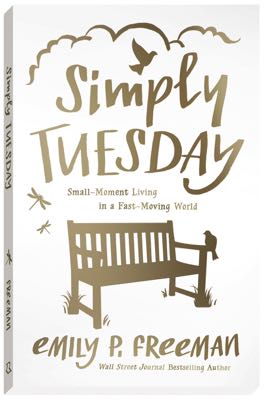
Drawing attention to this phrase of Ordinary Time, author Emily Freeman shares, “We already know that most of life is ordinary without it being something official. But when I learned that these ordinary days of life had a name, when I learned that someone decided to mark not only Advent and Christmas, Lent and Easter but all the days that come between—that meant something to me, even if they are labeled as ordinary.” Adding to this understanding of time, Mary Armore offers, “…Ordinary Time can be viewed as the dash in the yearly liturgical life of the church…While the great festivals of Christmas and Easter are truly Defining Moments in the spiritual life of all Christians, as are one’s birth and death, it is within the dash of Ordinary Time that we experience particular solemnities and feast days that present us with marvelous opportunities to deepen our relationship with the Lord, opportunities that invite us to spiritual transformation and discipleship in our daily lives.”
Keeping these explanations as a lens through which to view what it means to live a flourishing life, Freeman suggests that we “stop running from Ordinary Time but begin to sit in the midst of it.” Sit in the midst of the sixth week of a semester? Sit in the midst of a Simple Tuesday with piles of laundry and dishes? Sit in the midst of August, the month that holidays forgot? Sit in the midst of the twentieth time you’ve taught this lesson on sport security? Yes, even in the midst of all this Ordinary Time, God is asking us to cherish the “seeing, embracing, and learning from our whole life, not just the pretty parts…The truth is, the moments may be boring. In the scope of life, they may not have much impact on the course of things or the decisions we make. But learning to live well in Ordinary Time isn’t a call to elevate moments; it’s a call to draw close to Christ.”
Maintaining this view of Ordinary Time, we can take the practical suggestions from Justin Earley in Habits of the Household and remember that “our greatest moments of meaning are hidden in the ordinary ones.” Or to consider the perspective from Ted A. Smith when he notes, “All of these practices remember that Ordinary Time is not a dull void that waits to be filled, improved, or put to use. It is a kind of emptiness. It is the emptiness of open, ordinary days on the calendar. It is the emptiness that refuses human attempts to corral time too closely, to pretend that we can shape time always to our own ends.”
I don’t know about you, but in the days ahead, my plan is to focus on treasuring the Ordinary Time, just as much as a I would a special holiday or event. As Mark Batterson shares, “Time may be measured in minutes, but life is measured in moments. And some moments are larger than life. And it’s those Defining Moments that dictate the way we see life…You never know which [Ordinary] moment might become a defining moment, but identifying those moments is the key to identifying who you are.” May we all be aware of each moment that God gives us life and live each one to the fullest.
Can you think of an event that occurred in Ordinary Time that became something extremely special and treasured? Please share in the comments below.
References:
Amore, M. (2008). Celebrating the dash of Ordinary Time. Liturgical Ministry, 17(4), 183–193.
Batterson, M. (2011). Soulprint: Discovering your divine destiny. Multnomah Books.
Earley, J. M. (2021). Habits of the household: Practicing the story of God in everyday family rhythms. [Kindle version]. Zondervan.
Freeman, E. P. (2015). Simply Tuesday: Small-moment living in a fast-moving world. [Kindle version]. Baker Publishing Group. —
Smith, T. A. (2006). The fullness of ordinary time. Journal for Preachers, 29(4), 3–9.
 Flourishing @ Life
Pingback: Watch the Worm – Flourishing @ Life
Pingback: Simple Tuesday – Flourishing @ Life
Pingback: Tuesday People – Flourishing @ Life
Pingback: Cheers, Jumps, and Fist-Bumps – Flourishing @ Life
Pingback: Bench Warmers – Flourishing @ Life
I very much agreed with this post. I enjoyed reading it a lot. I am someone who tries always to find joy in what seems to be the most mundane of moments. “Ordinary Time” reminds me of the same idea as fasting. This however is fasting from the “highs” and busiest and most important days. When you fast from something, you are to take the time that you would normally be spending doing that thing and pray or draw closer to the Lord. That is exactly what you and Freeman are saying. The “Ordinary Time” is not to be spent just making the day less ordinary, but instead basking in our amazing God. To God be the glory for even the most mundane of days.
LikeLike
Pingback: Ordinary Blog – Flourishing @ Life
Pingback: Odometer Reading – Flourishing @ Life
Pingback: Everyday Faithfulness – Flourishing @ Life
Pingback: God Speed – Flourishing @ Life
Pingback: Never-Failing Friend – Flourishing @ Life
Pingback: Noticing – Flourishing @ Life
Pingback: Eulogy Virtues – Flourishing @ Life
Pingback: Elderly Slow – Flourishing @ Life
Pingback: Follow Me – Flourishing @ Life
Pingback: Grit and Grace – Flourishing @ Life