
If the title alone has not furrowed your brow wondering where I might be headed in this post, perhaps your curiosity is not yet piqued. My recent interaction with this concept, and its relationship to Scripture, truly has this brain spinning like a brightly-colored whirligig in my neighbor’s yard as the northeast wind blows chilly weather into town. To say that I was a little thrown off balance when I came across this phrase as I was engaging in researching concepts related to the Habit of Awareness, like identity and humility, might be an understatement. Yet, Mark Batterson’s quote from Soulprint, in addition to my word-nerdiness, set this mind whirling and I continued to read!
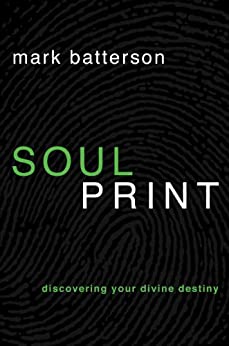
Approaching this reading from the perspective of investigating the components that lead to a flourishing life, I concede that both humor and humility have emerged in the research, but not in the way Batterson paints these qualities. It’s here that I engage my word-nerdiness because he offers, “The words humor, humiliation, and humility are all etymologically related. In fact, humor is a derivative of humiliation. One dimension of humility is the ability to laugh at ourselves, and I’m convinced that the happiest, healthiest, and holiest people on the planet are those who laugh at themselves the most.” So, on the journey to a navigating a flourishing life, we must be willing to have a humiliating one—to flounder and fail with others watching? Yes, I believe this to be true. And then to have a hearty laugh at what a mess we made of things!
“Too many people live as if the purpose of life is to avoid embarrassment at all costs. They never put themselves in situations that might be awkward. So they forfeit joy. They never reveal who they really are. So they forfeit intimacy. They never take risk. So they forfeit opportunity. They try to avoid embarrassment at all cost, and the cost is their souls. Or should I say, their soulprints.” Batterson is using the story of David’s Disrobing in 2 Samuel 6 to illustrate when we are humble enough to Disrobe from all our other identities, to surrender our pride at what we might have accomplished, He is more than willing to open our eyes to see our Divine Identity.
“David finds his true identity and true security as a worshiper of God Almighty. Disrobing symbolizes his naked humility before God. Disrobing symbolizes his naked dependence on God. David doesn’t find his identity and security as a king. He finds his identity and security in the King of kings.” So, where am I currently finding my identity? Is it as a professor, a daughter, a sister, a friend, a neighbor, a Unionite, a Jacksonian, an Enneagram 5, an ISTJ, a member of West Jackson? All of these are important roles that God has given me to fulfill; however, my Divine Identity should be found first in Him.
Now, here is where my mind really begins to spin—Batterson asks an extremely intrusive question–“what are your ‘royal robes’ [idols of identity]? “Disrobing means dying to self, and it begins with identifying the things we find our identity and security in outside a relationship with Christ. Now, here’s the tricky thing: the idol is often something God has given us.” For many of us who are accustomed to striving to achieve, whether that comes in the form of academic or athletic accomplishments, what happens when we Disrobe? “Disrobing is the courage to reveal who we are and who we aren’t. When we try to be all things to all people, we’re trying to be God…It takes tremendous courage to disrobe. In fact, it may be the rarest form of courage…Nakedness is awkwardness. That’s why emotional nakedness is so rare. And spiritual nakedness is even rarer.” Anyone else feeling awkward right now?
In my soul is a deep desire for everyone to have a flourishing life, and especially for Emerging Adults to grasp these ideas before they enter the “real world;” and at the heart of this lesson relates to where we find our Divine Identity. “Here’s what happens [during a life] crisis: You base your identity on school and then you graduate. You base your identity on a job and then you retire. You base your identity on marriage and you get divorced… [as an athlete and eligibility ends]… if you base your identity on Christ, you avoid the crises altogether. Your security is founded in the steadfast love of the Lord that never ceases. Your identity is found in the One who is the same yesterday, today, and forever. Jesus Christ becomes your cornerstone.”
I am constantly striving to embrace a Habit of Awareness and Growth that will allow me to Disrobe myself of the idols I have created in my life, even of those gifts of precious things like marriage and children. But what I am repeatedly finding is what I think David also found, my striving will pale in comparison to what He can do, in and through me, if I anchor my Divine Identity in Him. If I humble myself before Him, laugh at my ridiculous behavior, and surrender my stubbornness, He will lead me to an abundant and flourishing life. Is He asking you to consider Disrobing any of your worldly identities? Please consider sharing in the comments below.
References:
Batterson, M. (2011). Soulprint: Discovering your divine destiny. Multnomah Books.
 Flourishing @ Life
Pingback: God-Given Space – Flourishing @ Life