
In the 35 years since I began viewing the game of basketball as a Bench Warmer and my time as a physical educator, I have lost count the number of times the phrase “Follow Through” has been uttered in my presence by coaches, fans in the stands, and those of us occupying seats on the sidelines. For the non-sports fan, Follow Through is defined by My Basketball Teacher as “the extension of your arm to shoot the ball and the wrist motion in releasing the ball… In textbook form, a follow through has a completely extended arm held in place so that the forearm and upper arm form a straight line, as well as a fully flexed wrist so that the hand and fingers are pointed downwards.” For most shooters, a failure to Follow Through can result in a missed shot, especially on a free throw, which then brings about the reminder from the sideline, “Follow Through!”
Now, in this post, I want to acknowledge other moments when a failure to Follow Through results in undesirable outcomes, occasions like one I was reminded of this week during lunch with a recent college graduate. During the life update, this graduate shared about a potential job opportunity where the initial conversation happened in early January and there was no Follow Through by the organization for over six weeks. Silence. Nothing But Crickets. Now, she has an employment contract with a request to return the document in two days with a start date the following week, in another state! “What we have here is a failure to communicate” for you Cool Hand Luke fans. An organization’s lack of Follow Through in communication with a potential new hire, an issue easily preventable, probably cost them an outstanding employee.
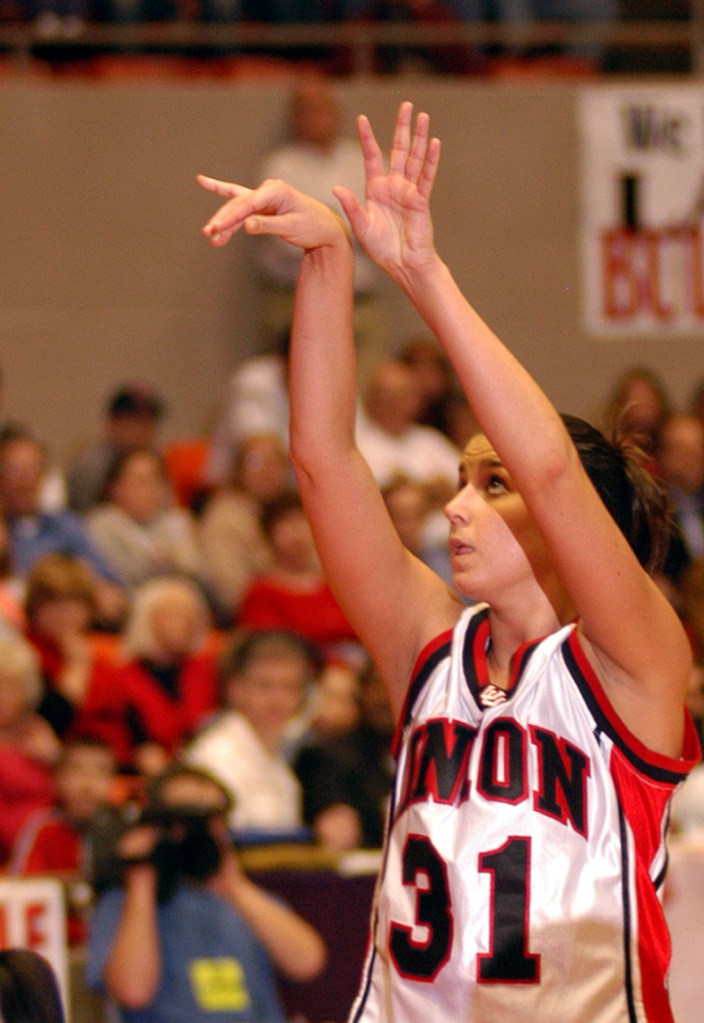
Photo by Morris Abernathy
Some other instances where a lack of Follow Through might result in unintended consequences includes: being unresponsive in returning communication such as emails and phone calls; a lack of expressing gratitude when an act of kindness is offered; failure to show up to a commitment; and negligence in taking the necessary steps to cultivate a healthy habit. It’s this last circumstance that correlates the highest to the content of this blog: how do we engage in behavior modification that will allow us the best opportunity to cultivate the Habits of a Flourishing Life? What is required to Follow Through on our best intentions that we know will improve our life?
Specifically, when addressing the Habits of Deep Work and Margin, one of the biggest obstacles we may encounter to cultivating healthy habits is the fact that we live in a world full of distractions. In Crazy Busy, Kevin DeYoung shares, “We are here and there and everywhere. We are distracted. We are preoccupied. We can’t focus on the task in front of us. We don’t follow through. We don’t keep our commitments. We are so busy with a million pursuits that we don’t even notice the most important things slipping away… [the] result, then, is simple but true: because we can do so much, we do do so much. Our lives have no limits. We eat (most of) what we want, buy (most of) what we want, and say yes to (too much of) what we want.” In order to modify our behavior, we need to decrease the distractions and focus on what matters. To offer an example of how easily this can happen, I often ask my students the question, “Did you see me write it down or did you email me?” because often our conversations occur as we are leaving the classroom and there are many distractions that happen between the Bowld and my office. My intent is to be responsive to their questions, but distractions often impede this process.
As we close this pondering of the need to Follow Through, and specifically, this idea of intent, I am reminded of a quote by Stephen M.R. Covey in The Speed of Trust, “We judge ourselves by our intentions and others by our behavior.” Whether it’s fair or not, the reality is that people’s perceptions of us are often linked to our behavior and when we Follow Through, we are demonstrating that our intentions and motivations are in alignment with our actions. Just as a basketball player needs to use proper arm alignment to finish a shot, all of us need to align our behavior with our actions if we hope to cultivate the habits that lead to a flourishing life.
In the comments below, please offer some examples of when an act to Follow Through either resulted in positive or negative outcomes. What kind of impact did this moment have?
References:
Covey, S.M.R. (2008). The speed of trust: The one thing that changes everything. Free Press.
DeYoung, K. (2013). Crazy busy: A (mercifully) short book about a (really) big problem. Crossway
Koeslag, C. (2017, August 20). What your follow through tells you. My Basketball Teacher. Retrieved from https://mybasketballteacher.com/follow-through-tells/
Rosenberg, S. [Director] (1967). Cool Hand Luke. [Film]. Jalem Productions. Retrieved from https://www.youtube.com/watch?v=_WUyZXhLHMk
 Flourishing @ Life
Pingback: Everyday Faithfulness – Flourishing @ Life