
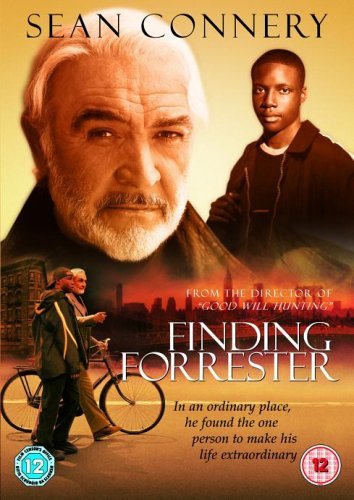
As the result of a friend quoting lines during a recent conversation and his encouragement to revisit a twenty-year-old movie, the educator in me not only found renewed energy to face the upcoming semester, but additionally discovered applications to an ongoing interest in the concept of Appreciative Inquiry and the struggle with students asking Lazy Questions. Penny Peterson offers this summary of Finding Forrester, “It’s a lovely movie about a man named William Forrester, an author who published one great novel then became a recluse living in New York, and Jamal Wallace, an unlikely teenage savant who becomes Forrester’s friend. Early in their relationship, Forrester asks Jamal to stir his soup, so a skin won’t form. Jamal asks him why this is needed and Forrester explains. Moments later Jamal asks Forrester a question about his personal life. To which Forrester answers, ‘That is not a soup question.’”
Like Peterson, I paused at this point in the dialogue, returning to listen to this segment a second time, as my mind considered the implications of asking a Soup Question. Again, Peterson articulates my thoughts as well when she shares, “So exactly what is a soup question? It’s a question with an answer that will benefit the person asking. In the first instance, Jamal learns something about various ways to make soup. This is to his benefit. It increases his knowledge. But as to the second question, Forrester points out that knowing intimate details of his life is not a benefit to Jamal’s.” In my mind, a Soup Question should be considered a form of appreciative inquiry as it increases our knowledge of a subject. In her experience, Peterson shares that she sprinkles what she identifies as a Soup Question here and there within her writing to have some fun, an added element, or additional knowledge, that moves her plot along.
Working with college students, my yearning is that they will engage in asking Soup Questions, clarifying questions that will improve their body of knowledge and guide them in their search for answers (whether in a classroom or professional setting). This approach is preferred over the typical approach of asking Lazy Questions, simple answers that with a little effort could be located on their own. Aspiring to accomplish this deeper level of discussion in the classroom setting, educators are attempting teaching strategies like using a flipped classroom approach or engaging in virtual simulations with the hopes of encouraging the development of these Soup Questions. For example, in the sport management courses that I teach, the intent of asking the students to complete the Virtual Business simulations outside of class is with the desire that through engaging in real-life scenarios, students will use the opportunity in class to ask me about why the choices they made had specific impacts on reaching (or not) the intended outcome or goal. Perhaps I might hear a Soup Question such as, “What strategy should I have implemented in pricing those tickets and concessions to reach the goal profit of $20,000?”
Not only can we use a Soup Question to increase our understanding of a particular topic like sport finance, I think we should also engage in appreciative questions that enhance our personal and professional relationships. Because they add value to another person, Appreciative Questions can lead to cultivating a Habit of Growth both to the individual and within the organization; they allow us to understand motivations and purpose. So, in this aspect I choose to disagree with William Forrester, and encourage all of us to intentionally engage more often in Appreciative Inquiry and not stop at the level of Soup Questions.
When considering the importance of both Soup Questions and Appreciative Questions, is there any advice you would like to offer to our readers? If so, please share in the comments below.
References:
Peterson, P.C. (2015, May 12). Finding Forrester and asking the soup question. [Blog post]. Retrieved from http://pennypetersen.com/finding-forrester-and-asking-the-soup-question/
Sant, G.V. [Director]. (2000). Finding Forrester. [Film]. Columbia Pictures. Retrieved from https://www.youtube.com/watch?v=ZIhRWV9zTIs
 Flourishing @ Life