
How do you want to be remembered? An awkward question to say the least, but one, I propose, if more people would ask it, might create a better world. Some people choose not to consider their own mortality, but we’ve all heard some variation of the saying, “Nothing is certain but death and taxes.” We are finite creatures. We will all die one day. This is how we were created. Kelly Kapic shares, “Whether through tragedy or simply as the result of aging, we all are repeatedly reminded that we are fragile and dependent creatures.” And every once in a while, it’s important for us to engage in the Habit of Deep Work and consider the trajectory of our lives to determine if we are cultivating the behaviors that will lead us to a flourishing life.
Any discussion which attempts to define what it means to flourish will eventually engage in a discussion of living a virtuous life. And any conversation related to virtues will always bring me back to the ideas presented by David Brooks in his book The Road to Character. Brooks suggests that there are two types of virtues, the resume virtues and the Eulogy Virtues. “The résumé virtues are the ones you list on your résumé, the skills that you bring to the job market and that contribute to external success. The Eulogy Virtues are deeper. They’re the virtues that get talked about at your funeral, the ones that exist at the core of your being—whether you are kind, brave, honest or faithful; what kind of relationships you formed…Most of us have clearer strategies for how to achieve career success than we do for how to develop a profound character.”
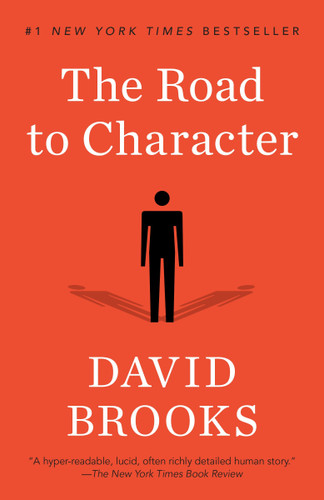
So, how do we focus on developing profound character in a Hustle Culture that according to Brooks “teaches us to promote and advertise ourselves and to master the skills required for success, but that gives little encouragement to humility, sympathy, and honest self-confrontation, which are necessary for building character.” How do we teach college students the importance of seeking out opportunities on campus to engage in developing the resume virtues, like learning how to host a sporting event, while not omitting the more important Eulogy Virtues? The motivation behind exploring the Habits of a Flourishing Life is to encourage us to “shoot for something higher than happiness” in this world, to look for ways to develop both resume and Eulogy Virtues by using “everyday occasions to build virtue in ourselves and be of service to the world.”
Andrew Briggs and Michael J. Reiss share this same idea of cultivating Eulogy Virtues in Ordinary Time, “Human flourishing this side of the grave is to be carried out in the everyday world of our existence, with its material, relational, and transcendent aspects.” What Briggs, Reiss, and Brooks recognize is that when we focus on Self-Forgetfulness, of being an Exemplar of Selflessness, we develop our character, we cultivate virtues that are of greater importance than achievement and fame. According to Brooks, “When we think about making a difference or leading a life with purpose, we often think of achieving something external—performing some service that will have an impact on the world, creating a successful company, or doing something for the community.” These activities can lead to a better community; however, what these authors, and many others, are encouraging us to do, if in fact we desire to live a flourishing life, is to work on rediscovering this moral tradition of character.
If character development, especially the cultivation of Eulogy Virtues is vital to a flourishing life, therefore, a flourishing society, what are the most effective strategies we can utilize to equip emerging generations with character? Who is doing this well and how are they accomplishing this task? Please consider sharing methods you think are helpful in cultivating the Eulogy Virtues.
References:
Briggs, A. & Reiss, M.J. (2021). Human flourishing: Scientific insight & spiritual wisdom in uncertain times. Oxford Press.
Brooks, D. (2016). The road to character. Random House. [Kindle version].
Kapic, K.M. (2022). You’re only human: How your limits reflect God’s design and why that’s good news. Brazos Press.
 Flourishing @ Life
I really like and relate to this post. I think it is very easy to get caught up in your resume and what you did/achieved and want to share that with the world. The quiet opposite of being humble. If I am being totally honest, it reminded me of a situation in high school where after a basketball game one night, there was a lot of trash left out, so my friends and I decided to pick it up. Afterwards we all looked at each other and started laughing because secretly, we were all thinking the same thing, “I wonder if anyone saw us to that,” which is terrible and not a virtuous thing to think at all. We partly picked up the trash because it needed to be done and we wanted to help out, but at the same time deep down, a small sliver of all of us was motivated by the fact that someone might see us to this kind gesture. Combining that memory with this post, I think that developing something that would qualify as a Eulogy Virtue is something done purely and for no attention or glory. Complete humbleness. Done from the goodness of your heart, and to be honest I think it is hard in this day and age where we posting every moment online and live in a state of, “Oh, look at me!” Instead of doing actions for the glory of ourselves, we should be doing actions for the glory of God and to benefit others around us.
LikeLike
In considering how to emphasize creating “Eulogy Virtues,” I believe there is a simple way to approach it. A book that speaks volumes to me is Andy Stanley’s “Better Decisions, Fewer Regrets,” in which he poses 5 questions for individuals to consider when making important decisions. One of these questions is referred to as the ‘legacy question,’ asking, “What story do I want to tell?” Taking this perspective allows for constant perspective towards creating eulogy virtues. Learning how to consider the long-term impact of decision making can allow one to hand write the story told about them, essentially breaking it down to, “If you want good, meaningful things to be said about you when your life story is told, do good, meaningful things for others.” The story others tell about you is something you personally earn through action, so correcting and learning to pursue eulogy virtues can allow for meaningful experiences benefiting others, as well as yourself.
LikeLike
Andy Stanley is one of my favorites with wise and practical advice. I use one of his questions often, What’s the wise thing to do?
LikeLike