
Using the legendary football coach Bear Bryant in the first chapter is a great method for capturing a sport-minded person’s attention to continue reading. After all, even the non-football fans living in the southern United States are familiar with Bryant’s accomplishments on the gridiron. Just look at how often any mention of football at a non-football school like Union University leads to a conversation of how Bryant holds an undefeated record at our school. So, laying the groundwork for what our Western culture defines as toughness through the lens of resiliency in sport is an easy association to make; however, it’s Magness’ appeal that perhaps it’s time to Redefine Toughness that found me highlighting paragraph after paragraph.
The investigation into how and why we need to cultivate a Habit of Resilience in order to lead a flourishing life has frequently led to research from those scholars drawn to topics like grit, perseverance, suffering, and overcoming obstacles. It’s no wonder that many of these scholars choose the lens of sport to describe what it means to accept defeat, to find oneself Face Down in the Arena, but still equipped to find some motivation to continue competing over and over again. Sports is an accurate analogy that many of us can relate to when offering an explanation for why we continue on when a task becomes difficult.
Outside of the world of sports, when I think of who epitomizes resilience, my mind drifts to explorers, pioneers, and trailblazers, especially those who chose to navigate the wild west! Their entire existence was based on meeting essential needs to just survive—food, clothing, shelter, and safety. When I read or view stories related to their journeys, I am confident that I would not have held the fortitude that it took, to not only survive, but flourish in the most brutal conditions imaginable. And yet, our country today, with people living coast-to-coast, proves that people can discover within themselves what it means to cultivate resilience and perseverance.
For many of us, when navigating a challenging season, we look to our faith to provide a compass for how to persevere through obstacles placed in our path. We embrace Holy Confidence that the Lord, who has provided for our needs in the past, will once again Show Up and guide us through the difficultly until better days arrive. His love and grace supply us with an inner fortitude that we likely could not achieve on our own. I believe it is this inner strength that we have access to that aids us in the process to Redefine Toughness. And although Magness does not speak through a lens of faith, he does offer, “It’s time to Redefine Toughness. It’s more important now than ever before. Ditch the façade and the external. It’s time to focus on inner strength.”
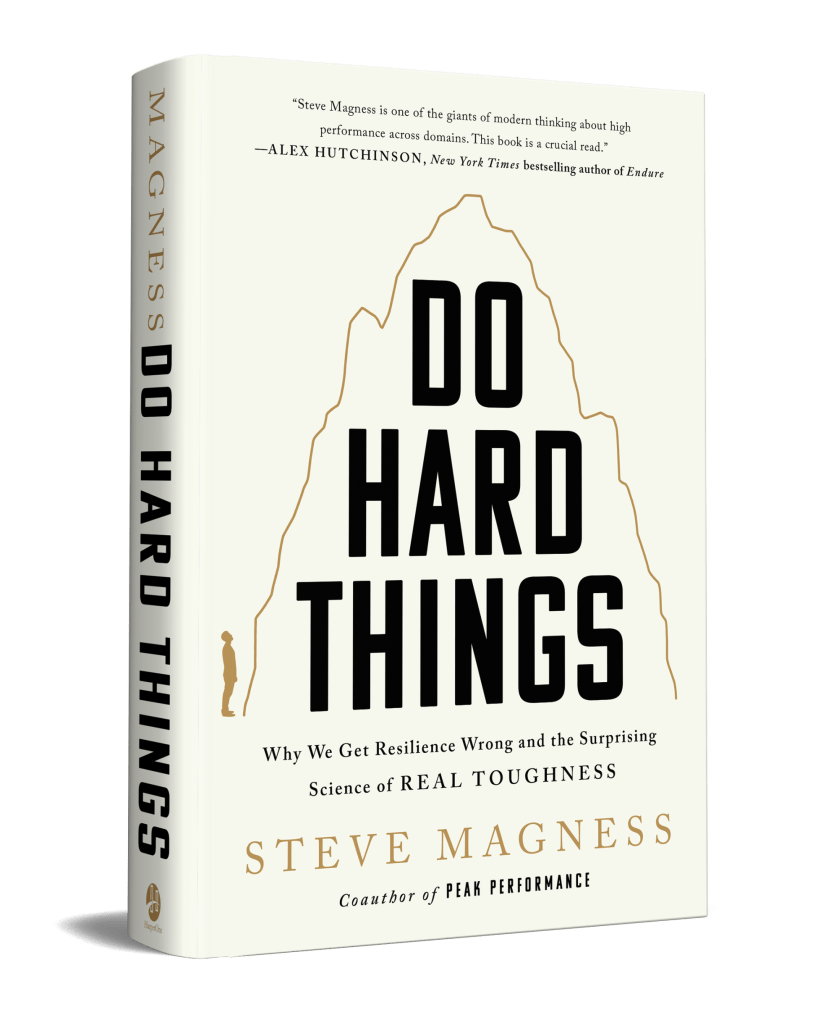
The shift Magness encourages us to make moves us from the old, external view of toughness that was connected to callousness and machismo and into an updated definition of what resilience really means. To Redefine Toughness, Magness shares, “…we are in a new era, one in which emerging science and psychology on overcoming challenges point to a radically different definition of toughness. Regardless of whether it’s on the sporting field, in the classroom, or in the boardroom, strength and resilience don’t come from blindly powering through adversity or pretending that pushing ourselves yields results. Instead, real toughness is experiencing discomfort or distress, leaning in, paying attention, and creating space to take thoughtful action. It’s maintaining a clear head to be able to make the appropriate decision. Toughness is navigating discomfort to make the best decision you can. And research shows that this model of toughness is more effective at getting results than the old one.”
What I discovered as I continued to read through Do Hard Things, was that Magness captures the essence of what appears to be a missing skill in our college students, the Habit of Resilience. We are living in a culture that, based on how many books, messages, and podcasts I see related to this topic, is in dire need of seeking effective methods for equipping Emerging Adults and ourselves, how to Bend Not Break, when facing life’s obstacles, whether it comes in the form of a challenging course, a distracting co-worker, or an opponent that just won’t seem to go away. What Magness outlines, and what I hope to incorporate into the Habit of Resilience is an approach which offers an avenue for “embracing reality, being secure in who we are, embracing our feelings and emotions as information, fulfilling our basic human needs, and finding purpose and meaning in life to carry us through life’s challenges.”
In our efforts to accept the challenge to Redefine Toughness, who is an example that comes to mind for you when discussing resilience? Is there someone who excels in this area that provides a great example for you? Please consider sharing in the comments below.
References:
 Flourishing @ Life