
“Develop a Quiet Ego. Our ego is like a kid trying to fit in during middle school. It just wants to be liked.” We might locate a bit of humor in this statement, especially if our middle school years are long behind us; and yet, no matter how many candles appear on our birthday cake in any given year, we still have a desire to belong. Perhaps it does not appear with the intensity of securing our identity the way it does in our formative seasons, but we all yearn to connect with others, to belong, it’s the way our Creator made us, it’s one way that we successfully navigate a flourishing and abundant life.
One of the significant challenges in pursuing this journey of what it means to live a flourishing life is arriving at a common understanding of how we interpret our life experiences—what does human flourishing really mean? And one especially challenging area is in cultivating the Habit of Awareness. How do we balance the scales between an awareness of self without becoming narcissistic? Who models for us the ability to place others first while not abandoning self-care? In earlier posts I’ve referenced the concept of anavah and what it means to live in our God-Given Space, this sense of balance in fulfilling our duties without overstepping or underserving, and I believe that the concept of a Quiet Ego navigates well the equilibrium necessary for a proper Habit of Awareness.
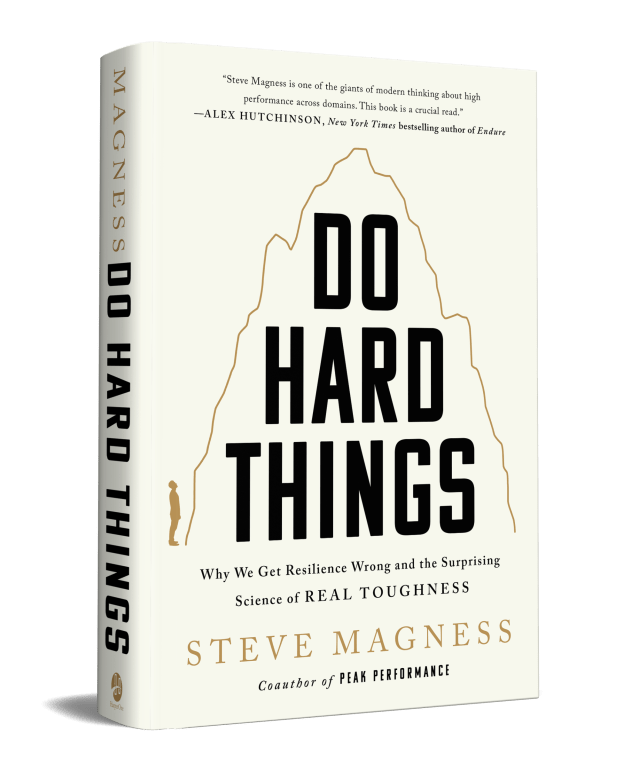
Introducing the Quiet Ego concept in his book Do Hard Things, Steve Magness shares, “Our ego does many good things for us, acting like a social immune system that swats away psychological threats. But if it is overactive, propping up a sense of self that doesn’t reflect reality, then it’s just as damaging as a hyperactive immune system. We don’t want to shut off our ego. We just want to dampen it down to a reasonable level.” Magness then walks us through how to develop a Quiet Ego, using social psychologist Heidi Wayment’s pioneering research.
It’s this Quiet Ego idea that comes to my mind when I consider people whose character I admire. Wayment and her colleagues describe it this way, “The Quiet Ego refers to a self-identity that transcends egoism and identifies with a less defensive, balanced stance toward the self and others.” With the creation of the Quiet Ego Scale, there is perhaps a way to measure the Habit of Awareness and its integrated nature with other aspects of a flourishing life. The researchers “suggest that the QES measures an identity that strikes a balance between a strong sense of agency (but not egoism) and a strong concern for the welfare of others…it was a distinct predictor of outcomes such as resilience, coping efficacy, and indices of well-being that could aid investigations of human happiness.”
In order to score high on the QES, Magness encourages us to consider specific aspects to cultivating a Quiet Ego, which I believe aligns well with navigating our God-Given Space in this world. “What you’re after is a dash of self-awareness and reflection combined with a secure sense of who you are. A bit of doubt and insecurity is normal. Too much defensiveness and protection are signs your ego is too loud. When we mix perception, awareness, and security together, we can move on from a false-bravado style of confidence that permeates the world. Confidence is doing difficult things, sometimes failing, but seeing where you lie, and then going back to the work.”
Loud egos seem to rule our current culture, as I was consistently reminded while recently viewing a documentary related to an American politician. It appears that much of the world resists being a Quiet Ego, they’d rather make noise rather than be the Strong and Silent type. In my experience, many people seem more interested in quid pro quo, bullying, or serving the self rather than quietly embracing a Towel posture (more on that later) and serving the needs of others.
So, how do we equip Emerging Generations to develop a Quiet Ego? My colleague, Kelly Elliott, has mentioned the importance of coaching our students in the area of personal effectiveness, and perhaps instructing them in ways of cultivating their character to embrace a Quiet Ego might be an essential component to this approach. In closing, who comes to your mind as you consider a Quiet Ego? Please consider sharing in the comments below.
References:
Wayment, H., Bauer, J., & Sylaska, K. (2015). The Quiet Ego Scale: Measuring the Compassionate Self-Identity. Journal of Happiness Studies, 16(4), 999–1033. https://doi-org.ezproxy.uu.edu/10.1007/s10902-014-9546-z
 Flourishing @ Life