
“All of us want to live it. Everyone wants it for their children [and students]. But what exactly is the [flourishing] life?” Millions of people over thousands of years have been on a pilgrimage to offer some inkling of an answer to this existential question, and I am no different. A deep-rooted desire to effectively guide and equip Emerging Adults in a transformational Season of Life, has led me down an arduous path of self-reflection to insightful research from wise scholars from all ranges of disciplines from theology to neuroscience. But if this quest has taught me anything, it is that the answer to this question is as varied as there are species of flowers on this colorful earth given to us by our Creator.
And Yet, even knowing this journey will likely turn into a lifelong endeavor, I travel on, extremely curious and asking even more big questions such as: How can I experience periods of discontent but still view my life as flourishing? How will God reveal His purpose and meaning to unexplainable moments that seem to transcend understanding in the here and now? What can I offer to these students before me that will be truly helpful in cultivating a flourishing future? All deep and intriguing questions that we often avoid because they are so bewildering.
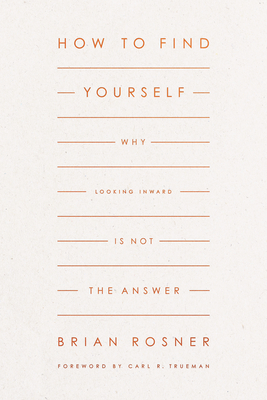
But whether the journey finds us in the works of the ancients like Aristotle, in God-breathed Scripture, or in recent scholarly studies, there seems to be a commonality that leads us to the concept of character. And Brian Rosner suggests that in order “to run a ruler over the self-made self, [he has] devised five tests of the good life.” These are what I will term the Flourishing Test because they “endeavor to face squarely the considerable challenges of the human condition in all its joys and sorrows. They also take seriously the fact that no life is lived in isolation; the best measures of a good life focus on the social nature of human existence and the way in which we respond to and treat others. The five [Flourishing Tests] of the good life consider how well the self-made self deals with: (1) Suffering and disappointment, (2) Pride and envy, (3) The existence of the weak and lowly, (4) Enemies and injustice, and (5) Happiness and pleasure.”
Rosner goes on to call these Flourishing Tests the Existential Test, the Ego Test, the Enemy Test, the Ethics Test, and the Enjoyment Test. After offering an explanation for how these tests are measured through the lens of individualism, Rosner then guides us to consider these tests through the lens of being known by God and how that guides us to a better anchor for where we find identity and meaning in life. “At this point, I should offer a caveat. I am not arguing that all believers are more resilient, humble, loving, compassionate, and happy than all nonbelievers. Nor even that the self-made self necessarily leads to poor outcomes on my five tests…People’s identity formation script is just one factor among many that will affect their behavior. My point is simply that, in my judgment, those who are known by God intimately and personally are well equipped to deal with the questions of existence, ego, ethics, enemies and enjoyment and have deep resources from which to draw in positive ways to life’s challenges.”
We are provided an opportunity to write our life story, to create a narrative, of what it means to live a flourishing life. Today’s culture of individualism encourages us to publish this narrative widely across social media in considerable detail, but it often misses the mark that we are living shared stories with others. The metanarrative, or big story, includes a community of people, as we see in the story of God’s people in Scripture. If we use the Flourishing Test as a measurement of their story, we are provided a glimpse into what it means to flounder and fail, to be redeemed and loved, and to find a template for living the good life.
“What sets a course for your life and keeps it on track is your identification with Christ and imitation of him, and being known and loved by God as his child. Putting on that identity will determine the sort of man or woman, worker, friend, neighbor, father or mother, son or daughter that you will become.” Anchoring your identity in the transcendent will allow you to pass any Flourishing Test because your character will be rooted in eternal things rather than the fading things of this world.
I may not have provided a detailed description of the five tests Rosner posits for measuring a flourishing life, but perhaps you might offer strategies that have been successful for you in dealing with the following: suffering and disappointment, pride and envy, the existence of the weak and lowly, enemies and injustice, and happiness and pleasure. Please consider sharing in the comments below. Your comments may guide someone to an answer to the question: what exactly is a flourishing life?
Reference:
Rosner, B. (2022). How to find yourself: Why looking inward is not the answer. Crossway.
 Flourishing @ Life