
Studying history is unlikely to appear as a priority on any of my to-do lists; however, as my age continues to increase, I seem to notice a growing fascination, or at least a budding appreciation, for events of the past. Perhaps some of this interest stems from a captivation with generational theory in an attempt to understand my current students, after all, we are all products in some way or another of the era into which we were born. But part of this current enchantment is due to the talent of gifted writers, whether of books or scripts, to weave historical events into the personal stories of characters, providing context that allows the past to connect to the present. Whether it’s Stephen Bly’s tales of the Fortune family that paint a picture of settling the West in the 1800s, or the writers on the BBC show Call the Midwife exploring healthcare in the 1960s, I find myself engaged in, not only in the stories being shared, but to considering the historical background that provides a richness to each of the narratives.
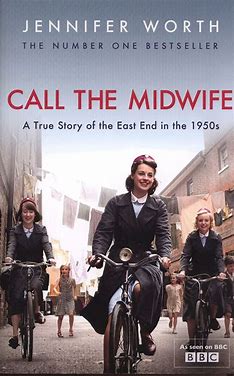
Although I discover myself jotting down notes for my health courses when a specific drug or procedure is mentioned in a Call the Midwife episode, I am becoming more intrigued by the intersection of the sacred and the secular that appears in many of the episodes of this time period drama (which I plan to share more on later). Set in the East End of London, the plot follows a young midwife and her work with a group of nuns and midwives out of a place called Nonnatus House, where they attempt to meet both the physical and the spiritual needs of the families within their community. The sense of belonging that the residents of Poplar share speak to the heart of every generation’s need to experience a place where they are accepted and loved.
As the narrator communicates the importance of community in an episode of season five, I began to ponder how I was viewing with nostalgia a period of time when life seemed so much simpler—much, much harder–but with a clear focus on what it takes to survive. And somehow in this simplicity of survival, we are provided a glimpse of a flourishing community even in poverty, disease, and death. Mature Jenny shares, “A sense of community is the Holy Grail of modern living. When we cannot find it in the present day, we reach back through the years and say, ‘That was when we knew each other. That was when we held all things in common.’ It is a thought so tender and consoling that it scarcely matters if it is not true. Past Perfection is a wonderous thing.”
It is this concept of Past Perfection that intrigues me the most as I see a connection between my current perspective on Emerging Adults and the idea that perhaps I might be at risk for viewing former seasons of teaching as being a better experience than the present. Instead of focusing on an effective solution for creating a Generational Remix, it’s sometimes easier for me to look into the past, remembering things as being better than they actually were, forgetting that those seasons also had their own struggles. In looking through a lens of Past Perfection, might I be creating a Comparison Trap that no group of students could ever live up to?
One endearing aspect of this period drama is the character of Sister Monica Joan, who is facing the early stages of dementia, and her tendency to view a current situation through the lens of Past Perfection. As the nostalgia of the past clouds her view of the modern present, Sister Monica Joan allows us to find humor in what she sometimes prefers to remember, how better things were “back then.” How often do I find myself engaging in this mindset of preferential remembering when facing a difficulty that seems to have no current resolution? How often am I guilty of this behavior when I bump up against the obstacle of finding the best strategies for educating today’s college students?
No one in today’s world can ever compete with a skewed perspective of Past Perfection. And although it can, at times, be “a wonderous thing” to find myself lost in the beauty of memories, I must caution myself to not allow the past to overshadow the present. I can learn from the Timeless Wisdom that the past provides, but remember to do so with a humble heart, knowing that there is a human tendency to sometimes forget the bad that typically accompanies the good of those memories.
Do you ever find yourself remembering the past with a lens of perfection? When do you find this practice helpful and when might it be hurtful? Please consider sharing your thoughts in the comments below.
Reference:
Thomas, H. & Worth, J. (Writers). & Martin, D. (Director). (2016, May 22). Season 5, Episode 8). [TV series episode]. Call the Midwife. Neal Street Productions.
 Flourishing @ Life