
One week ago, I was sitting in a church in Huntsville, Alabama, at a women’s conference when the speaker asked the audience if we’d ever heard of the Hebrides Revival [ˈhebrədēz]. Today, sitting in chapel, when the pastor mentioned the Hebrides, I thought I knew the story he was about to share with us, yet I was mistaken. For a place I’ve never heard of, that I even misspelled in my notes, I find it intriguing that in a short expanse of time, it has been spoken about twice. It’s actually two different geographical places on a map, yet linked by culture, but even more so, a connection is being made in my heart; for my spirit is being nudged, not only to a personal revival, but a desire to see one spread across our college campus.
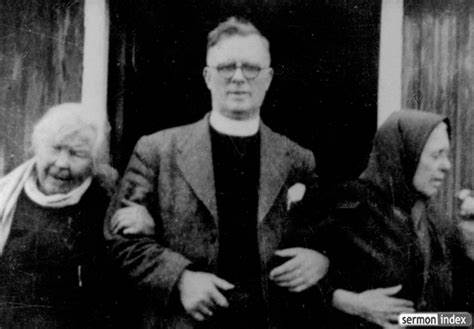
The first mention was to share about a revival that occurred in the 1950s on a Scottish island. Robert Kendall shares, “By ‘revival’ I do not mean a planned, orchestrated series of meetings,” instead we read about an “extraordinary event” that could only be explained by the presence of God. And at the center of this work, we find two sisters, both in their 80s, who became “two real-life prayer heroes,” little known by man, but well-known by God, in poor health, but were faithful to pray for a revival as they witnessed the “trend of young people toward worldliness,” shares Leslie Bennett. So, these two women, faithfully prayed on their knees from 10:00 p.m. until 3:00 a.m. “Eighteen months passed with no evidence of God hearing or answering their pleas,” until one night when men humbled themselves and expressed their deep need and the Hebrides Revival began.
The second mention was to share the story of missionary John Paton, a Protestant missionary in the early 1900s to the New Hebrides Islands of the South Pacific, named after the Scottish archipelago, now called Vanuatu (which sadly I only am familiar with because of the tv show Survivor). Losing his family, facing constant death by the cannibals, Paton found the courage to serve in the place where he had been led. “The list could go on as to how Paton displayed courage through his decades on the mission field. But we turn to the question, Where did this courage come from? The answer Paton would want to give us is that it came from God. But he would also want us to see what precious means God used and, if possible, apply them to ourselves and our situations,” offers John Piper.
Hebrides–two stories, two locations, one name and one shared purpose, demonstrating for all of us that Aging Faithfully means allowing God to use us where He calls and at the right time, whether we are in our twenties or in our eighties. For revival begins in the heart, and we live in a culture that will slip out of our hands if we don’t wrestle it back from the Enemy for our emerging generations. So, I’m asking God for the courage to pray for a revival in my own heart and for our college campuses across this nation. If it can occur at Auburn and Asbury in 2023, why not here? If two sisters can pray from their bedrooms and hearts change in a barn miles away with arevival that lasted two years, why not me? When did my belief that God could do something amazing on a college campus diminish so much?
So, for you Emerging Adults, I pray for your hearts to be transformed and for the Spirit to move in your life. I commit that I will not abandon my post and will do everything within my power to stand between you and the enemy, and I refuse to believe that a generation who has walked away from the church in large numbers will not return, for lives depend on it. May the Lord allow you to be Respectfully Mystified with a word like Hebrides. Hopefully, He’ll choose something you can spell correctly the first time, unlike me!
References:
Bennett, L. (2016, June 22). When women cry out, things change. Revive Our Hearts. Retrieved from https://www.reviveourhearts.com/blog/when-women-cry-out-things-change/
Kendall, R.T. (2023). The Hebrides revival (1949-1952). [Blog post]. R.T. Kendall Ministries. Retrieved from https://rtkendallministries.com/the-hebrides-revival-1949-1952
Piper, J. (2019, January 28). Immortal till his work was done: John Paton (1824-1907). Desiring God. Retrieved from https://www.desiringgod.org/articles/immortal-till-his-work-was-done
 Flourishing @ Life