
Transhumanism, expressive individualism—anything ending in an “ism” is likely more of a deterrent for me than an invitation to dig in. Perhaps I’m intimidated by the fact that the concepts will be too philosophical for my practical mind to grasp; nevertheless, the topic of the best place to anchor our identity grabs my interest, even if the concept is an “ism”–expressive individualism. After all, every day I am surrounded by college students navigating the Season of Life known as Emerging Adulthood; and one of the recognized steps in the maturation process relates to identity development. But the concern expressed by author Brian Rosner, which mirrors my own, is that culture is leaving one’s identity Up For Grabs.
In his book How to Find Yourself: Why Looking Inward is Not the Answer, Rosner shares, “Identity angst is on the rise in the twenty-first century…Whereas identity formation almost took care of itself, nowadays everything about who you are is Up for Grabs.” For many of us, our identities became set during adolescence; however, in younger generations, there are multiple transitions in life related to identity that we were not forced to navigate. “These days, life-cycle dilemma experts believe that for many people, identity transitions occur earlier than midlife and much more often. The age of discontent can happen at any and every age, the obligation to define or design yourself being always at hand…The dreaded ‘thrisis’ awaits those turning thirty, who, having climbed the ladder of success, are disillusioned to discover it’s leaning against the wrong wall.”
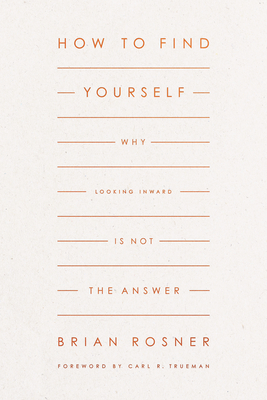
What I did not have to take into consideration across my lifespan was social media, and this technology has changed our world—some for the good and some detrimental to human flourishing. Rosner states, “The digital age has added a new dimension to the question of personal identity…social media is a major factor in the rise of expressive individualism; many believe that the web has affected our very identity…Defining ourselves via social media raises many thorny issues.” And the challenge, for me and my friends and colleagues, is now attempting to guide emerging generations with technology that did not exist when our identity formation was Up For Grabs!
The premise of Rosner’s book is the idea that as Christ followers, our identity is not Up For Grabs. “Not only are we as Christians called to maintain that human identity is ultimately rooted in the fact that we are made in God’s image; we are also called to revitalize any competing claims to offer identity in light of that fact. In a world where so many identities now set themselves in direct opposition to traditional Christianity, that makes our situation even more complicated.” The desire is not to create more angst among generations of young people struggling to find where they fit into this wide and amazing world, but to encourage them that looking inward, to accepting culture’s version of individualism, may not lead to a fulfilling and flourishing outcome.
Cultivating a flourishing life includes the Habit of Attentiveness and one area that needs careful attention is the understanding of who God created us to be and His purpose and meaning for our existence. My hope is that by looking outward, as Rosner suggests, to Scripture, through prayer, and through the body of Christ, emerging generations will find their secure identity anchored in the one place that offers eternal security.
Reference:
Rosner, B. (2022). How to find yourself: Why looking inward is not the answer. Crossway.
 Flourishing @ Life