
As another page is torn from the 2024 calendar symbolizing the movement towards the close of another year, I should no longer be surprised by how quickly time seems to pass. Moving into a new month, decorating for the holidays, and making entries into a crisp, new 2025 day planner, these activities trigger a time of reflection. And considering the progression of my life over the last 12 months, I would offer it as a model for what it means to live a Paradoxical Life. However, I am not the only one who experiences concern over having an Unpredictable Future, as higher education and other sectors in society also grapple with how to flourish in the reality of today’s world. But I admit to having several advantages that assist me in times of uncertainty, two of those include my faith and Christian liberal arts education.
Admittedly, as a high school senior making the choice of where to continue my education, I would not have been able to explain that Union University was a liberal arts institution. I was aware of its Chrisitan identity, I was able to calculate how long the drive home to Munford, Tennessee would be, and I felt a sense of belonging within athletics and the academic department, but I would not have been able to describe how it differed educationally from the University of Tennessee. Someone handed me a catalog that described the courses I was required to pass, and along the way I managed to enroll in a few electives, but there wasn’t a great deal of thought to the type of institution I was experiencing. I felt a vocational calling to education and sports, so I completed the necessary steps to cultivate the skills necessary to flourish in that area of my life. I might not have been able to predict the future, but I was following a good plan based on a valuable education.
Although I treasured my time at Union as a student and deeply invested in the place during my career, it wasn’t until several years ago during a faculty meeting when a colleague offered a definition of what the liberal arts are that I seriously began to reflect on how vital that aspect was, not only to who I was becoming, but also to what I dream for my students as they grapple with their own Unpredictable Future. So, I return again to content shared in the post entitled Wrestling Coach, and the question students are struggling with, who am I supposed to be after college?
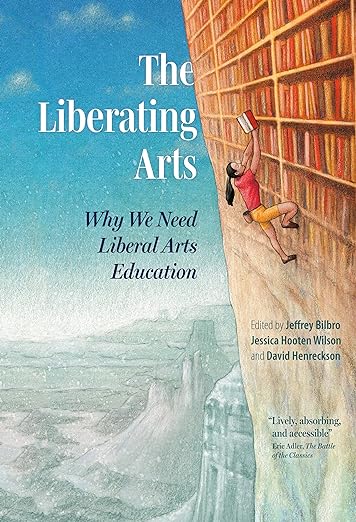
In The Liberating Arts, David Henreckson shares his perspective on using the idea of a period of Sabbath to reflect on what it means to teach and practice the liberal arts in our current culture. He points out, “A college degree no longer ensures a good job and a stable middle-class existence. Student debt has climbed so high so fast that we now commonly call it a national crisis. The pressure to perform, to succeed, to excel is more intense than ever, even as the markers for success are harder to measure and harder to attain.” So, the question for society shifts from what am I supposed to do to who am I supposed to be?
What if Christian liberal arts institutions are an ideal place for Emerging Adults to explore the answers to these questions? What if Christian liberal arts institutions committed to cultivating Unreasonable Hospitality where a sense of belonging develops a safe place to grapple with Big Questions? Henreckson offers, “in truth, this sort of community, where the pleasures of friendship and the rigors of work were united, is both the grounds for renewal of our scholarly labors and their culmination. The liberal arts themselves are not mere skills or techniques to be mastered and passed along to the young adults we happen to teach. Rather, they are a way of life, the crafts or practices by which we live out the freedom that makes us flourish as human beings. This way of life ought to cultivate in us a spirit of liberality and a communal desire to mend a tattered world, to seek justice for our neighbor, and to heal social divisions.” That sounds like the mission of a Christian liberal arts education.
As another year prepares to roll into a new one, as we reflect on how to best guide these Emerging Adults in front of us, as we plan courses and curriculums that will truly help them flourish, let’s not overlook the value of a Christian liberal arts education. Yes, I recognize that college isn’t everyone’s path, that there are viable alternatives to a four-year degree, but I also recognize the worth that is sometimes difficult to measure in what is gained from a liberal arts degree, and as a person of faith, it also serves as a place to navigate our spiritual and moral formation.
References:
Bilbro, J., Wilson, J.H. & Henreckson, D. (2023). The liberating arts: Why we need liberal arts education. Plough Publishers.
 Flourishing @ Life