
Do you ever have random memories from childhood pop into your head? Obviously, something triggered the back recesses of your brain, but you really aren’t sure what caused the memory to appear? At some point in the tween years, Denise and I played hotel in our Munford home, using the wood-burning stove as the front desk and the doors along the hallway numbered to create rooms for guests. As a family who typically camped on vacations, I have no reasonable rationale for why playing hotel seemed fun, for I’d rarely stayed in one, but perhaps that’s when an interest in travel and the concepts of hospitality were sparked.
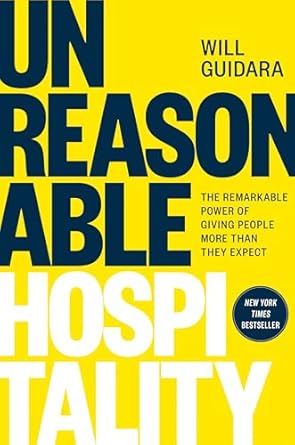
Today, the notion of hospitality, specifically Unreasonable Hospitality, resonates deeply with me. Perhaps it’s because we currently live in a world that although immensely connected through digital platforms, seems to be lonelier than ever before. A gap exists between connection and belonging. When people experience a culture of Unreasonable Hospitality, they also encounter a culture of care, a place where they feel a sense of belonging. Will Guidara shares in his book, “Fads fade and cycle, but the human desire to be taken care of never goes away.” I believe there are vital applications of Unreasonable Hospitality that can be made to multiple industries including education, athletics, churches, and just about any organization where humans are involved. Let’s take a moment to consider one of these applications.
Knowing that we would be covering some controversial topics in a sports ethics class, I was particularly grateful for a presentation by Dale Connolly and David Wadell at the annual CSKLS conference that demonstrated how we might approach having difficult conversations in a classroom setting. Combining their suggestions with my research on hospitality, I felt confident in creating a presentation entitled Cultivating Hospitality to share with the class on how we might approach the conversations to come. We attempted to answer these questions: Can sports cultivate a culture of hospitality? athletic teams? college classrooms? Can you cultivate a culture of hospitality personally? In order to answer those questions and more, we arrived at a consensus for our class that utilizing Civil Discourse, developing a code of conduct, and engaging in Unreasonable Hospitality would be of greater benefit than accepting the current practices of Cancel Culture.
What I hope these students experienced in our semester together, and what I hope all of Christian higher education would intentionally pursue is Unreasonable Hospitality. Guidara explains, “’Service’ is black and white; hospitality is color. ‘Black and white’ means you’re doing your job with competence and efficiency; ‘color’ means you make people feel great about the job you’re doing for them. Getting the right [knowledge] to the right [student] at the right [time] is service. But genuinely engaging with the [students] you’re serving, so you can make authentic connection—that’s hospitality.” Hospitality moves from a transaction and into a transformation.
Creating a culture of Unreasonable Hospitality, whether in education, sports, finance, or some other industry, means the focus shifts from productivity (such as sharing content) to people. “How do you make the people who work for you and the people you serve feel seen and valued? How do you give them a sense of belonging? How do you make them feel a part of something bigger than themselves? How do you make them feel welcome?” With Unreasonable Hospitality.
The diversity of backgrounds and experiences that college students bring with them to the classroom can sometimes make it difficult to find common ground. But I truly believe we have more similarities than differences, and even those differences don’t have to be divisive when we engage in Unreasonable Hospitality. We can share different perspectives, distinctive viewpoints, and still be respectful and honorable with how we approach each other. After all, we are all God’s Image Bearers, and embracing that philosophy means we go above and beyond in our practice of hospitality.
Reference:
Guidara, W. (2022). Unreasonable hospitality: The remarkable power of giving people more than they expect. [Kindle version]. Optimism Press.
 Flourishing @ Life
Pingback: Second Mile Spirit – Flourishing @ Life
Pingback: R&D – Flourishing @ Life
Pingback: Transplanted – Flourishing @ Life