
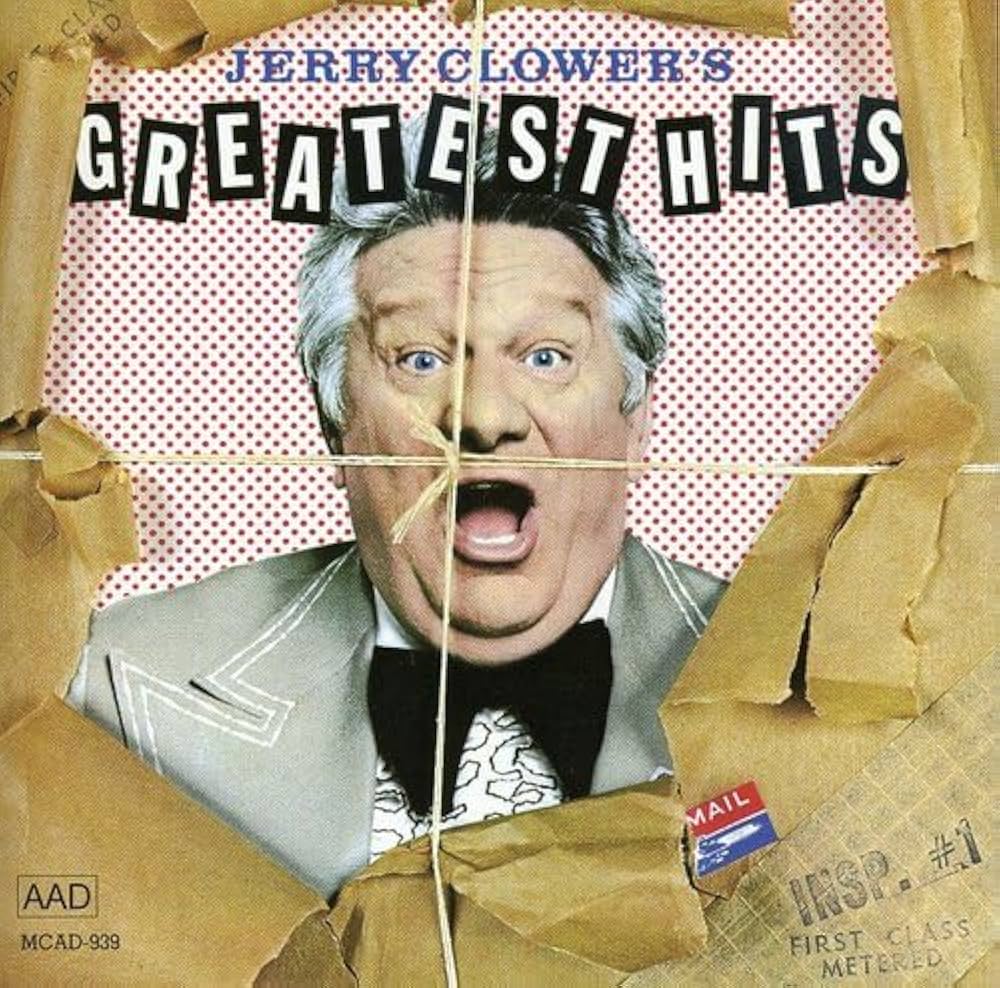
Yazoo, Mississippi—If reading those words fails to bring to your mind a rich southern drawl sharing the stories of Marcel Ledbetter and coon hunting, then you did not have the same rich childhood that I did growing up in the 1970s. But guess what? You do not have to miss out, because you can Just Ask Google and hear the incredible storytelling gift of Jerry Clower for yourself. For it is his story entitled “The Chauffer and the Professor” that I hear in my head at any mention of the word Expert. (And I was unaware until I searched my phone playlist for the story that it was a professor who is the Expert in the story). Because it will ruin the telling if I attempt to summarize the story here, I encourage you to listen for yourself to serve as a framework for this post.
Several recent encounters have made me ponder this idea of expertise other than what I share in Just Ask Google. One, a casual conversation with a colleague, where upon celebrating her completion of a doctoral degree, she claimed to not feel like much of an expert on her research. Another, a time of reflection where the insecurities of this female Enneagram 5 were magnified by a male college administrator who questioned why a physical education and health educator would be teaching about the spiritual formation of her students since she was not a theologian. However, it is the third moment upon reading an article by Perry Glanzer in Christian Scholars Review that I hope to elaborate on here.
During a 2024 CSKLS presentation on gratitude, a colleague mentioned Glanzer’s work on virtues and human flourishing, so we enjoyed a discussion over shared interests and their application to the world of sports. Fast forward a year to Glanzer’s visit to CU’s campus and a heightened awareness of his writing, and I am once again intrigued by his perspective—this time on the relationship between expertise and excellence. Glanzer shares, “Christians, including Christian academics, should embrace the pursuit of excellence over expertise for themselves and their students because they embrace the God who is excellent. The difference is easy to understand when I put it this way. My wife rarely wants my expertise as a Christian ethicist. She instead wants me to be an excellent Christian, husband, father, friend, son/son-in-law, steward of finances, steward of my body (it’s why married men live longer), neighbor, etc. I do think my expertise as a Christian ethicist helps these latter ends, but the two are different.”
It is Glanzer’s Habit of Attentiveness in his interviews with students about the good life that he notices a pattern where the definition for flourishing at life is often connected with outward measures of expertise in a vocation rather than cultivating the virtues that lead to excellence at life. Rather than professors mentoring students to “become excellent professionals, intellectuals, or excellent human beings—excellent image bearers of God—in ways that extend to their sub-identities…Students learn to offer opinions…but they are not necessarily encouraged or equipped to be excellent in these sub-identities[(emphasis my own].”
Because I believe we should all embrace life-long learning in all of our identities and pursue excellence in our God-Given Space, I agree with Glanzer’s perspective that expertise and excellence may differ. “Christians should counter [current culture] by focusing on excellence. Indeed, that’s what we all usually want in life. That’s why, when interacting with a doctor, the popular press advises you to ask a question that goes from their expertise to excellence in the stewardship of the doctor’s own body: ‘What would you do if it were you?’ The question then pertains to one’s personal wisdom regarding stewardship of their own body and not their knowledge of the strengths and weaknesses of the five different options for treatment.”
I am certainly Not an Expert on flourishing at life, but I can pursue what it means to engage in Appreciative Inquiry in efforts to determine what it means for me to cultivate excellence in all the dimensions of health and wellness and then try to model for students what the pursuit of excellence looks like in the Habits of a Flourishing Life. And if all else fails, maybe there will be a chauffeur in the back of the room to field any questions I am unable to answer.
Happy 85th birthday, Dad! You brought so much more to my childhood than Jerry Clower, but maybe nothing as humorous.
References:
Andrews, B. (1994). The chauffer and the professor (Live 1971) [Recording]. On Jerry Clower’s Greatest Hits [Album]. UMG Recordings, Inc. https://www.youtube.com/watch?v=v5FswEmlNTw&list=RDv5FswEmlNTw&start_radio=1
Glanzer, P.L. (2025, September 3). Are You Trying to Create Experts or Mentor Students toward Excellence? The Two Are Not the Same. Christian Scholars Review. https://christianscholars.com/are-you-trying-to-create-experts-or-mentor-students-toward-excellence-this-fall-the-two-are-not-the-same/
 Flourishing @ Life