
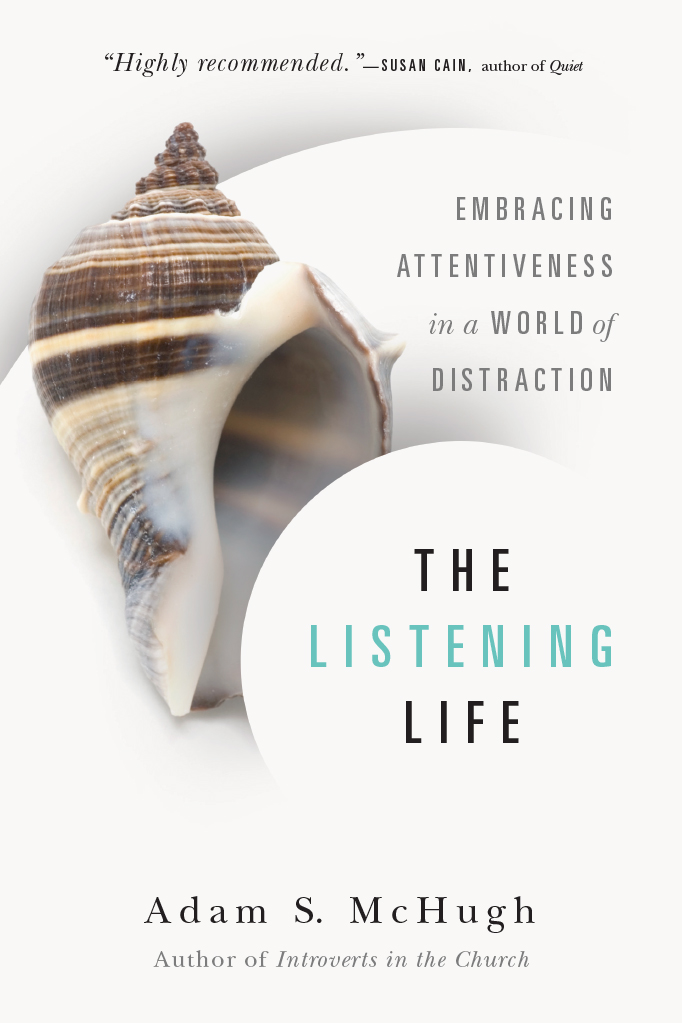
Meandering a little further down the road in this journey to define and explain relational equity, we discover a second destination in the book entitled The Listening Life by Adam McHugh where he discusses the importance of “assuming the listening posture of a servant. We speak volumes, but we listen in snippets.” Similar to the thoughts shared by Ehman in the post Others-Centered in a Self-Centered World, Christ followers are encouraged to tune their ears into the hearts of others.
Appearing to reach a consensus, it appears that several researchers estimate the average person speaks 7,000 words per day, and I don’t even want to estimate how greatly that number increases for an educator! Admit it, when we really enjoy our discipline, we absorb the books, the blogs, the journals, the podcasts, and any other media within our grasp, and we have an eager audience awaiting our every word on the topic. There is a wealth of knowledge gained from years of experience that we wish to invest in these emerging adults in our sphere of influence. It truly is difficult to be “quick to listen, slow to speak” even for an introvert like me (James 1:19)! But if I am to consider the challenges of these authors to be others-centered, then I must work diligently to lessen the words I speak and to increase the amount of time spent listening.
McHugh offers an abundance of insight into the importance of Biblical listening which he describes as “a whole-hearted, full-bodied listening that not only vibrates our eardrums but echoes in our souls and resonates out into our limbs.” Continuing to communicate the importance of deep listening in creating relational equity, McHugh portrays listening “as a practice of focused attention. Hearing is an act of the senses, but listening is an act of the will. In listening you enter not only your ears but also your mind, heart, and posture on someone or something other than yourself.” Does this sound similar to Ehman’s challenge of waiting for heart drops?
But how can one be attuned for heart drops in a culture that is so noisy? It’s impossible to even work a crossword puzzle online without ads screaming for attention or to pump gas into an automobile without the news playing on a screen at eye level. McHugh shares the fact that, “Whether we realize it or not, we are persistently serenaded by a cacophony of voices that battle for our souls, each seducing us with promises of fullness. Marketing experts say that Americans living in large cities are exposed to as many as five thousand advertisements per day” which can lead to becoming “selective listeners” and make it difficult to not only focus on the faces of those sitting across from us, but to “create the internal quiet necessary for true listening.”
Choosing to create relational equity means we listen as “we open the door and receive a guest. When we listen, we welcome others into our space. We open ourselves. When we listen, we invite others into places of vulnerability and potential intimacy.” Consider how crucial this posture of listening is to emerging adults who are possibly experiencing instability at what life’s next steps are. How essential are the moments when a mentor listens deeply to hear the desires of a heart? What transformation can occur when an adviser affirms the callings of vocation and is able to steer a student to viable career options? Or how about when an educator listens to student evaluations in order to grow professionally?

Without completely eschewing life-changing technology, the challenge is to find a balance of deep listening because our technology is “producing a splintering effect in us and stripping us of the ability to be fully present.” In addition to being only partially attentive, we also run the risk of “digesting little” and “filter out voices that challenge us to think differently.” This listening life is, of course, best demonstrated by Jesus and his ability to slow down, appear unhurried, and offer his full attention to those who crossed his path.
Realizing that I offer no simple solutions to the challenges we face to listen well for heart drops, there are a few postures I can assume to communicate to others that they are being heard. Choosing to make eye contact, focusing on the entirety of the person in front of me, and placing my phone out of sight may be some first steps to attempt a listening life.
What characteristics do you associate with good listeners? What habits have they established that set them apart from the crowd? Who do you know that by listening deeply allowed you to flourish in one area of your life?
 Flourishing @ Life
Pingback: Others-Centered in a Self-Centered World – Flourishing @ Life
I believe wholeheartedly that we do way too much speaking and way too little listening. The only way to truly understand someone is to listen to what they have to say. We love to talk about ourselves and the things we are passionate about, but how often do we listen attentively to what others are passionate about? I will admit that it is easier for someone like me, an introvert, to be more willing to listen to others, but it is still a skill that I have to work on everyday especially when getting involved in a conversation that I care deeply about. Another thing that may be preventing us from being better listeners and it is mentioned above, but it’s our inability to maintain focus on someone or topic for a long enough time period. In short, our attention spans have dramatically been reduced. We simply don’t pay attention long enough to be diligent listeners.
LikeLike
Pingback: Humble Inquiry – Flourishing @ Life
I think we live in a time in which listening is underrated. We sit on our phones scrolling through Instagram, Twitter, Snapchat, and Facebook, and we will say to the person speaking “don’t worry I’m listening”. This is definitely not the case though. Like your post said, just because we can hear what is being said, doesn’t mean we are listening to what is being said. This happens a lot when we aren’t genuine to others. When we don’t care, we just sit there and take what they are saying just waiting for them to stop. When we care about that person, we lean in and truly take in everything that they are saying. My roommates have sat with me countless times listening to things that I am struggling with emotionally and spiritually, and they have changed my life because of that. They listen to me. I listen to them. We help each other get through all sorts of things. It’s hard for us to be “quick to listen, slow to speak” because we live in a world in which everyone has an opinion that needs to be shared whether or not it’s warranted. Listening is the one thing that I focus on every day. I do my best to put my phone down when someone is trying to open up with me because that’s what I want them to do for me. Unfortunately, I think our world is headed down hill when it comes to face-to-face relationships and conversations, and it’s really sad to think about.
LikeLike
I can say that I catch myself speaking more than listening at times. I have noticed since I became a graduate assistant coach I listen more to when my fellow coaches say, how they speak to players, and I could take from all of that. I have learned so much from listening but being an introvert sometimes I catch myself not speaking when I should. I do believe that we all have so much to learn. As a staff in our fall exit meetings we asked the players what we could also improve on. They aren’t the only ones growing and learning. We are as well. I also feeling like us taking the time to listen to what they have to say makes them trust us even more because they know we value their opinion.
LikeLike
Pingback: Are You an Energy Vampire? – Flourishing @ Life
Pingback: I Sliced Instead of Peeled – Flourishing @ Life
I love this charge to be intentional listeners by Dr. Powell. So many things happen when active listening takes place. It builds relationships, invites vulnerability, creates a safe environment, and allows for comfort and love. Good listeners non-verbally show somebody that they are actively engaged. They don’t need to say it with their words because they are showing the other person with their actions. The best example of this in my life is my husband. He will communicate with me that he is interested and engaged in what I am saying all nonverbally. What sets these people apart is the unexplainable connection you have with them in those raw moments. It is a wonderful feeling to know you are heard, understood, and affirmed.
LikeLike
Pingback: Courageous Conversations – Flourishing @ Life
Pingback: Probing Conversations – Flourishing @ Life
Pingback: The Habit of Awareness – Flourishing @ Life
Pingback: The Habit of Margin – Flourishing @ Life
Pingback: The Case of the Bad Listener – Flourishing @ Life
Pingback: Listening Tour – Flourishing @ Life
Pingback: Agendaless Conversations – Flourishing @ Life
Pingback: Friendship Conversations – Flourishing @ Life
Pingback: Cowboy Creed – Flourishing @ Life
Pingback: Volume Knob – Flourishing @ Life
Pingback: Changing the Metrics – Flourishing @ Life
Pingback: Holding Space – Flourishing @ Life
Pingback: Watch the Worm – Flourishing @ Life
Pingback: River We – Flourishing @ Life
Pingback: Buried Pipes – Flourishing @ Life
Pingback: His Presence – Flourishing @ Life