
When was the last time you were intently aware of the asphalt that lined the streets of your town? As many luxuries in Western culture are easily taken for granted, I would opine that asphalt might possibly be at the top of this invisible list. Driving through our regular routine, we notice many things through the windshield of our vehicle; however, unless there is a problem such as a pothole, our attention is focused on other drivers, the traffic signals, the thoughts playing through our mind, and a myriad of other matters as the rubber tires glide along the blacktop. Unless of course you happen to be on Vann Drive anytime between November and January, then the tires stay mostly silent as you inch along.
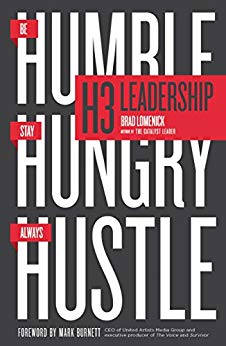
While reviewing notes taken during the reading of H3 Leadership, Lomenick’s use of a distinct phrase resonated in a unique way with me as the pilgrimage to determining the qualities exhibited by flourishing professionals continues. As Lomenick describes his experience “working with the best and most respected leaders in America” and the occurrence that they “share a common set of characteristics” which we will explore at a later time, he shares the phrase, “The path to being a better leader is paved with the asphalt of the habits we develop.” In my way of thinking, these habits that flourishing leaders have instilled in their lives become like the asphalt we drive on every day in that they are such a part of their personhood, they blend into the natural environment.
Lomenick’s perspective that successful people use “time and hard work to develop the habits necessary to get better at their craft” is consistent with most of my reading lately whether one is addressing the issue of professional success such as earning a leadership position or a more personal viewpoint of practicing the Spiritual disciplines. So, whether one chooses to use the term habit or discipline, the concept becomes a border piece in the conceptual puzzle of creating a flourishing life. Small, deliberate activities are enmeshed into a regular routine which ultimately leads to a “lifetime habit of growth” as described in People Fuel by John Townsend.
Townsend continues, “If you have productive habits, positive thoughts, the right core values, and healthy emotional expression in important relationships in which you can be vulnerable, be yourself, and disagree and solve problems, those are good indicators of a healthy, happy [flourishing] life. Not a perfect one but one anyone would want. And that is the vision for where life should go.” Paving your path with good habits is also an essential element to engage in deep work as described by Cal Newport. “The key to developing a deep work habit is to move beyond good intentions and add routines and rituals to your working life designed to minimize the amount of your limited willpower necessary to transition into and maintain a state of unbroken concentration.”

Whether discussing the view out the windshield for an emerging adult or the perspective from the rearview mirror of an experienced mentor, the journey to a life of significance and meaning is paved with the asphalt of good habits. From the Thrive Principle to Maintain Healthy Habits and Boundaries in Thriving at College to Sasse’s “five ways to cultivate character-building habits in children,” we are all encouraged, at any age, to embrace good habits, even small ones, on our pilgrimage through life.
From Teaching and Christian Imagination, “As a wise teacher once said, ‘We don’t move toward Heaven in one gigantic, decisive step after another. We move in small, repetitive, cumulative patterns-learning to make a habit of what we do well, and repenting, again and again, what we do badly.’ Pilgrimage, in other words, is a life lesson in revision. And to their great comfort, pilgrims make these small, repetitive patterns in the company of others. My circumference of ignorance bumps up against your circle of knowledge, and in this way we both grow and change and move forward.” Continuing the emphasis on creating relational equity between generations, we see the patterns of modeling and developing good habits paving the blacktop which culminates in a flourishing life.
Please feel free to share below some good habits that you think lead to a flourishing life either professionally or personally.


It is very true that most of the time we drive in town or across town and never pay any attention to the asphalt underneath the car unless it’s a bad one!!!
It’s interesting to see how asphalt, leadership, professional aspects, personal matters and spiritual disciplines can be related here in this original writing through habits.
When I think of asphalt, the first thing I think of is something that is heated, mixed and well compacted. When I think of my habits, the first thing I think of is the going to church on Sunday. I have my parents to thank for training that habit in me years ago. Years later today, looking back on the road that I have traveled, I cannot imagine a life without church and all the worshiping and learning and living in it. Yet, I have overlooked the effort (heating and mixing and back-and-forth compacting) going into the paving of that pathway for me to travel on. People have been talking about standing on the shoulders of giants a lot in talking down their contributions to something. However, just traveling on, without having to contribute anything to, the asphalt road paved by others who fostered some good habits in me is “grace” enough for me.
As to the no-question-asked habit of going to church on Sunday, while it’s a blessing for me and for many of us, it is a struggle for a lot of other people in the world. It’s a strange “thing” as a matter of fact! May the Lord use us to pave the way for others to travel on. It takes asphalt–something hot, well mixed and frequently compacted. Amen
LikeLike
This post brought home many ideas and teachings that I have been raised on. I grew up in a home where I am the oldest of six siblings, and because of this, my parents always raised me by saying I will always have people looking up to me. This, along with many other lessons, taught me to be a person who works hardest at anything I set my mind to, a person who takes each and every day and makes the most of it, a person who asks questions, and a person who, at the end of the day, trusts the Lord with every decision that was made. Among these, I put a special emphasis on the act of asking questions for many reasons. I believe everyone should ask questions because without questions, one is seen to just subject to the views/ideas that are initially shared. If everyone was so passive as to not ask questions, no steps would be taken to progress anything in this world, such as technology and any innovative subjects. At the end of the day, each and every little thing that a person does shapes him/her into the person that the Lord intends them to be, and if those steps are positive, they will fulfill a flourishing life.
LikeLike
Pingback: Deliberate Practice – Flourishing @ Life