
Passion and Perseverance
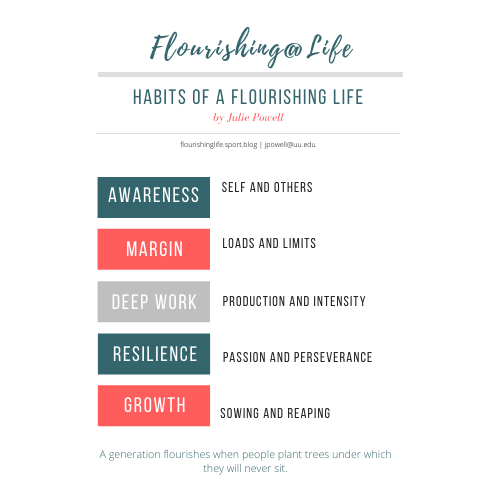
Emerging from the research on Gen Z comes the notion that Americans are trailing in their ability to be resilient, to bounce back after a flounder or failure, resisting the lessons to be learned from those valuable experiences. The prevalent reason for this gap relates to the protective nature us Gen Xers instilled through well-intentioned safety measures, but the result is the same where today we need to encourage the Habit of Resilience in order to flourish at life. Duckworth’s creation of the Grit Scale where she measures a person’s passion and perseverance emphasizes the relevance of consistency over time where she outlines “enthusiasm is common” but “endurance is rare.” Remaining persistent to the concept of deliberate practice, Duckworth shares, “…routines are a godsend when it comes to doing something hard. A mountain of research studies, including a few of my own, show that when you have a habit of practicing at the same time in the same place every day, you hardly have to think about getting started.” In summary, resilience in the perspective of perseverance (Grit) “is about holding the same top-level goal for a very long time.”
In his book Resilience: Hard-Won Wisdom for Living a Better Life, Eric Greitens offers a different view of resilience in that he considers, “If we limit our understanding of resilience to this idea of bouncing back, we miss much of what hardship, pain, and suffering offer us. We also misunderstand our basic human capacity to change and improve. Life’s reality is that we cannot bounce back. We cannot bounce back because we cannot go back in time to the people we used to be.” Instead of bouncing back from a floundering or failure, Greitens encourages you to move through. “Fortunately, to be resilient we don’t need to go back in time. What happens to us becomes part of us. Resilient people do not bounce back from hard experiences; they find healthy ways to integrate them into their lives.”
Moving through these tough experiences is a critical time when Gen Z most needs the influence of wise mentors, teachers, and coaches to guide them through times of adversity, especially if the building of resiliency was lacking in early seasons of development. Elmore and McPeak share what they consider to be the essential ingredients necessary for the development of a Habit of Resilience through the acronym IDEA in Generation Z Unfiltered:
- Instruction – “Adults provide verbal insights and explanations through conversations with Generation Z. This furnishes them with both knowledge and understanding.”
- Demonstration – “Adults find a way to offer an example of what the insight looks like in real life. This furnishes Generation Z with confidence and vision.”
- Experience – “Adults turn Generation Z loose to practice the insight on their own, to apply the knowledge. This furnishes them with skills and abilities.”
- Assessment – “Adults take time to debrief and evaluate the learning process with the Gen Z students they lead. This furnishes them with wisdom and perspective.”

Navigating the perfect amount of freedom to allow failure, known as controlled floundering, is unique to each individual and their personal situation; however, recognizing that struggle is necessary in order to develop a Habit of Resilience, we are presented with an opportunity to teach Gen Z ways to embrace the struggle appreciating that no one can build resilience for another. Mentors can point Gen Z in a specific direction and give them a map of where to go; but ultimately, they are unable to actually carry Gen Z through the struggle. “To move through pain to wisdom, through fear to courage, through suffering to strength, requires resilience. The benefits…are so precious that if they could be bottled, people would pay dearly for them. But they can’t be bottled. And if you want the wisdom, the strength, the clarity, the courage that can come from struggle, the price is clear: you have to endure the struggle first,” explains Grietens.
Those in the emerging generation who are fortunate to have been led by wise leaders should seek the opportunity to learn as much as possible from them. Luckily, as Grietens continues, “struggles are very much like the struggles of those who went before [Gen Z], and they are very much like the struggles of those who will come after [Gen Z]” and hopefully, we are providing “sources of wisdom” all around them. For this very reason, you will find me encouraging intergenerational mentoring relationships so that all the generations can flourish.
Please feel free to share below your thoughts on ways to develop the Habit of Resilience and why it is an important virtue to have.
References:
Duckworth, A. (2018). Grit: The power of passion and perseverance. Scribner.
Grietens, E. (
 Flourishing @ Life
I really like this post. Some many times I think younger generations believe we have to be able to do everything on our own to prove we are worth something, that we will make a difference with no interruptions. The problem with this mindset is we find ourselves stuck in a hole because we have no idea how to get ourselves out. We want to believe we have the power to save our own lives when in reality we need people with more experience to help us figure out the ways we can make it through life. Relationships are vital when trying better yourself, especially relationships with those who come before us.
LikeLike
This post on resilience is very relevant in today’s society. I specifically loved when you admitted the struggle is a requirement in requiring resilience. I also liked how you noted that it was important to embrace the struggle. I personally believe reassuring oneself how positive a struggle can be in the midst of it, can be a stride towards resilience. Furthermore becoming aware of what your struggle really is can also be beneficial. In my life, there have been several times that I believed I was struggling with one thing, but in reality there was an underlying problem that I was really struggling with. This goes hand in hand with self awareness. Bring self aware is one of the most important things when it comes to finding resilience.
LikeLike