
As I compose this post on January 1, 2020, it’s the first day of a new year, the first day of a new decade. With over 30 scrapbooks organized according to year filling the shelves in my home office and bedroom, capturing time through photographs and jotting down memories has been a priority in years past. Although my intentions are to stay current, I am slightly behind in my documentation. I believe I’m ready to begin January of 2017…maybe this month I will invest the time, who knows? The attempted point of this dialogue is to discuss the concept of time and the significance it plays in our lives.
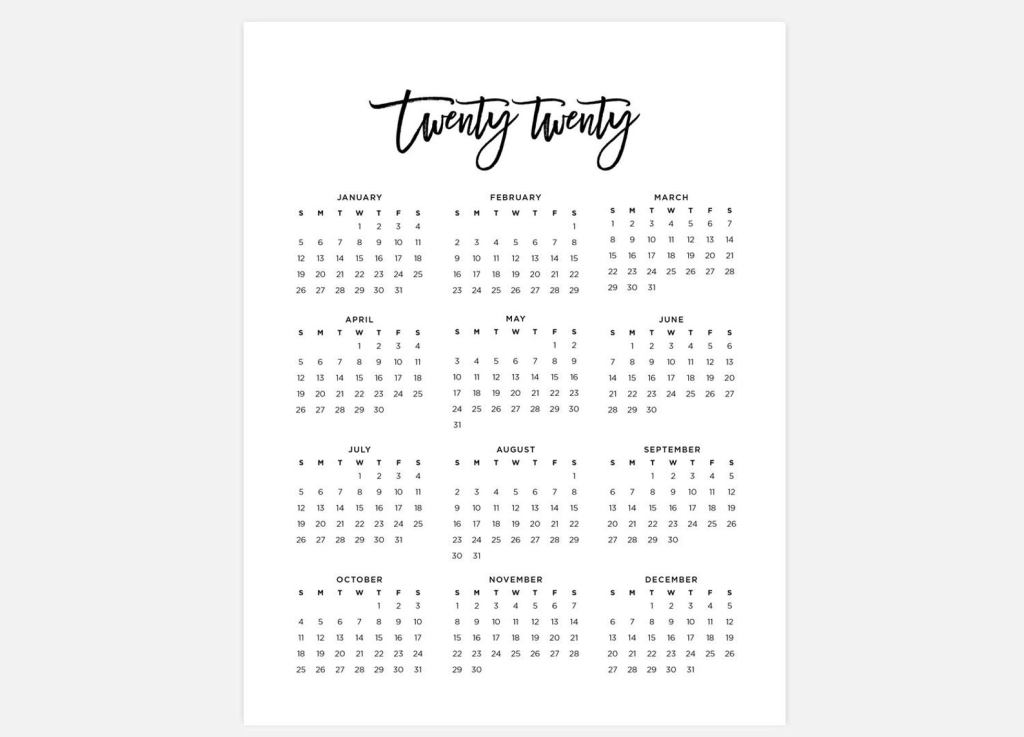
For most of us, a fresh calendar now hangs in the house, ready to be filled with events and appointments, celebrations and holidays, reminders and memories. Although I typically associate a new year with the month of August because of my life in academia, most people on this planet will associate January 1 with a new start, a new beginning, an opportunity to develop new habits that might lead to a flourishing life. Grasping the red Sharpie, I thumb through the months of 2020, documenting the items that are already set. Post-it notes will suffice for the potential trips such as completing the goal of a race in all 50 states before the end of 2021.
However, as the progression through the year happens, it occurs to me that as I turn each page of the calendar, there is a significant tickle in the brain that nudges me to truly consider the meaning of time. The fact that my watch has needed a new battery for weeks and I continue to look at the unmoving hands, that nudge only increases. Interestingly, this week has included research where a common issue of one’s perception of time has arisen whether it’s how one stewards their time or how technology might be wasting one’s time. And no matter where I seem to seek answers about flourishing at life, the issue of time appears to connect to all five of the Habits of a Flourishing Life: awareness, margin, deep work, resilience, and growth.
In a previous post entitled Why is the Discussion of Death Often Taboo?, an introduction to the concept of Chronos vs. Kairos time is made, and I would encourage you to return, or even read for the first time, this post by clicking on the title above. Understanding this framework for thinking about the preciousness of time is relevant to all Christ followers and is an underlying principle in developing the five Habits of a Flourishing Life. So, after reading that post, please return here to continue the conversation on these two Greek terms we have for time.

Admittedly, the initial research on these two Greek terms related to emerging adulthood and how one might, during this season of life, consider the meaning of time. In Calling All Years Good, the authors offer this insight, “We too often think of adolescence as the time of preparation for adulthood, diminishing it to a linear chronos trajectory: ninth grade prepares you for tenth grade, which prepares you for college entrance exams, which prepares you for college applications, and so on. But kairos places the emphasis on the present moment as filled with possibility for responding to God’s call: the call of teens is to be teens and to experience God’s purposes for them as they are in adolescence. Chronos, then, is the context for kairos: we experience callings at the age we are, the ‘appointed’ or ‘crucial’ time of decision.” It is this movement away from just considering chronos time and towards the significant focus onto Kairos time that is vital, regardless of which season of life we happen to currently reside.
It is this modern view of time which becomes an essential focus when considering the five habits. In the book Margin, Swensen offers a perspective of time which “is to compress it and milk it for every nanosecond of productivity we can get. To understand how a society experiences time, examine its operative vocabulary. We talk of no time, lack of time, not enough time, or being out of time. Trying to get more time, we borrow time only to incur a time debt and end up with even less time.” It’s this vocabulary of time that becomes important and how we can move away from our bad habits regarding time and towards productive habits of stewarding time that provides us with an awareness of where we invest our time, how to create margin in our schedules, the importance of time to deep work, the reality that it takes time to be resilient, and that all things inevitably need time to grow.
So, as you ponder the development of the five Habits of a Flourishing Life, I ask you to contemplate your vocabulary as it relates to time. Is it one of deficiency, as with an essential nutrient, or one of overflowing with much to spare? Please feel free to share your thoughts in the comments below.
 Flourishing @ Life
I am an individual that gets a little overwhelmed with the idea of time. As someone with a pretty extensive medical history, the concept of time isn’t that unfamiliar to me though. The same goes for me being a Christian. I know that time is a gift and that we’re not guaranteed a single second.
That being said, I feel as though my vocabulary is more of a mixture between not enough time and too much time. I’d like to think of myself as having just enough time as opposed to a deficiency or abundance.
LikeLike
Pingback: Seasons of a Professional's Life – Flourishing @ Life
Pingback: Hub of the Wheel – Flourishing @ Life
Pingback: Larks, Owls, and Third Birds – Flourishing @ Life
Pingback: Gratitude Gap – Flourishing @ Life
Pingback: Changing Seasons – Flourishing @ Life
Pingback: Waiting Room – Flourishing @ Life
Pingback: Friendship Conversations – Flourishing @ Life
Pingback: Inner Scarlett – Flourishing @ Life
Pingback: Anti-Aging Mindset – Flourishing @ Life
Pingback: Ordinary Time – Flourishing @ Life
Pingback: Watch the Worm – Flourishing @ Life
Pingback: Eight Decades – Flourishing @ Life
Pingback: Still Learning – Flourishing @ Life
My vocabulary regarding time typically resembles more of a linear perspective. I suppose I instinctively relate more to the chromosome concept of time. There are countless different aspects of life that you can dedicate your time to. It is not a question of good or bad, but what you want to prioritize. It’s difficult to have to choose amongst an array of objectively good things. A prime example of this struggle is when you are in college. Everyone always talks about how there are so many things to get involved in your freshman year, but these decisions have been something that I have struggled with every year. I am just now completing the first semester of my senior year and I believe that this has been my busiest semester yet! There are so many wonderful things to be involved in and I have genuinely enjoyed each of my experiences, but an over scheduled life is not a flourishing one. Whenever I find myself living “due date to due date” I know that I am not flourishing where I am in the moment. I often have to remind myself to pause for a moment and remember the kairos aspect of time. Every second of life we have is a blessing and deserves to be viewed as such.
Courtney
LikeLiked by 1 person
The idea of “kairos,” the art of living in the present moment, is a charming thought. However, its practical application faces challenges in a society that relentlessly demands fast and efficient progress. Despite my desire to embrace kairos, I am pressured to conform to “chronos” – the forward-focused, “what’s next?” orientation of time. My commitment to chronos is partially crucial for my success, yet I am also conscious that this dedication to productivity may result in a rapid passage through my youth, leaving little room for anything beyond work. Seeking a balance between kairos and chronos seems like a plausible solution, but I am unsure how to achieve this.
LikeLike