
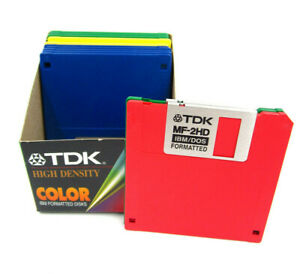
As a member of Gen X, born in the early 1970s, technology has required that I continually make adjustments, but I can’t say that I’m always prepared. Let’s see if anyone else relates to the ever-changing path of saving data, music and videos: first, we had a range of floppy disks from the large 8” to the smaller 3.5”; next, the VHS and cassette tapes which were finally eliminated by CDs and DVDs; once I managed to transfer everything from tape to disc, along comes the USB drive and now the cloud. I sincerely hope that jpegs and mp4s do not become obsolete or else my memories are in deep trouble! Witnessing, what I formally considered as drastic changes, these were just small blips on the technology radar compared to the last decade of the 2000s. As a result of where I was born on the generational timeline, I wrestle with this accept/reject relationship with advancing technology.
Bouncing back and forth between the desire to embrace technology and a crave to completely ban it, my course syllabi over the years reflect this struggle. In addition to the class policy conundrum, there is the personal wrestling with a proper balance on utilizing technology in my life without allowing it to take over. Implementing practices such as fasting from social media, unplugging for periods of time, and silencing all the notifications, my hope is to prevent an addiction to this little device known as the smartphone. Anyone trying to reach me can attest that sometimes this doesn’t happen as quickly as with other individuals. Other useful tools such as night mode and removing the phone from the bedroom have also helped. I’ve learned to protectively guard my time; however, I recognize this is much easier applied to life when there are no children involved.
Applying reduction strategies is personally preferred over the extreme philosophy of digital minimalism which is defined by Cal Newport as, “A philosophy of technology use in which you focus your online time on a small number of carefully selected and optimized activities that strongly support things you value, and then happily miss out on everything else.” Newport’s philosophy arises out of concern that smartphones are creating a behavioral addiction and he isn’t the only one raising red flags. In future posts such as, Is Gen Z the Canary? and This is Your Brain on a Smartphone, I will share research related to the physiological response in our brains as it relates to technology use, but for now, the focus will remain on the philosophy of minimalism.
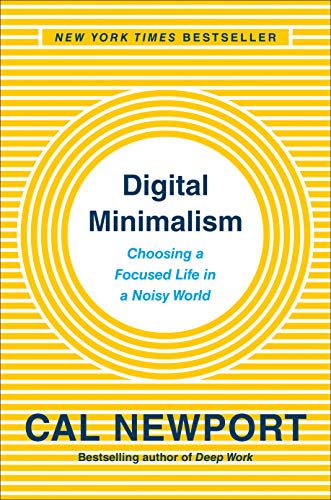
Attempting to define the Habits of a Flourishing Life, I cannot ponder this issue without acknowledging the role of technology in our lives today. And although I’m not ready to embrace the philosophy completely, Newport offers sound reasoning as he outlines three core principles for its effectiveness. “Principle #1: Clutter is costly. Digital minimalists recognize that cluttering their time and attention with too many devices, apps, and services creates an overall negative cost that can swamp the small benefits that each individual item provides in isolation. Principle #2: Optimization is important. Digital minimalists believe that deciding a particular technology supports something they value is only the first step. To truly extract its full potential benefit, it’s necessary to think carefully about how they’ll use the technology. Principle #3: Intentionality is satisfying. Digital minimalists derive significant satisfaction from their general commitment to being more intentional about how they engage with new technologies. This source of satisfaction is independent of the specific decisions they make and is one of the biggest reasons that minimalism tends to be immensely meaningful to its practitioners.”
If asked, it is my belief that Newport would argue that digital minimalists are flourishing people who have found a way to navigate life in a manner that suits them. Personally, I am still on the fence in my attempt to define best practices with regards to technology and its connection to the five Habits of a Flourishing Life; therefore, you are welcome to journey on with me until I reach a conclusion. Please feel free to share below your approach to balancing today’s technology for yourself, your children, and your sphere of influence. What practices seem to work best to prevent a behavioral addiction?


Pingback: This Is Your Brain on a…Smartphone – Flourishing @ Life
Pingback: Bridging the Generational Gap – Flourishing @ Life
Pingback: Airplane Mode – Flourishing @ Life
Dr. Powell,
I really enjoyed this blog. I recently had to read the book Digital Minimalism for a class assignment. The principles within the book are all explained very well and in-depth. I personally really liked the idea of being more in the moment, and intentional with the people around you. I feel like there are many times that I am with my friends and instead of being intentional and direct with each other, we are all lost in our phones and scrolling on social media. I feel like if we would focus on not being on our phones and just being present in the moment, we would create many more memories and have those deep and personal conversations that make you grow closer to each other. After reading this book I’ve considered trying to implement these values and ideas into my life. I think that it would be something that I might struggle with at first, but after a couple of weeks, I feel that it could be a life-changing decision. Not only would I be more intentional with the people around me, but I would also have much more time in the day to be productive and complete miscellaneous task.
LikeLike