
For those of us who routinely are a part of a sporting event, whether as a volunteer or an employee, we understand the importance of the hospitality room where we can refresh ourselves with snacks and visit with colleagues during intermissions of play. During the more than two decades that Jackson served as the host city for the NAIA Women’s Basketball National Championship, it was often discussions about the menu downstairs that filled the scorer’s table in Oman Arena. Attempting to weigh the decision between heading upstairs for a restroom break or sprinting downstairs for food during our ten-minutes between halves, the menu became a critical deciding factor.

Whether you have ever visited a hospitality room or not, I have faith that you grasp the idea of offering a place where people are invited in whether to eat a bite, relax for a spell, or engage in vibrant conversation. As I begin reviewing my notes from 2013 in the book What the Best College Teachers Do this week and the highlights from The Hospitable Leader, my mind drifted to consider if these concepts could possibly merge in any way that would be applicable to a college classroom. Bear with me, because I believe there are valuable applications to be made for how a leader approaches any setting, from a Fortune 500 company to an intercollegiate athletic program, to a college classroom, to a Bible study. According to Smith in The Hospitable Leader, “Hospitable leaders-especially in today’s world-must seek permission from followers in order to lead them. We must invite people in. We must welcome them to the table. We must create conditions in which people want to be led. We cannot lead people from here to there if they have not first been welcomed here.”
So, what actions can I select which would enable students to feel welcomed in my class? Thinking beyond the everyday behaviors that promote social etiquette such as greeting students by name and smiling, how do the best teachers conduct their class? According to Bain in What The Best College Teachers Do, the best teachers create a classroom where “students encounter safe yet challenging conditions in which they can try, fail, receive feedback, and try again without facing a summative evaluation. They learn by doing and even by failing.” Giving attention to this concept of controlled floundering previously, it remains a vital key to learning for Gen Z as they learn how they learn (metacognition). When we “create space physically, emotionally, and relationally” that is hospitable, the result is an “environment where people and dreams flourish,” states Smith.
Smith continues to describe this environment of hospitality as home. Not sure that I can create a homey atmosphere in the cold, former science lab of A-11, but maybe outside of the physical space, I can embrace the mystery and warmth of home in other ways. “A leader who connects to the subconscious need in each of us for the warmth of home is one who cultivates environments where people and dreams-the dreams of the followers and the leader-can flourish.” Emerging adults in my sphere of influence have big dreams for their vocation, their life, and what is yet to come. Smith quotes another author, Brene Brown who said, “For me, teaching is about love. It is not about transferring information, but rather creating an atmosphere of mystery and imagination and discovery.” Smith claims, “This teacher gets ‘home.”
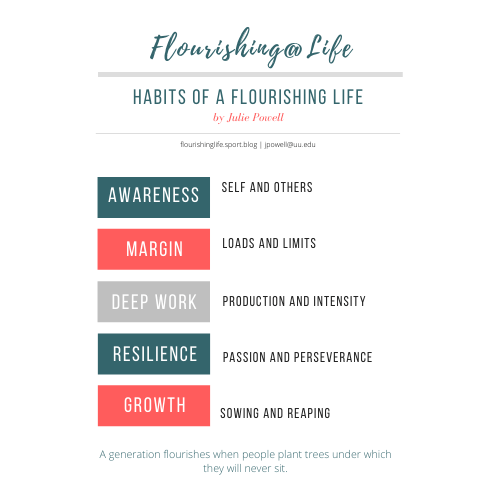
Returning to the research on college teaching, Bain shares other ways to create a sense of home. In our homes, each family member has a sense of commitment to each other and to good stewardship of the physical space. “Exceptional teachers ask their students for a commitment to the class and the learning.” Some leadership refers to this same concept as buy-in, asking followers to engage in the process together, working towards a common goal. There may be times that we must approach our Hospitality Room, our classroom, as a joint learning space where both the teacher and students develop a Habit of Growth that lasts a lifetime.
Bain offers an extensive look into What the Best College Teachers Do that can be useful in other settings as well. When you combine his findings with the concepts of a Hospitable Leader, we find some unique approaches that allow us “to get up every day to do everything in [our] power to help [emerging adults] see their God-inspired dreams come true.”
Thinking back on previous experiences, either in a school or organization, when did you feel welcomed into a hospitable environment? What descriptors would you use to capture the feeling of that experience? Please share in the comments below.
References:
Bain, K. (2004). What the best college teachers do. Harvard University Press.
Smith, T.A. (2018). The Hospitable leader: Create environments where people and dreams flourish. Bethany House Publishers
 Flourishing @ Life
Pingback: Culture of Hospitality – Flourishing @ Life
Pingback: The Hospitable Leader – Flourishing @ Life
I really liked this post. When reading i completely agreed that if i felt more comfortable in a classroom i also succeeded much more. One example i can think of was a class my sophomore year at Jackson State. It was not because i knew a few people in the class that made me feel comfortable it was the teacher. This teacher was one I could talk to in the hall for long periods of time and just have conversations with and not school conversations. This professor was very outgoing with us and straight forward and let us know what would help us in the future and what probably wouldn’t. He wasn’t afraid to learn from us either whether it was a different study tactic or anything he made everything easy within the classroom which I feel as if let me thrive academically.
LikeLike
Pingback: Surprise and Delight – Flourishing @ Life
Pingback: The First 48 – Flourishing @ Life
Pingback: Team Chemistry – Flourishing @ Life
Pingback: You’re Invited! – Flourishing @ Life
Pingback: Asking Over Assuming – Flourishing @ Life
Pingback: Eyes Opened – Flourishing @ Life