
“Watching a skilled magician at work is an exercise in awe. Try as we might to see through the sleight-of-hand and illusions taking place before our very eyes, we come away amused, amazed, and astonished…It makes us smile. It makes us shake our heads. It makes us wonder. And it leaves us with a feeling of enchantment that stays with us for a long time.”
Zemke and Bell’s Service Magic
If you’ve ever been entertained by an illusionist, there is a cognitive awareness that you are being tricked, manipulated, and deceived; however, because you experience such Surprise and Delight, it is an acceptable manipulation. When researching the topic of hospitality as it relates to a flourishing life, I was doubtful when the research algorithm suggested Zemke and Bell’s Service Magic; but once the decision was made to flip a few pages of the ebook before dismissing it outright, I found myself pleasantly surprised. Who knows, this new resource might become a suggested reading in sport management along side of Raving Fans, Inside the Magic Kingdom, and Delivering Knock Your Socks Off Service.

Because I am a firm believer that all of us are provided with opportunities to be hospitable servants to others, there are lessons to be learned from Service Magic that can be applied when serving in retail, education, or athletics. “Service Magic, like stage magic, is a set of learned skills developed through desire and mastered through thought and determination…The service magician takes pleasure in the pleasure of others and in the practice of skillful service. Making the difficult appear easy.” One of the common themes emerging here, as in the other books mentioned above, is a need to be intentional about caring for others. It cannot be an afterthought. You cannot wait until the Abracadabra to figure out what the audience will find entertaining. It takes preparation.
“Part of that preparation involves learning to match the right trick to the right audience. Another part involves positioning-doing his tricks and illusions in a way that awes and enchants his audience, fits the moment, and preserves the mystery. And part of that preparation involves subtly leading the audience to want the amazement to happen and to suspend its disbelief in magic itself.” Zemke and Bell offer that the Service Magic Method incorporates the three Ps of place, process, and performance. Place Magic addresses the venue and the physical aspects that “attract and please.” Process Magic is the invisible, behind-the-scenes policies and procedures that allow an experience to be “hassle-free and even interesting.” Lastly, Performance Magic is the interaction with personnel such as a “waitperson who makes the dining experience ‘work’ for you by correctly reading your mood and engaging you in light-hearted banter or by leaving you to your solitude is a card-carrying, practicing, professional service magician.”
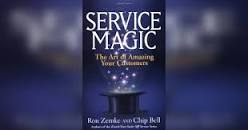
Zemke and Bell share stories of organizations that use the Surprise and Delight relationship approach to wow their guests from car rental companies to hotels to sporting events; however, the one that touches on the personalization aspect of the Service Magic Method, and speaks to me the loudest, is this one: “A customer traded in an older model car for a new one. A week after owning the car, she turned on the radio for the first time to discover the dealership had programmed the radio stations from her old car’s radio into the new one. That bit of unexpected and thoughtful personalization created a small thrill of magic for this customer.” Abracadabra!
The magic moments described here, the culture of delight that is created, and the emotions of feeling deeply cared for, it’s all in the details. And the details emerge when people develop a Habit of Awareness, particularly, situational awareness. From Zemke and Bell to Dan Coyle’s The Culture Code to Zigarelli’s The Messiah Method, we are provided with numerous stories of those Abracadabra moments that emerged out of employees who were aware of their guests and their needs.
Please feel free to share in the comments below your thoughts related to creating magical moments in your classroom, office, athletic venue, church, or family.
References:
Coyle, D. (2019). The culture code: The secrets of highly successful groups. Random House
Zemke, R., & Bell, C. R. (2003). Service magic: The art of amazing your customers. Kaplan Publishing.
Zigarelli, M.A. (2011). The Messiah method: The seven disciplines of the winningest college soccer program in America. Xulon Press.
 Flourishing @ Life
I use magic in my class that deals with activities for those with disabilities. It adds a level of fun and wonderment to the student’s tool belt!
LikeLike