
When attempting to flourish in any capacity, it’s important to know the person God created us to be and this can be accomplished by pursuing a Habit of Awareness. Learning about ourselves and others opens our eyes to see the talents, gifts, and strengths that each person possesses along with the unique situations where various combinations of characteristics are needed. When a group/organization/team is working towards a common goal, the shared mission is accomplished when members comprehend the nature of their role in the process. Just as Scripture informs us in Romans and 1 Corinthians, not all parts have the same function; however, all parts are needed to successfully reach our intended purpose.
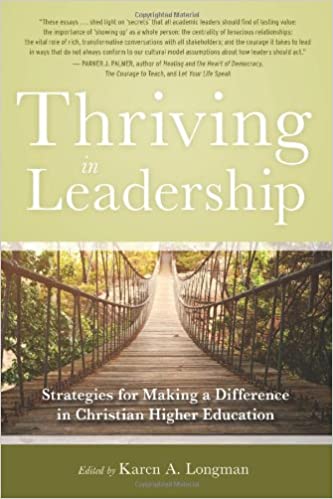
Leaders Who Flourish embrace the importance of forming relational equity within their organization. In Thriving in Leadership, we learn about “the importance of relationships to accomplish God’s work: ‘Leadership is about people-influencing people, listening to people, understanding what makes them tick, forming networks, relationships, and alliances. There’s a cynical saying, ‘It’s not what you know, it’s who you know.’ Guess what! The universe is personal, and it is who you know. God made it that way…The challenge is to take what you know and who you know and put them together productively.’”
Leaders Who Flourish appreciate the need for perseverance and resilience that can only emerge after a difficult period or crisis. Laurie Shriner shares, “Exploring the difference in these leaders, between those who floundered and those who flourished, led me to the topic of resilience. The statement by the college president who became a better leader for having experienced a crisis is echoed in the research on human thriving: many psychologists believe that the heights of the human experience can only be fully known by those who have experienced the depths as well, ‘those who have run the gauntlet.’” Developing a Habit of Resilience is vital to becoming a leader who flourishes.
Leaders Who Flourish adopt a positive perspective. “The ability to see the big picture, to discern ‘what’s going on here,’ to understand multiple viewpoints, and to see a situation and our role in it realistically in leadership over the long haul…Flourishing leaders utilize this positive perspective in four key aspects of their work: how they see the situations that arise, how they see themselves, how they see others, and how they see the future. In each of these aspects, a particular strategy distinguishes the flourishing leader from those who flounder.”
Leaders Who Flourish incorporate a Habit of Growth into their leadership philosophy which includes the pursuit of their best self. “Flourishing leaders regularly seek opportunities for professional growth and leadership development, recognizing that connecting to other leaders and learning from them strengthens their skills and equips them with the tools they need when challenges arise.” Mirroring other experts like Tommy Spaulding, Miller and Angaza, Sinek, and Brown, Shriner describes the importance of creating a Posse (Fifth Floors, Trust Agents, Circle of Safety, Safe Containers) in leadership when she recommends “forming your own personal ‘board of directors’-friends and mentors both inside and outside the work environment who can speak into your life and provide support for your leadership journey.”
When we discuss Leaders Who Flourish, it is important that we grasp the depth and complexity of what this descriptor entails. Shriner’s definition has become one of my favorites in capturing the essence of what flourishing truly means. “’Flourishing’ has emerged from the positive psychology literature as a concept that describes the experiences of human beings who are vitally engaged in their work and in significant relationships, who find meaning and fulfillment in the contributions they make-in short, those who thrive. Flourishing goes beyond effectiveness-it means not only doing a job well, but also experiencing deep satisfaction and a sense of purpose in that role. Flourishing people look beyond themselves to the welfare of others and to making the world a better place.”
As you have read through this post today, does a leader emerge in your mind who mirrors the characteristics mentioned above? Who would you describe as a Leader Who Flourishes and why? Please share in the comments below.
References:
Brown, B. (2017). Rising strong: How the ability to reset transforms the way we live, love, parent, and lead. Random House.
Miller, D. & Angaza, J. (2012). Wisdom meets passion: When generations collide and collaborate. Thomas Nelson.
Longman, K.A. (2012). Thriving in leadership: Strategies for making a difference in Christian higher education. ACU Press.
Sinek, S. (2017). Leaders eat last: Why some teams pull together and others don’t. Portfolio.
Spaulding, T. (2010). It’s not just who you know: Transform your life (and your organization) Relationships. Crown Business.


The term “leaders who flourish” is almost a goal that any leader or future leader should strive to achieve. It’s also kind of ironic that leaders who embody this title aren’t leading people for their own personal gain. As mentioned in your post, a leader who flourishes is someone who is completely engaged in their work, builds, and maintains meaningful relationships, and those who find the ultimate fulfillment in the work they do. If I were to add to it, I would add the people they impact as well. One of the core reasons of mine for wanting to coach is the amount of impact we have on our players. Finding our sense of purpose is what all humans search for and if found, can give us more satisfaction and fulfillment than any amount of personal gain or any monetary value. The growth mindset that these individuals feature is a “habit” that reveals much about you. People who are willing to learn and grow show that they are humble enough to understand that they can’t know all the answers. They realize that the only way to grow is by constantly learning from others. This is the only way to adapt. When you asked who I thought of when reading this blog, I thought of several people that I met virtually for the first time over the past 6 months. I was able to connect with many coaches and many of those people all shared these qualities. They wanted to build genuine relationships, they are fully engaged in their work, they find fulfillment in impacting others and they are always willing to grow and learn.
LikeLiked by 1 person
Until reading this blog about Leaders Who Flourish I only thought of flourishing as succeeding. As the post mentioned flourishing means much more than just succeeding as an individual. Flourishing involves finding what what our true passions are in life and planning,creating and pursuing that passion. Through finding our passions we are able to impact so many lives whether be coaching, teaching or any other area in life. When we are passionate about what we are involved with people notice and are drawn to that energy. I believe God creates these passions within us as Christ followers to do His work and reach more people to bring in to His kingdom. Leaders who flourish take their role seriously knowing the impact they can have of those around them. The best leaders who I have ever encountered were never afraid to step outside their comfort zone and they knew they could only grow from possible failure. The people were all coaches throughout my baseball career from a young age to high school. They had a lasting impact on my life as Christ followers and leaders. They lead with conviction and purpose and shared their passion for all things to help us grow and mature.
LikeLike
When I think of the word flourish, I would have never associate it with being a leader, but now that you have, I can’t imagine a leader not flourishing. I’m an athlete and have been a part of many different teams over the years, this also meaning that I’ve had several different leaders. Something that I’ve picked up on overtime is that the leaders that are more relational have more people willing to follow them. There is a big difference between a leader that is focused on the end result and being successful and a leader that knows the purpose of the things you do and is confident that they’ve prepared enough that they’ll be successful. The quote from the blog saying, “Leadership is about people-influencing people, listening to people, understanding what makes them tick, forming networks, relationships, and alliances.” These are the thing I associate with being a great leader, but when you add a leader that is flourishing onto that it makes them unique and a prime example to others of what to strive for.
LikeLike
Before I discuss the contents of this post I thought it was very much worth mentioning the reason I chose to read it. The reason is because of how applicable knowledge on how to be a better leader is to me as a part of Union’s Women’s basketball team. My coach has made it very clear to me lately that I have the ability to lead our team in a variety of areas and I wanted to take this opportunity to read more about how I can achieve that. The very first paragraph about groups that work towards a common goal by having each member understand their role in the process was extremely applicable and is something my coach often talks about. He makes us aware of each of our gifts and how we can utilize them to help the team succeed. As a leader I also try to make myself aware of the gifts of others so that I can put them in situations for them to give their gifts away. The different characteristics of flourishing leaders were also very relative to me and all acted as great reminders of what I need to be like when it comes to serving my team. I liked reading about the need to persevere and resilient through obstacles, something that applies to basketball greatly. The need to have a positive attitude was also nice to read about because I tend to get down on myself when I don’t perform well. I think the characteristics discussed in this blog post greatly mirror what I picture a great leader to be. Some other characteristics that come to mind is someone who is bold enough to hold others accountable and also pull others along with them to the top. Overall, I really enjoyed this blog post 🙂
– Shanique Lucas
LikeLike
I really enjoyed reading this article. Being a part of the men´s soccer team leadership counsel has made me think of how to be a better leader. I liked how you mentioned the meaning of Flourishing and how we have to be vitally engaged in the work and in significant relationships, finding meaning and fulfillment in the contributions we make-in short, those who thrive. How important it is to incorporate a Habit of Growth into our leadership philosophy which includes the pursuit of our best self. “Flourishing leaders regularly seek opportunities for professional growth and leadership development, recognizing that connecting to other leaders and learning from them strengthens their skills and equips them with the tools they need when challenges arise”. Becoming a good leader is a constant progress of learning and developing new skill sets. After reading this article, i could see how important it is to persevere and be resilient through obstacles and challenges.
– David Hurtado
LikeLike