
Why I remember obscure and trivial details will always be a mystery to me; however, sometime in the 1970s, I remember dad coming home one day and showing us this circular object called a Round Tuit. Absorbing the idea took a few minutes, but the idea behind the object was to reach deep into your pocket and offer it to the next person who spoke the words, “When I get around to it.” Basically, by providing this circular object, you were eliminating a person’s excuse not to take action. In a quick search online, I was able to order my own Round Tuit, a laser-engraved wooden token with the following words: “Side 1: Tuit. Side 2: This is a ROUND TUIT. Guard it with your life. It could help you be more efficient. For years you’ve heard ‘I’ll do it as soon as I get a Round Tuit.’ Now that you have your own, you can accomplish all those things you put aside until you got this ROUND TUIT.”
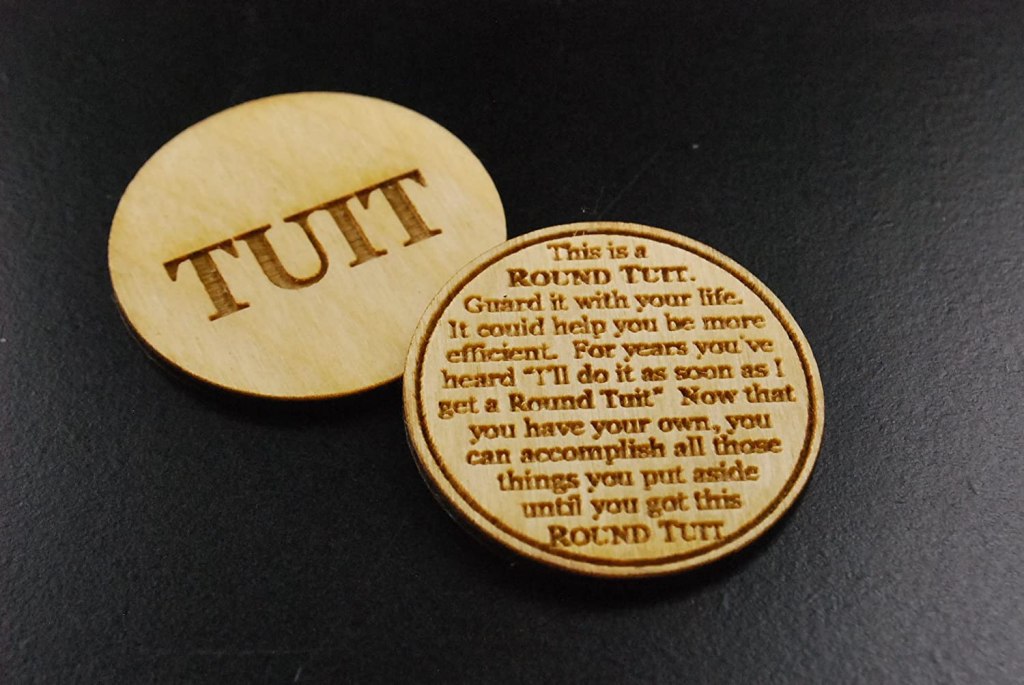
Connecting to John Maxwell’s insights shared in First to Help, my thought was to distribute a Round Tuit to each of my sport management students in class this semester and discuss the importance of establishing an Improve Mindset where they take the initiative to learn about the sport industry by gaining knowledge and experience. How delightful it would be to hear an undergraduate major working one of Union’s sporting events utter the phrase, “How can I help?” Mirroring the philosophical approach of Disney, who consciously seeks ways to demonstrate excellence within the organization, our students assist the entire Union community in establishing a Culture of Hospitality. “Disney shows how an organization can counter such assumptions that ‘it’s not my job’ or ‘someone else will do it.’ When you see a Disney employee and are working in one of the parks, no matter what their job title is, when a guest appears to need help, it is always your job to jump in and assist them. When there is trash on the ground, you always pick it up,” as shared in Scaling Up Excellence.
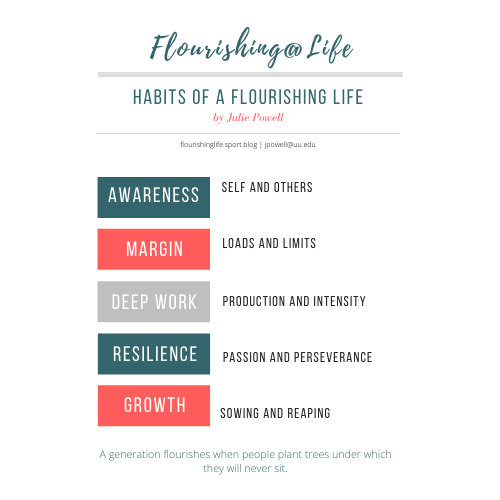
One of the reasons I encourage our students to develop a Habit of Awareness, where they notice the needs of others and step in to be the First to Help, connects not only to our mission as followers of Christ but also to the research on life satisfaction. Most people nearing the end of their life have a tendency to reflect on the things they didn’t get around to, the relationships left uncultivated, and the opportunities where they failed to act. There is no way to eliminate all the inevitable regrets one might accumulate in a lifetime, but the earlier an emerging adult becomes aware of the importance of intentionality, in all their relationships-personal, professional, and spiritual-the fewer they might have. So, if I provide students with a Round Tuit, do you think the message will penetrate at least with a few?
Please feel free to share in the comments below any times you would have benefited from possessing a Round Tuit. What assisted you in times where you didn’t hesitate and took the initiative? How did you benefit?
References:
 Flourishing @ Life
I used to carry one of those tokens in my pocket, with the thought I could use it in a variety of situations. The problem was that I never got around to taking it out…
LikeLiked by 1 person
Very clever…as a parent of 4 under the age of 8, I feel that there are many things that I need to get ’round to. The other side of the coin (pun intended:) is that sometimes there are things that we (I!) feel so desperate to get a round to, and yet sometimes we may come to find that they aren’t as important as we may think. Relationships, etc….absolutely! But there will likely always be laundry, dishes, painting, cleaning, etc. to do be done…and fretting over them only seems to serve to stress me out. I suppose the balancing act is to figure out what we really need to get ’round to…and do those…as opposed to constantly reflecting on what else we have to do (which is a never ending list…at least for me:). Great stuff, Julie!
LikeLiked by 1 person