
Pivot…what comes to mind when you see this word? Perhaps it’s the scene from the 1990s sitcom Friends when Ross Geller, along with Rachel and Chandler, attempt to move a new couch up the staircase to Ross’ apartment. After finding themselves in an awkward position on the stairs, Ross begins yelling, “Pivot! Pivot! Pivot!” much to the exasperation of his two helpers. If you can clearly picture this scene, you are likely a member of Gen X, or someone wisely educated you on the long-running sitcom full of phrases and sayings that reframed our vocabulary for more than a decade. Perhaps, you have an interest in the world of sports and you envision a body move on the court or field. Regardless of which scene rushes to the forefront of your mind in efforts to define Pivot, the meaning doesn’t vary. It means to turn.
Just as Ross needed Rachel and Chandler to Pivot, or turn, the couch while climbing the stairs, there are moments on a journey to a flourishing life that will require us to Pivot. Whatever goal, expectation, or aspiration we’ve executed a plan for isn’t having the result we imagined, so we are required to make an adjustment. Engaging regularly with Emerging Adults, one of my deepest desires is that they can cultivate a Habit of Resilience, so that when it comes time for them to Pivot, they are equipped to make that turn, that transition, without derailing all of their hopes and dreams. As those of us who are in later Seasons of life can guarantee—something that they’ve invested a great deal of resources in (time or money), will not have the desired result.
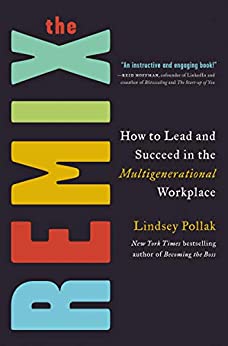
So, how does a person Pivot? How do they become flexible and adapt to circumstances that could easily derail their God-given mission? How do we successfully model for Emerging Adults, both as individuals and organizations, some best practices for adapting to changing circumstances without losing sight of our vision and mission? The entire world now, thanks to the COVID pandemic, knows in a very real manner what it means to Pivot, but not all of the adaptations that were made during this crisis need to be duplicated. How can we implement the concept of Lindsay Pollak’s Generational Remix by blending the positive changes that resulted by the Pivot with the sound strategies that have worked for decades previously?
More than once in the last few years, we’ve all witnessed a sign communicating something to the effect of, “Please be patient with us, we are experiencing a workforce shortage.” Perhaps, the message might be better worded, “We are attempting to make a Pivot and are uncertain in how do it.” Many will lay blame for this shortage at the feet of COVID, but perhaps there are other conditions that led to our current state that are just a result of the current world in which we live. One concern regularly expressed over the last few years in higher education is the reality that in the United States, we are headed for a Demographic Cliff, or enrollment cliff, depending on where these conversations are taking place, when there are no longer enough college students to fill the seats of previous generations. Perhaps, this is a great opportunity to model for them what it means for an organization to strategically plan for adaptations that are on the horizon. Although we may not be able to plan for every eventuality that will arise in the future, we can be hopeful and purposeful in how we approach the Pivots we do need to make. How do we make the turn, the transition, and continue moving forward with the successful aspects of our organization while recognizing those things that will indeed need to change?
Whether it is generational theory highlighting the reality that Gen X, sometimes referred to as the Forgotten Generation, is not large enough to replace those exiting the workforce from previous generations. Or that Emerging Generations are seeking new ways of approaching their education and workplace, the need to Pivot is coming. Where are those students and workers going to come from when the population does not exist to replenish the existing gaps? These are deep and vast questions that I certainly do not have the answer to; however, I hope that by spurring the conversation about the need to Pivot in life, we might arrive at some appropriate solutions.
In what areas of life have you found it necessary to Pivot? What lessons have you learned that might be beneficial for someone else to read? Please consider sharing your wisdom in the comments below, continuing this vital conversation.
References:
Campion, L.L. (2020). Leading Through the Enrollment Cliff of 2026 (Part I). TechTrends 64, 542–544. Retrieved from https://doi.org/10.1007/s11528-020-00492-6-00492-6
Leger Marketing, Inc. (2022, February 8). MiIlennials, Gen Z and the Labour Shortage: Flexibility is the key. [Blog post]. Leger Marketing. Retrieved from https://leger360.com/surveys/millennials-gen-z-and-the-labour-shortage-flexibility-is-key/
Pollak, L. (2019). The remix: How to lead and succeed in the multigenerational workplace. Harper Business.
 Flourishing @ Life
When I saw the title of this post, it caught my attention immediately because I thought of the show, Friends, at the recognition of the word “pivot.” Whenever I have heard that word, I have thought of the show, but I have never thought about a deeper meaning to the word. I do see that our society needs to be pivot every once in awhile. I have experienced a job in which I worked in an understaffed environment, and I wished for patience from the customers as we were having to pivot around because of new circumstances. Now, the word “pivot” will be on my mind as my life is changing and evolving, and I need to be aware that I may need to pivot because of new circumstances.
LikeLike
This was an interesting article as it points out that change is inevitable in life and so we must be willing to adapt and “pivot” when necessary. Until now, I had not given much thought about how COVID forced us all to “pivot” and how it still impacts the way we live today. After reading your article, I realize that I will experience more moments over my lifetime that will require a “pivot” or change. I can only hope that I will keep a positive outlook and embrace change instead of letting it get me down.
LikeLike
Pingback: The Great Resignation – Flourishing @ Life
Pingback: I Quit – Flourishing @ Life