
Who Am I? A deep, existential question that is not always easily answered, especially for Emerging Adults in a season of exploring their identity outside of the homes in which they were raised. It’s not even a simple question for someone in her fifties; although, there are some settings, and depending on who is posing the question, that it becomes easier to compose a response. Engaging with college students during this transformational Season of Life is one of the pleasures of being employed in higher education, as I shared in Find Your Flame. However, the arrival at an answer often does not appear without struggling and wrestling and without a great deal of intrinsic Deep Work. But coming to some sense of who we are, to our identity, is a crucial step in cultivating a flourishing life.
Probing the Who Am I? question with college students often means delving into passions, interests, gifts, and talents, usually in the pursuit of determining a major, which often points us in the direction to a career. Working with intercollegiate student athletes, this question can bring about an even deeper internal wrestling when navigating this inquiry once decades spent in pursuit of athletic goals comes to a conclusion as eligibility ends. In some form or fashion, we are asked to define, redefine, and edit our “identities” in many ways as the roles we are accountable to are shaped, reshaped, and transformed due to life circumstances. For these reasons, along with others, I pose a related question to all students who enroll in one of my classes, which is “Why am I here?” The reflections on the life calling presentation are one of my favorite assignments to grade because it asks that we engage in the Habit of Deep Work to uncover our God-Given Space in this world.
Even the mentoring model of discovering our God-Given Space, I hope students find useful that at its core this idea of identity, specifically our identity in Christ, becomes the anchor in their life. It is through this lens that we grapple with the Who Am I? question so that we can identify the values, virtues, and characteristics we desire to accumulate in our lifetime. Once these are examined, we are asked to consider people who model these attributes and look to them for guidance, wisdom, and direction as we traverse this pilgrimage to flourishing at life personally, professionally, and spiritually.
With the wealth of resources I am finding on this flourishing journey, it’s not uncommon for me to have a notion, search for someone who articulates it best, use their definition, and then later, add to the concept with even more amazing insight from others. The identity component is a foundational one to the flourishing life as evidenced by how many potential blog posts are saved on my computer with some reference to identity; however, the most current reference to explaining what it means to live a flourishing life, seems to capture the essence of identity in a way that had me exclaiming out loud, “Yes, yes, yes!” Perhaps, this excitement might not be shared by all of you, but for me, it is a pivotal moment in this research journey.
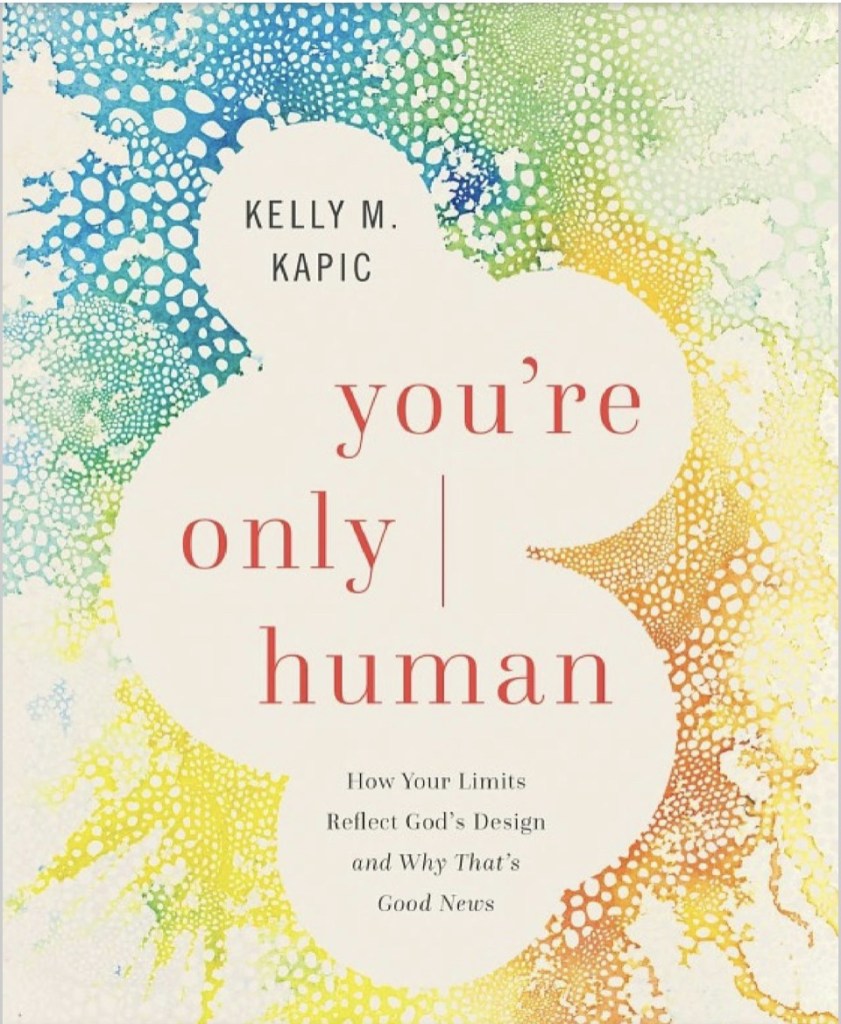
It is Kelly Kapic’s answer to the Who Am I? question that I want to share here, and I hope, like me, it helps you articulate this question in the deepest sense of meaning:
“So who am I? I am a Christian. I am a saint. I am a child of God whom he has called to good and meaningful work. As a finite creature, I am from a particular place and people; I don’t ignore my ethnicity, native language, socioeconomic setting, or the relationships that surround me. As God’s child, I am called not to deny my context or past but to see all of these relationships changed in and through God’s holy love. Here my identity is shaped and reshaped. Secure in Christ and aware of my dependence on others, I know that the Spirit works in me against the distorting effects of sin that harm the relationships God created for us. With gratitude I have been set free to engage in acts of love and reconciliation that now foster mutual life-giving communion. In this way, my identity can be properly found in Christ, in the community, and in relationship to God’s whole creation. This, as we will now see, is the path of humility [anavah], which is the path of being a truly human creature.”
Kapic’s message is the essence of cultivating the Habit of Awareness that enfolds both the need to know ourselves intimately and how that relates to our connection to God and others. Is there someone or a resource that has helped you to articulate an answer to the Who Am I? question? If so, would you please consider sharing it in the comments below to help guide myself and others?
Reference:
Kapic, K.M. (2022). You’re only human: How your limits reflect God’s design and why that’s good news. Brazos Press.
 Flourishing @ Life
I haven’t found any articles that has helped me answer the who am I question, but I often find myself relating to the passage of what Kelly Kapic stated. I rely on God and know He has a plan and He knows what my future holds. I do not stress the question of who I am, because I know to trust the Lord and what He has planned. I have found myself stressing about what was next after I finished cheering in high school, that is all I knew for so long but an injury prohibited from me being able to cheer in college. I relied on God because He knows who am I and what I possess and hold.
LikeLike
I really enjoyed this article. I too ask myself “Who am I?” I have asked myself this every single time i changed my major. It’s like those times at family holidays where everyone asks on updates about your life. It’s a hard question to answer. Almost impossible to answer sometimes. There are times in my life where I just accept what is happening now and pray that later I will know who I am.
LikeLike
I agree with Rachel. I really have not found an answer to that question. Basketball was me, but that came to an end and I’ve been trying to find out who am I ever since but I have not accomplished that yet. My favorite scripture in the Bible that keeps me motivated to know that one day I will be able to answer that simple question is, Proverbs 3:5-6. Trusting in God and not leaning on my own understanding has kept me in a positive mindset that one day I will know who I am.
LikeLike
I enjoyed reading this post because I feel as if “Who am I?” is something that college students struggle with almost everyday. Scripture has been my main resource in forming an answer to that question. It has become clear to me that I am not defined by what I am studying or what I aspire to do in life, but by what God thinks of me. It is so easy to let ourselves be defined by earthly things, but we must remember that these things mean nothing compared to our creator. We mostly struggle with this as college students because we are headed into a new phase of life, but I think that even after being at a balanced point in life, people will always struggle with “Who am I?”
LikeLiked by 1 person