
Post-it Notes…this is the answer I provide to students when a discussion arises over the question, “What do you wish you had invented?” Not only would I be financially secure, I would have been responsible for creating an item with perfect balance—enough stickiness to adhere where it’s needed, but not too much that it destroys things. How often do we come across objects in this world that are in perfect symmetry? Post-it Notes have to be a top contender in any list created! By the way, if you’ve never heard the story behind the invention of sticky notes, it’s worth your time to read. But the point is, I have an attachment for things that are sticky (pun intended)!
This affection for sticky things has been mentioned previously when I attempt to describe how appreciative I am that we serve a Savior who is sticky in the post Stickiness, but today, let’s examine some other areas where stickiness appears on the pilgrimage to cultivating a flourishing life. In addition to having a sticky relationship with our Savior, I offer that it’s vital for us to invest time in Cultivating Companionship by becoming a sticky friend or colleague—someone who takes the “long walk through everything: sorrow and celebration, heartbreaking disappointment and heartwarming contentment, all sorts of uncertainty and a moment of clarity here and there,” as Kelly Flanagan shares in True Companions, “companionship isn’t loud and fancy and intoxicating like a wedding celebration. It’s quiet and plodding and nourishing.” It’s sticky!
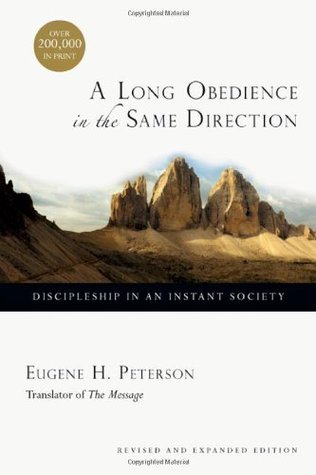
So, not only is Stick-to-itiveness vital in forming lasting relationships, finding the right balance between availability and Holding Space, it’s a key component in cultivating the Habit of Resilience. And no one describes this idea of Everyday Faithfulness better than Eugene Peterson, “Stick-to-itiveness is one of the more inelegant words in the English language, but I have a special fondness for it…the church had a fancier word for the same thing: perseverance. I have also found that it is one of the marks of Christian discipleship and have learned to admire those who exemplify it.” In the timeless wisdom of A Long Obedience in the Same Direction, Peterson reminds us that the Christian faith lasts, it weathers adversity, it’s sticky! “Stick-to-itiveness. Perseverance. Patience. The way of faith is not a fad that is taken up in one century only to be discarded in the next. It lasts. It is a way that works. It has been tested thoroughly.”
If we apply the guidance of Psalm 129 to cultivating the Habit of Resilience on the journey to a flourishing life, we see a valuable example to follow. “The psalms are not sung by perfect pilgrims. The pilgrims of old made their mistakes, just as we make ours. Perseverance does not mean ‘perfection.’ It means that we keep going. We do not quit when we find that we are not yet mature and there is a long journey still before us,” shares Peterson. What we see modeled is the perfect balance of Stick-to-itiveness. God allows us opportunities to make our own decisions, but he also sticks with us. As Christians, we “can look back over a long life crisscrossed with cruelties, unannounced tragedies, unexpected setbacks, sufferings, disappointments, depressions—look back across all that and see it as a road of blessing, and make a song out of what we see.”
Because we are finite creatures in a fallen world, we will never achieve perfection in all areas of our life; however, we can be intentional about learning to become sticky—to endure working towards a goal when it becomes difficult, to be there in support of others when they are engaged in a struggle, and to remain in our God-Given Space when we feel like leaving. We may not arrive at the perfect balance of stickiness that is found on a Post-it Note, but I firmly believe we can stretch ourselves to our human limits–to stick it out–when life gets hard, but also to grasp that there may be moments when it’s time to release our hold on something and let it go.
One challenge of engaging daily with emerging generations is that sometimes we need them to become better skilled at Stick-to-itiveness without pushing too hard. How can we assist younger generations in finding the proper balance for sticking things out? Who is modeling this well? Please consider sharing in the comments below.
References:
Peterson, E.H. (2000). A long obedience in the same direction: Discipleship in an instant society. IVP Books.


Become a sticky friend! I love the points raised here by Dr. Powell on becoming a sticky friend and being faithful to your people. This analogy was incredible and we all need to learn how to be more sticky. It needs to be our mission to show ourselves and the younger generation how to stick things out and be intentional about their actions.
LikeLike
I love this article! One of the things that so many people should work to be is “sticky!’ We should not be so sticky as to hold on to people in a smothering way but in a way that is constant in a loving way. I love how Dr. Powell uses this analogy to highlight the simplicity and joy in being this kind of friend. This should be a mission to all to “be sticky” and be intentional about the friends we all make.
LikeLike
Pingback: CTRL+ALT+DEL – Flourishing @ Life