
On a recent road trip, I utilized a streaming service to select my music, which can often lead to befuddlement as I question the algorithm’s choices. However, for the most part, the songs seemed to align with what I was hoping to hear and even allowed for some reminiscing about college days. One song that repeated several times during our fourteen hours on the road was Diamond Rio’s Meet in the Middle,and today some of these lyrics seem to be playing on repeat in my head while researching the topic of kindness. Now, I do recognize that I’m likely the only one to see a connection here, but I ask that you bear with me, and see things from my view.
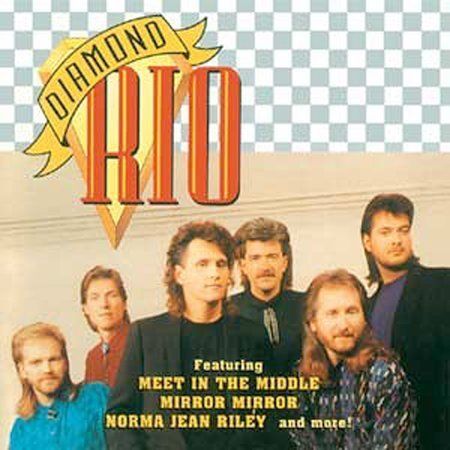
The lyrics are minimal beyond the chorus to Meet in the Middle, but they are what matters for this post: I’d start walkin’ your way, you’d start walkin’ mine/We’d meet in the middle ‘neath that old Georgia pine/We’d gain a lot of ground, ‘cause we’d both give a little/There ain’t no road too long when we meet in the middle.
Alluding to the concept that Sherry Turkle calls the Empathy Gap, I’m discovering that many authors writing on issues related to our current culture, and specifically for Emerging Generations, are mentioning the lack of empathy that seems to be a pattern in human behavior today. Regardless of whether the reason stems from immersion in social media, a lack of experiencing nature, or a lack of cultivating character and virtues, many authors are raising the alarm that we are experiencing a deficit of kindness, a loss of empathy, and an unwillingness to Walk A Mile in Someone Else’s Shoes. In other words, we are witnessing a culture that is disinclined to Meet in the Middle.
Instead of being willing to “give a little” as the song shares, I’m observing an attitude from many in today’s world that speaks more of “it’s my way or the highway.” Whether it’s refusing to allow a car to merge into oncoming traffic, unenthusiastic support for another person’s idea, or leadership that appears reluctant to listen to its members, we seem to be living in a society that accepts being Empathy Challenged and unwilling to steer a different course. Anyone who has ever engaged in healthy and successful relationships where people flourish and thrive, recognize that this only occurs when both parties are willing to Meet in the Middle, where compromise is necessary to achieve a shared goal.
Now, as with all the other concepts related to cultivating the Habits of a Flourishing Life, there appears to be a requirement to find some sort of balance, some Give and Take, and to recognize that as a human being created in God’s image, we have a responsibility to care for others. This task is difficult to accomplish if the culture around us is challenged by a lack of empathy. In his book The War for Kindness, Jamil Zaki defines empathy as the “several different ways we respond to each other. These include identifying what others feel (cognitive empathy), sharing their emotions (emotional empathy), and wishing to improve their experiences (empathetic concern)…Empathy’s most important role, though, is to inspire kindness: our tendency to help each other, even at a cost to ourselves. Kindness can often feel like a luxury—the ultimate skill in a hard world.”
Zaki proposes that there is hope for cultivating empathy and kindness in today’s culture, which will allow us to Meet in the Middle, if we view the challenge through then lens of Carol Dweck’s growth mindset. “If we can break this [fixed] pattern and acknowledge that human nature—our intelligence, our personality, and our empathy—is to some extent up to us, we can start to live like mobilists, opening up new empathic possibilities.”
Just to be clear, this is what I consider to be a multi-generational issue; however, as someone with a platform to influence Emerging Generations, I feel the pressure to ask myself and others some hard questions: Are you willing to Meet in the Middle? Am I willing to consider issues from another’s point of view and to find a consensus where both sides of the issue win? It is a life struggle to fight against our own selfishness, but if we hope to live in a world where healthy debate and dialogue can occur, we will need to face the reality that many of us are currently Empathy Challenged.
References:
Hartford, C. Foster, J. & Pfrimmer, D. (1990). Meet in the middle. [Recorded by Diamond Rio]. [Lyrics]. Arista NashRetrieved from https://genius.com/Diamond-rio-meet-in-the-middle-lyrics
Turkle, S. (2015). Reclaiming conversation: The power of talk in a digital age. Penguin Press.
Zaki, J. (2019). The war for kindness: Building empathy in a fractured world. Broadway Books.
 Flourishing @ Life
A “common denominator” is essential to putting fractions together. A common denominator is also necessary to repair a “fractured world”. Is there a point when one should consider going beyond the middle or go beyond the parameters of the common denominator?
Keep up the good work of keeping our minds active!
Doug Ellis
LikeLiked by 1 person
I am very happy that you clarified that this is a multi-generational issue, as many older folks are quick to label the youth as the world’s scourge. To the people who hold that kind of antagonistic mentality, I ask: Who do you think raised and influenced the younger generation? Rather than blame social issues on children and young adults, recognize that selfishness and the resistance to “meet in the middle” is a product of the culture we are subjected to every day- a culture that has been in the making for quite a while. Western culture is busy, competitive, and individualistic; it is easy to become numb in such an egocentric society. That’s why it is important to make a positive example of yourself!
LikeLike