
Admittedly, I do not like the taste of coffee, even when the mug is more than half filled with milk, the bitterness overwhelms the tongue. Thanks to friends like Sidney, Sharon, and Ashlee, I’ve ventured a few times to Taste and See the appeal that warm beverages have, but unless they are with me to order from the barista or prepare their personal brew, I struggle with what to try. The concept of Sipping and Savoring appeals more than the drink itself, however, I seem to struggle with that aspect of the coffee experience as well. I tend to eat and drink quickly because it hinders productivity—there are just so many items begging for attention on that to-do list!
Perhaps it’s my lack of appreciation for the brew that leaves me baffled at the car lines in the drive thru, the need for three shops on a small college campus, or the current trend in churches, but I find the idea of gaining rejuvenation from Outdoor Nutrition holding much more appeal than a caffeine buzz. If I am sleep-deprived, lagging in energy, a walk outside, spending time in nature, not only increases my energy level, but contains numerous other health benefits that can be valuable and last long beyond a single cup of mocha latte.
In efforts to address the Great Rewiring with the college students sitting before me each day, I wrestle with how to encourage them to cultivate flourishing habits to manage the stress in their lives. Choosing a $5 coffee holds more appeal as a quick fix than considering the alternatives that require more attentiveness to how they invest the time of their days. But I think God has already provided us with an outstanding alternative, what I will call Outdoor Nutrition, that provides research-proven benefits to improve our health. Now, how can I creatively remove students from a classroom full of desks and chairs and get them outdoors into nature to reap the benefits of our natural world?
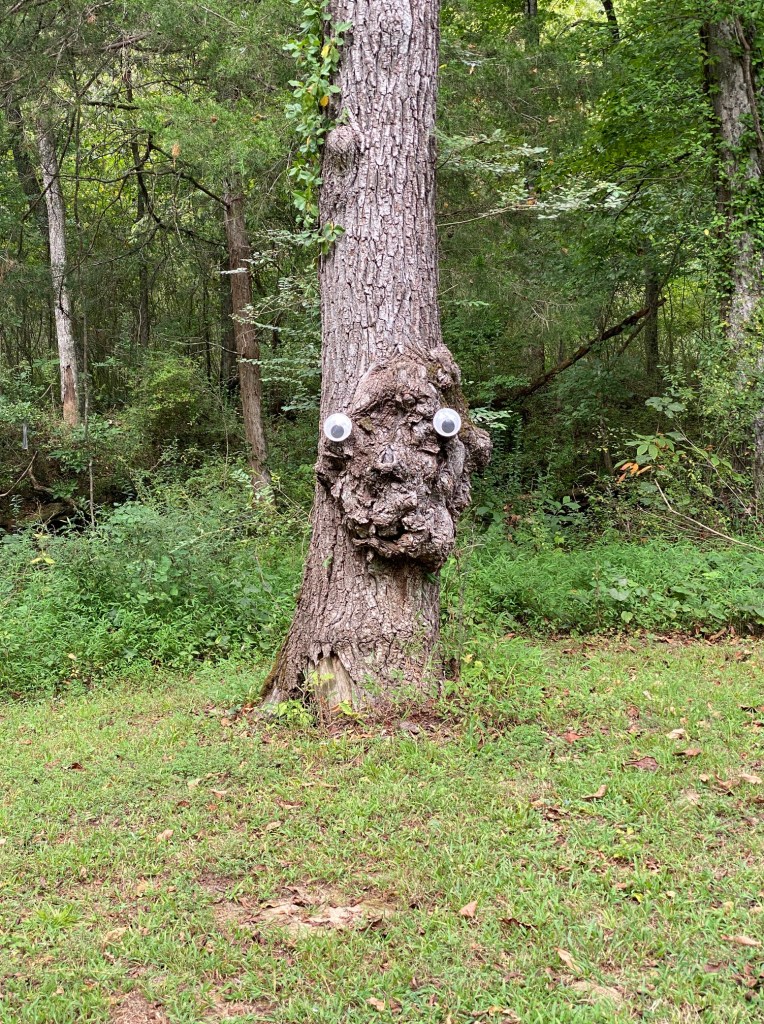
One idea floating in my mind, which was inspired by reading The Nature Fix, The Secret Therapy of Trees, and Like a River, is to ask students to meet me at a local greenway area to have a conversation with a tree. Yes, I’m having difficulty grasping this idea even for myself, but I’m warming to the idea because of a single intriguing tree with a mass of burls that gives it character. If I were to carry on a conversation with a tree, I would opt for this one rather than one with a nice smooth bark. These deformities on the tree indicate a deeper story to me, perhaps one of adversity and perseverance. And not only have I seen others stopping to ponder this tree, but many leave evidence, such as rolling eyes, to help us imagine what they are seeing when they inspect this interesting phenomenon.
Putting aside the random concepts for attempting to make learning Transformissional, we have the evidence that we are currently experiencing an “epidemic dislocation from the outdoors.” And as the writer Annie Dillard once said, “How we spend our days is how we spend our lives. Why don’t we do more of what makes our brains happy?” And you know what science tells us makes our brains happy? Outdoor Nutrition! Florence Williams outlines for us many of the ways that being outside can help us lower healthcare costs for ailments worsened by too much time indoors: myopia, vitamin D deficiency, obesity, depression, loneliness, anxiety, distractedness, and a lack of psychological resilience. “Scientists are quantifying nature’s effects not only on mood and well-being, but also on our ability to think—to remember things, to plan, to create, to daydream and to focus—as well as on our social skills.” Williams goes on to add, “I’m not going to tell you to pitch your smartphone over a waterfall. The world we live in is fully plugged in. But it’s important to call out just how radically our lives have shifted indoors—and what those changes mean for our nervous system.”
God designed our bodies to engage with the outdoors, to care for nature and be cared for by it in return. Perhaps not everyone can engage in Forest Bathing and long treks across the Appalachian Trail, but there are simple steps that each of us can take to increase our time in nature and to be attentive to how our constantly connected culture is changing us. What does that look like for you?
References:
Mencagli, M. & Nieri, M. (2019). The secret therapy of trees: Harness the healing energy of forest bathing and natural landscapes. Rodale.
 Flourishing @ Life
Pingback: Under the Influence – Flourishing @ Life
This article gives a refreshing perspective on the modern struggle to balance productivity with well- being, highlighting the contrast between quick fixes like coffee and more sustainable practices such as spending time outdoors. I grew up surrounded by nature. My town is surrounded by a national park and my family went camping yearly.I belief that we as humans need to intentionally reconnect with the earth on a daily basis. The mention of the tree with the burls symbolizes how embracing life’s imperfections can foster resilience, making the idea of connecting with nature not only beneficial but deeply meaningful.
LikeLike
This article reminds me of the time I was studying for my High School final exams. Studying all day and just sitting there quiet in your room, I can barely do that fully focused for max 2-3 hours. A walk outside in the nature really helped me get my concentration back and to start studying more productive. Nice to be able to relate myself to this blog. Thanks
LikeLike