
After discussing with students in our sport ethics class about character development, I was walking through a department store when the title of a book caught my eye, The Humble Pie. In our dialogue from several sources, the class all seemed to agree that humility was a virtue or character trait that everyone should embrace. Of course, I made the purchase, including the plush toy that accompanied the book, and read the book to our class; unaware that the story is about a class project where Jake the Cake didn’t contribute his fair share. (The ethics students are currently preparing class experiences on their topics. I don’t think this is a coincidence. Maybe the message landed. We shall see).
However, like Humble Pie, I can sometimes experience confusion when trying to apply Scripture’s definition of Healthy Humility to my life. For much of my life, I assumed humility meant staying in the background, downplaying my strengths, and making sure I didn’t appear too confident. Yet the more I study Scripture, work with student-athletes, and reflect on what it means to live a flourishing life, the more convinced I become that biblical humility is something far more beautiful.
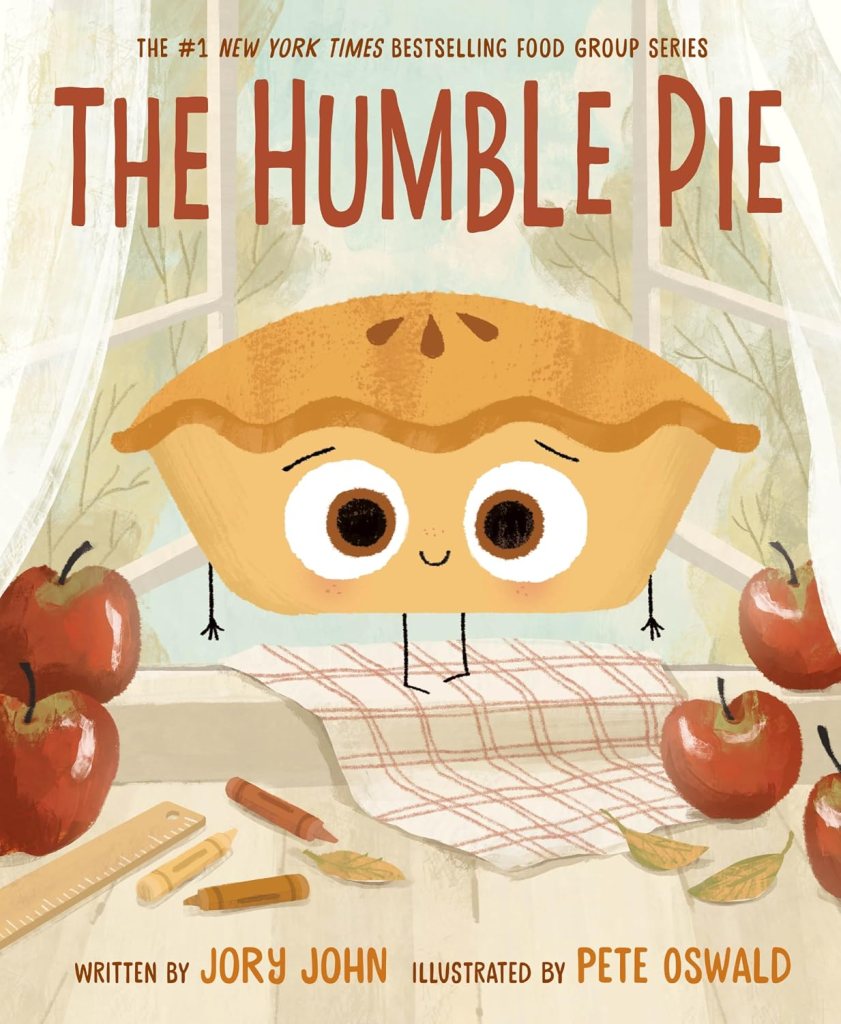
Recently, while reading Arianna Molloy’s chapters on humility and calling, I found myself repeatedly thinking about the Hebrew concept of anavah, a word often translated as humility but carrying a much richer meaning; one I describe as learning to occupy our God-Given Space. Ironically, one of the clearest illustrations I have encountered recently comes from a children’s book.
In The Humble Pie, Humble Pie enjoys directing attention toward others and avoiding the spotlight. But when he works on a school project with his friend Jake the Cake, he discovers that staying hidden all the time is not actually humility. Sometimes humility requires speaking up, contributing your gifts, and allowing your voice to be heard. That lesson gets to the heart of Adamson’s description of anavah; that we should not take up so much space that we crowd others out, nor should we take up so little space that we fail to fulfill our responsibilities.
Humble Pie initially believes that goodness means remaining in the background. Many of us make the same mistake. But biblical humility is not self-erasure. When God gives us gifts, experiences, wisdom, and opportunities to serve, hiding them does not honor Him. Neither does using them to make ourselves the center of attention. The challenge is finding that delicate balance. That is the essence of anavah.
One quote from Molloy that continues to stay with me is: “Our calling is oriented by the Caller.” Calling is not simply about discovering what we love to do. It is about responding to God’s invitation. Yet responding requires participation. Humble Pie eventually realizes that he has something important to contribute. His voice matters. His ideas matter. His presence matters. The same is true for us.
As I reflect on Molloy’s question about what I would do if all my financial obligations disappeared for a year, I realized I would still spend much of my time teaching, mentoring, and developing student-athletes. Character formation, flourishing, and helping people discover their God-given purpose continues to bring life to my soul. Humility does not require me to apologize for that calling; rather, Healthy Humility asks me to steward it faithfully.
In many ways, Humble Pie’s journey mirrors the journey many of us must take. We move from thinking, I shouldn’t take up any space, to understanding, I should occupy the space God has given me faithfully and graciously. That is not pride. That is obedience. That is Healthy Humility.
The lesson of Humble Pie is the lesson of Healthy Humility: don’t push others out of the spotlight, but don’t hide in the shadows either. Flourishing happens when we learn to occupy our God-Given Space with gratitude, confidence, surrender, and grace.
References:
Adamson, D. (2019, July 29). Anavah. Radical Mentoring. Retrieved from https://radicalmentoring.com/anavah/
John, J. & Oswald, P. (2025). The humble pie. Harper Collins.
Molloy, A. (2025). Healthy calling: From toxic burnout to sustainable work. IVP Press.


Spot-on!! I’m in a similar position on learning not just where I fit but how I fit in the places and times appointed for me by God. Thank you for sharing this today!
LikeLike