
Whether shaped by culture or my experience teaching drug education, the first definition that comes to mind when I hear the word sober almost always relates to alcohol or drugs. Because of this, I find myself momentarily distracted when encountering the word in Scripture—particularly in passages like 1 Peter 5:8. Even across translations, the Greek word nepho is rendered “sober” (NIV, KJV), while the NLT says, “Stay alert. Watch out,” and The Message urges us to “keep a cool head.”
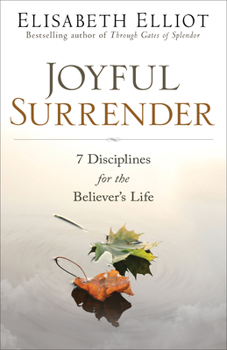
It wasn’t until reading Elisabeth Elliot’s Joyful Surrender that the concept of being Sober-Minded deeply resonated with me. Elliot highlights the writings of the French bishop Fénelon as a model of mental discipline and clarity. Eliot observes that “a simple and orderly life represents a clean and orderly mind. Muddled Thinking inevitably results in muddled living.” In other words, external clutter often reflects internal confusion—and the path toward transformation begins by simplifying and clarifying our thinking.
To avoid Muddled Thinking, we must cultivate Sober-Mindedness. As modern research on flourishing and mental health affirms, a healthy mind is marked by order rather than chaos. One potential contributor to mental clutter today is our constant engagement with digital devices, which fragment attention and overwhelm our thoughts.
Scripture calls us to something different. Passages like 1 Peter 5:8 and Romans 12:3 invite us into intentional, disciplined thinking. Elliot suggests that by practicing focused reflection, we can develop what she calls a “power of peaceful concentration.” From this place, we are better equipped for honest self-evaluation and discernment.
Elliot offers a practical challenge: “Do we understand our individual assignment within the Body of Christ? What gifts have we been given, and what functions? Suppose we were to set aside half an hour to think soberly about what we can and cannot do for the sake of the church…”
She suggests that when we first submit our thoughts to Christ and then intentionally reflect, we may discover misplaced energy—time spent on things we are not called to do, alongside neglected opportunities where we could faithfully serve. Her question echoes a familiar tension: are we pursuing what is merely good, or what is truly God?
At its core, Elliot’s challenge calls us to view everything—relationships, decisions, priorities—through the lens of the cross. Our thinking shapes our actions, yet many of us avoid the hard work of careful thought. As Elliot notes, people often confuse personal preference with reason, lacking the practice needed to distinguish between the two. To be Sober-Minded, then, is to exercise clear judgment, self-control (a fruit of the Spirit), and a Habit of Attentiveness. It is to “have our wits about us” spiritually and mentally. This kind of clarity enables deeper discernment between what is Good or God.
Elliot also shares a caution, echoed by Dr. Charles Stanley, about the formation of strongholds: “Strongholds develop…with a thought. One thought becomes consideration. A consideration develops into an attitude, which leads to action. Action repeated becomes a habit, and a habit establishes ‘a power for the enemy.’”
If this is true, then Sober-Mindedness is essential in guarding our thoughts. It may even require us, at times, to hold unresolved questions in faith—choosing trust and obedience over endless analysis. Elliot reminds us that the true disciple focuses less on exceptions or loopholes and more on wholehearted surrender and obedient love.
My personal challenge, then, is to intentionally create rhythms that foster Sober-Mindedness—to surrender my thoughts, decisions, and perspectives to Christ, allowing Him to shape them with clarity and purpose. It is not an easy pursuit, but it is undoubtedly a worthy one. If you have any insights on what it means to be Sober-Minded, please consider sharing them in the comments below.
References:
Eliot, E. (2021). Joyful surrender. [Kindle version]. Baker Publishing Group.
Fenelon. (1992). The seeking heart. SeedSowers Publishing.

