
This post has sat in my unpublished folder for several years, not because I lacked resources, but because I had too many. At the time of writing, I have more than a dozen references for it, and if I delay any longer, that list will only continue to grow. The challenge is that the journey of faith, the journey toward a flourishing life, inevitably leads us into paradox. Not just for those of us living in the twenty-first century. Not just for the disciples who walked alongside Jesus in the first century. From the moment God created humanity, life with Him has been filled with tensions that seem impossible to reconcile.
Webster’s Dictionary defines a paradox as “a person or thing having seemingly contradictory qualities or phases.” Author Jen Pollock Michel captures this reality when she reflects on the paradox of being human: “I’m a riddle to myself. I want to parent my children well. I will do right by them. Yet even on my best days, I fail these good intentions by virtue of being human, limited in understanding as well as capacity… I fail because I’m a sinner.” She goes on to echo Paul’s words in Romans 7, observing that we are “both morally frail and also morally aspiring.” We long for goodness yet continually discover our limitations. In many ways, we remain a mystery even to ourselves.
Kenneth Peterson of Our Daily Bread points to humorous contradictions such as “awfully good” and “jumbo shrimp” before explaining how Isaac Watts used paradox in his hymns to highlight the wonder of Christ’s work on the cross. Jesus Himself regularly taught through paradox. The Beatitudes of Matthew 5 celebrate the poor in spirit, the meek, those who mourn, and those who are persecuted. To the world, these descriptions appear backward. To Christ, they reveal the path to true blessing.
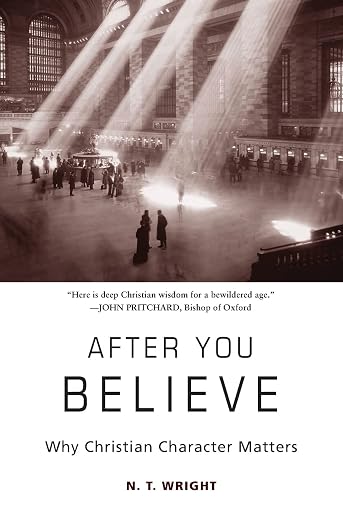
N.T. Wright describes this same tension in the Christian vision of virtue: “It is not about you, your happiness, your fulfillment, your self-realization. It’s about God and God’s kingdom, and your discovery of genuine human existence by the paradoxical route… of giving yourself away, of generous love which constantly refuses to take center stage.” That, perhaps, is the essence of the Paradoxical Life. We find by losing. We lead by serving. We become strong through surrender. We flourish by giving ourselves away. Yet I admit these tensions are a struggle for my finite mind. Even when I believe they are true, I wrestle with them.
At times, following Christ can feel like watching a championship tennis match, constantly turning your head from one side of the court to the other, trying to follow the ball. One day you feel as though you’ve finally Let Go of the grief or disappointment that accompanied an undesired major life change. The next day, you’re back on your knees, pleading with God to help you become Better Not Bitter. You experience a peace that surpasses understanding, only to have something unexpectedly touch that still tender place in your heart. Suddenly, it feels as though you’re starting all over again.
Conflicting emotions are real. Healing is rarely linear. Faith often grows in the tension between what we know to be true and what we are currently experiencing. Perhaps you cannot relate to this struggle, and honestly, that would be my prayer for you. But personally, I find myself resonating with the honest questions Levi Lusko frequently raises, one of which I will share in Avoiding Ugly. His reflections eventually led me to Dr. Kent Keith’s Paradoxical Commandments, a reminder that following Jesus and cultivating the Habits of a Flourishing Life will always require us to embrace paradox.
Choosing to heed Christ’s invitation to “Follow Me” means accepting that our lives will often resemble the tension Paul describes in Romans 7. Michel offers a profound observation: “It would seem, at least to me, that God has a kind of preference for paradox. Given the choice between either/or, God would often choose both/and.” She notes that God is both immanent and transcendent; merciful and just; mysterious and knowable. Paradox, she argues, invites both curiosity and humility. When we are left with complexity and mystery, we are reminded of a simple truth: He is God, and we are not. That may be one of the hardest lessons for me to learn.
Like Job, I may never receive answers to all my questions. And trust me, I ask “why” quite often. Yet on the days when bitterness feels closer than betterness, I want to choose a different response. I want to fall to my knees and ask the Holy Spirit for the strength to move forward. I want to choose humility over certainty, trust over understanding, and surrender over control. I may never fully resolve the tensions of faith; but if embracing the Paradoxical Life means choosing Him, then that is the life I want to live.
References:
Keith, K.M. (1968, 2001). Anyway. The paradoxical commandments. https://www.paradoxicalcommandments.com./
Lusko, L. (2026, July 20). Doing your best when life is the worst | Is that in the Bible?: House of David. Fresh Life Church. https://www.youtube.com/watch?v=AHR60iu5CbQ&t=4s
Michel, J.P. (2019, April 16). Christian life is paradoxical. Embrace it. Worshiping the God of the both-and. The Gospel Coalition. https://www.thegospelcoalition.org/article/embrace-paradoxes-christian-life/
Paradox. (2026, July 20). Paradox. In Merriam-Webster.com. https://www.merriam-webster.com/dictionary/paradox
Peterson, K. (2025, February 02). Christ’s visual paradox. Our Daily Bread. Retrieved from https://www.odbm.org/devotionals/devotional-category/christs-visual-paradox
Wright, N.T. (2010). After you believe: Why Christian character matters. Harper One.

