
There are times that I wish that I didn’t find correlating messages so frequently, because it generally means there is more reading ahead. And as much as I love reading and learning, I had really expected an Expiration Date for this flourishing topic; instead, it keeps going and going like that one battery company’s mascot! Indeed, while exploring the public library in Victoria, BC, I had to stop at a display on the well-being of Elderhood to see what resources their librarians suggested, so here I am writing about Blue Zones. “The longest-lived people in the world didn’t just live longer—they lived together, with purpose, rhythm, and belonging. These same patterns echo the way of Jesus, inviting us not just to add years to life, but life to years—and eternity to both.”
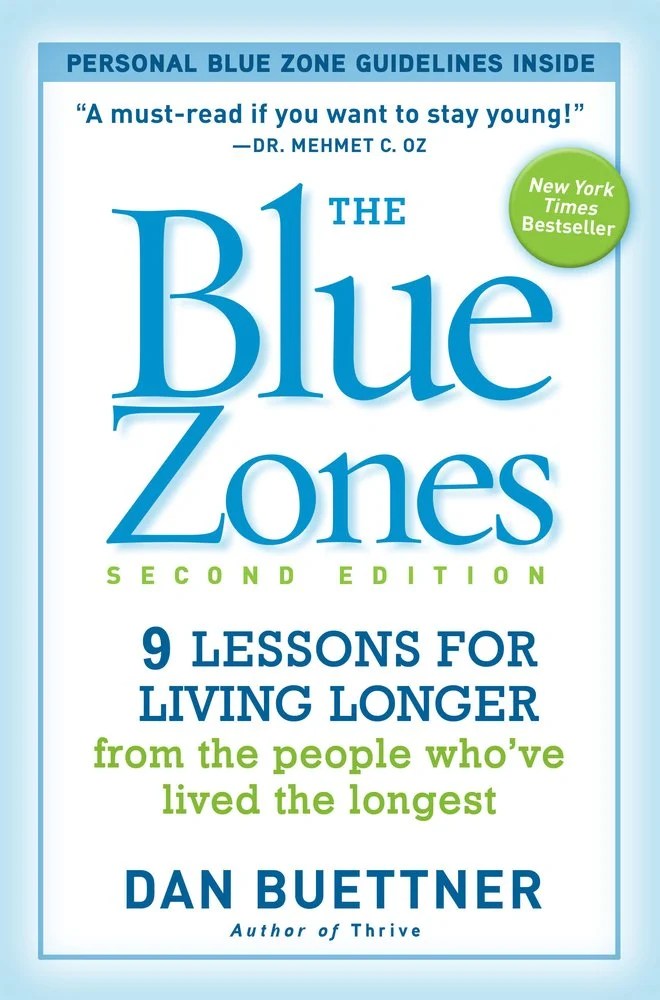
In a world often driven by speed, individual achievement, and constant striving, the message of the Blue Zones offers a refreshing alternative. Dan Buettner’s research into the world’s longest-living communities—from Okinawa, Japan, to Sardinia, Italy—reveals that longevity is not primarily about genetics or high-performance health strategies. Instead, it emerges from simple, consistent practices woven into daily life: movement, purpose, rest, community, and connection.
What is remarkable is how closely these patterns align with the rhythms of a life rooted in faith. For those of us pursuing a flourishing life, the Blue Zones don’t just suggest a pathway to longer living—they illuminate a deeply biblical vision of abundant living. In Blue Zones communities, people wake up each day with a clear sense of purpose. Whether it’s caring for family, tending a garden, or contributing to the community, their lives are anchored in meaning.
Faith invites us into something even deeper: a calling, not just a vocation. We are not self-made individuals chasing success; we are created with intention and sent with purpose (Ephesians 2:10). This sense of calling sustains us—not just for productivity, but for impact. When we live as people who are called, we align our lives with something eternal. Purpose becomes more than motivation—it becomes mission.
Blue Zones cultures focus on Taking It Slow, or “downshifting” into their lives—moments of rest that lower stress and restore the soul. In Scripture, this rhythm appears as Sabbath, a sacred pause that reminds us that we are not God. Jesus Himself modeled this, often withdrawing to quiet places to pray. Rest, then, is not weakness—it is worship. It is an act of trust.
In a culture of burnout, choosing rest is a countercultural declaration: God is in control, and we are invited to live in His peace. Flourishing requires this rhythm. Without it, we may survive—but we do not thrive.
In the Blue Zones, movement is not a scheduled event—it’s a natural part of daily life. People walk, garden, cook, and serve. Their bodies are engaged in meaningful activity, in physical wellness. For people of faith, this becomes an opportunity for embodied worship. Scripture reminds us that our bodies are temples of the Holy Spirit (1 Corinthians 6:19–20). Movement is not just exercise; it is stewardship. A walk becomes a prayer. Serving others becomes physical expression of love. As we move, we participate in the life God has given us, using our bodies not merely for performance, but for purpose.
Blue Zones diets emphasize simplicity—mostly plant-based, minimally processed, and consumed in community. They also practice moderation, often stopping before they are completely full. This reflects a deeper spiritual principle: contentment. In a world of excess, faith teaches us to receive with an Attitude of Gratitude and to recognize when we have enough. Meals become more than fuel—they become communion. Around tables, relationships are nurtured, stories are shared, and gratitude is practiced. This is the heart of flourishing together.
One of the most powerful findings of Blue Zones research is the impact of community. People who live the longest are deeply connected—to family, friends, and faith communities. This mirrors the design of the early church in Acts, where people lived, worshiped, and shared life together. They were not isolated individuals; they were a body. Faith flourishes in community. We need people who encourage us, challenge us, and walk beside us. In a culture that often celebrates independence, the Kingdom of God calls us back to interdependence. We do not flourish alone—we Flourish Together.
Blue Zones cultures prioritize family and close relationships. Time is invested in those who matter most. Scripture reinforces this truth again and again: love God and love others. These are not secondary commitments; they are foundational. To live a flourishing life is to reorder our priorities—to place relationships above productivity, presence above performance, People Over Property. When we do, we reflect the heart of Christ, who consistently chose people over agenda.
Blue Zones communities regularly gather to celebrate life—often around food, laughter, and shared experiences. There is a sense of joy woven into everyday living. Faith, too, calls us into joy. Not superficial happiness, but a deep, abiding joy rooted in God’s goodness. Jesus participated in celebrations, turned water into wine, and rejoiced with others. Joy is not an afterthought—it is a spiritual discipline. It reminds us that flourishing is not just about endurance, but delight.
Those in Blue Zones are surrounded by people who support healthy behaviors. Their “tribe” shapes their Habits of a Flourishing Life. Similarly, Scripture reminds us that we become like those we walk with. The people around us influence our direction, our mindset, and our faith. This is why intentional community matters. Small groups, friendships, and faith communities create environments where growth is nurtured. Flourishing is contagious when we are surrounded by others pursuing the same path.
The wisdom of the Blue Zones is simple but profound: a flourishing life is not built on extremes, but on consistent, meaningful patterns, habits, practiced in community. For people of faith, this is deeply encouraging. The life Jesus modeled—one of purpose, rest, relationship, service, and joy—aligns beautifully with what science now affirms about well-being. We are invited into a life that is both deeply human and eternally significant. Not just adding years to our lives, but life to our years.
If Blue Zones show us how to live longer, faith shows us how to live deeper. And when we bring the two together, we discover something powerful: A life that flourishes—now and forever.
References:
Buettner, D. (Executive Producer). (2023). Live to 100: Secrets of the Blue Zones [TV series]. Netflix. https://www.netflix.com/title/81214929

